

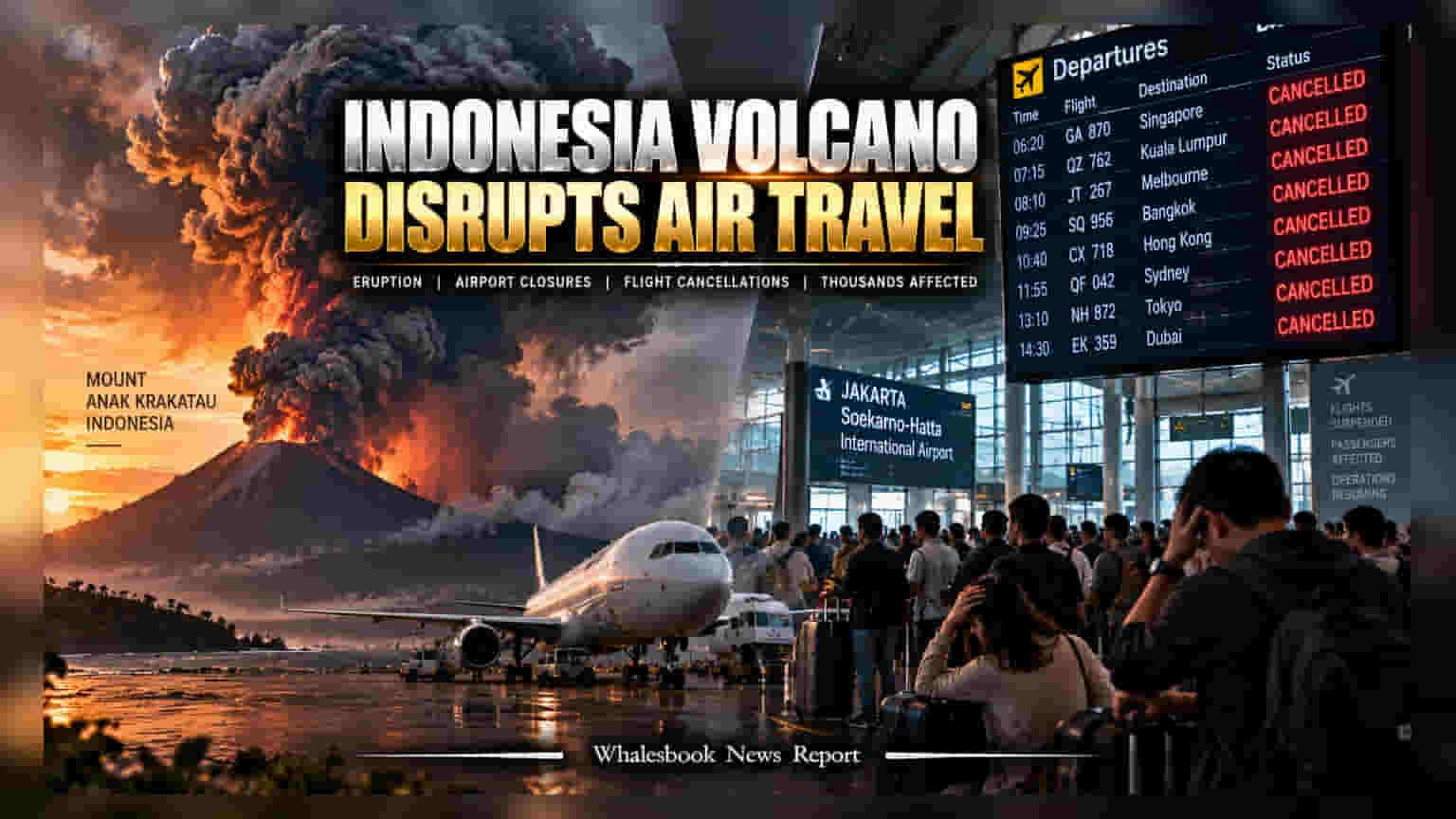
Mount Anak Krakatau erupted on September 6, 2026, forcing a temporary shutdown of Jakarta’s Soekarno-Hatta International Airport. Over 200 flights and 22,800 passengers faced disruptions as volcanic ash prompted security closures. For investors, the event highlights the operational risks in the Southeast Asian aviation sector, where unpredictable natural events can lead to sudden cost increases, schedule delays, and potential revenue pressure for regional carriers.
Mount Anak Krakatau, located in Indonesia, erupted early on Sunday, September 6, 2026, sending volcanic ash into the atmosphere. The eruption prompted immediate safety concerns, forcing authorities to suspend operations at Soekarno-Hatta International Airport in Jakarta. The closure, which lasted until 1:30 p.m. local time, significantly disrupted travel in the region.
The impact on aviation was substantial, with 209 flight movements grounded or affected. Approximately 22,800 passengers faced delays or cancellations as international and domestic routes were paused to avoid the risks posed by airborne volcanic ash to aircraft engines and visibility. Other regional airports, including Halim Perdanakusuma, Budiarto, and Radin Inten II, also implemented temporary closures as a precautionary measure.
From an investor perspective, events like this underscore the operational vulnerabilities in the aviation and tourism sectors. Airline operators face immediate financial pressure when such events occur, driven by the costs of flight cancellations, passenger support and compensation obligations, and the complexity of rescheduling crews and aircraft across international networks. These disruptions can lead to temporary spikes in operating expenses, even when assets like aircraft remain physically safe, as was the case with 170 aircraft parked in Jakarta during this event.
While air travel is resilient, volcanic activity introduces a variable risk factor. Geological authorities have noted that Anak Krakatau remains unstable, meaning future ash dispersion remains a possibility. For those monitoring aviation or logistics companies with exposure to Southeast Asian routes, the key risk is the potential for cascading delays. A single airport closure in a major hub can create a ripple effect, reducing fleet efficiency and increasing the burden on airline management to restore normal schedules.
Investors typically track the duration of such events and the effectiveness of airline contingency plans. Prolonged disruption would likely increase pressure on profit margins for affected carriers, particularly those with high connectivity to the Jakarta hub. As operations resume, the focus for stakeholders will remain on the ongoing volcanic monitoring reports issued by the Indonesian Ministry of Transportation and geological agencies. Any further activity that forces repeated closures could prolong the financial and logistical challenges for regional travel operators.