

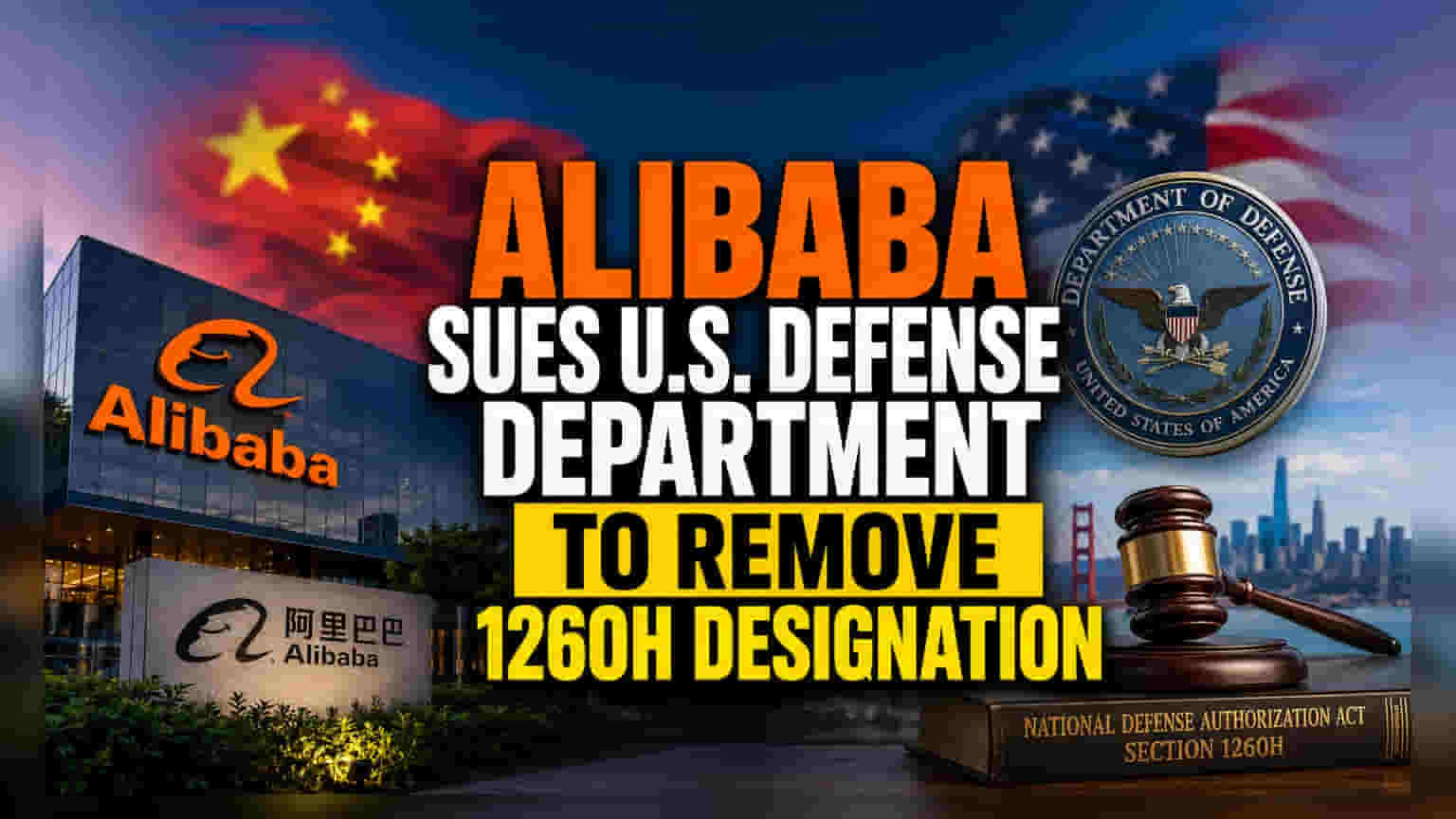
Alibaba has filed a lawsuit against the U.S. Department of Defense, challenging its inclusion on a military-linked blacklist. The company argues the designation is baseless and threatens its reputation and business operations. The list, known as Section 1260H, alerts US organizations to potential risks but does not impose immediate total sanctions.
What Happened
Alibaba Group Holding Limited has initiated legal action against the United States Department of Defense (DoD) in a California federal court. The e-commerce and technology giant is seeking to be removed from the Pentagon's "1260H list," which identifies companies the US government claims have ties to China's military-civil fusion strategy. Alibaba’s lawsuit, filed on June 23, 2026, asserts that the government failed to provide substantial evidence to support this designation. The company maintains that its business operations—focused on e-commerce, cloud computing, and logistics—are entirely commercial and lack any link to the Chinese military or defense industrial base.
Understanding the 1260H List
The list is mandated by Section 1260H of the National Defense Authorization Act (NDAA) for Fiscal Year 2021. It serves as a tool for the US Department of Defense to identify Chinese companies operating in the United States that it believes are supporting the People’s Liberation Army. Inclusion on this list is not the same as a full economic sanction, which would freeze assets or block all transactions. However, it functions as a formal risk-advisory mechanism. Being on this list warns US entities to exercise caution when dealing with these companies and restricts them from certain US defense contracts.
Why This Matters for Investors
For investors, the primary concern is the potential for future regulatory escalation. While the current 1260H designation is not a total ban, it creates operational and reputational friction. Companies on this list often face heightened scrutiny from other US agencies, such as the Department of Commerce or the Department of Treasury, which could lead to tighter export controls, investment bans, or limitations on accessing US capital markets.
Alibaba is not the only company affected. The Pentagon recently expanded the list to include other prominent Chinese firms such as Baidu, BYD, and Nio. This reflects a broader trend of increased US regulatory oversight on Chinese tech giants amid ongoing geopolitical and technological competition between the two nations. For Alibaba, the risk lies in the uncertainty—if the designation leads to further restrictions, it could impact the company’s ability to conduct business with American partners or hinder its growth in international markets.
Business and Operational Context
Alibaba has argued in its court filing that the Pentagon's determination is "arbitrary and capricious." The company noted that it is governed by an independent board and has already provided evidence to officials to counter the military-link claims. The Pentagon has not publicly provided specific, detailed evidence for the recent additions, stating only that the list is part of an ongoing effort to track and counter China's military-civil fusion strategy.
What Investors Should Track Next
Investors should monitor the court proceedings in California, as a ruling in favor of Alibaba could pressure the DoD to provide more transparent criteria for its designations. Furthermore, the market will likely watch for any retaliatory measures from the Chinese government, which has historically responded to US blacklists with its own trade curbs on American firms. Any sign that other US agencies, such as the Treasury or Commerce Department, are using this 1260H list as a foundation for stronger sanctions would be a significant development for the stock.