

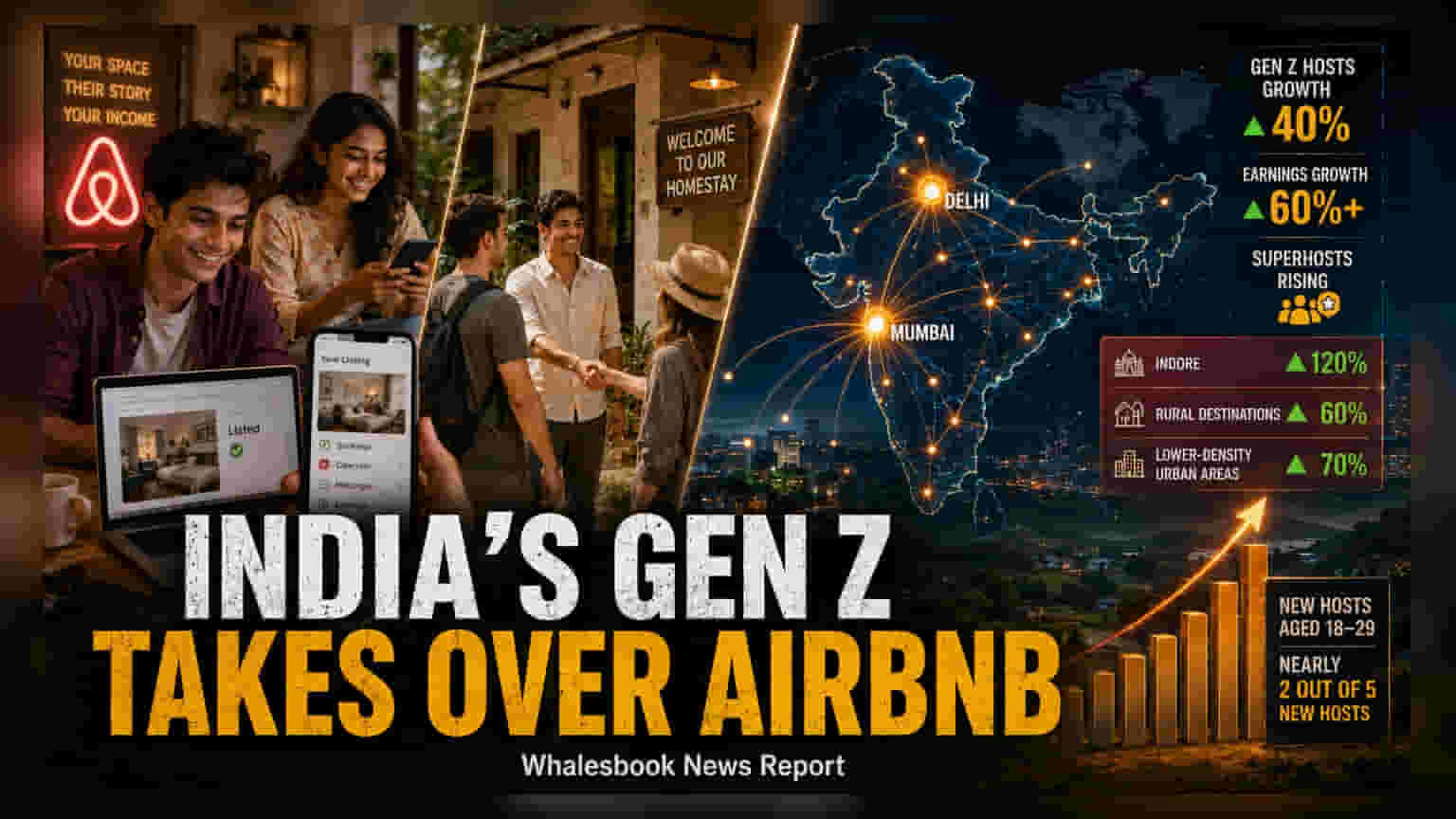
Airbnb's Indian operations report a 40% increase in hosts aged 18-29 for the first half of 2026, with significant expansion into smaller cities. While the platform is driving a new segment of entrepreneurs, Indian investors should note that the company is not listed on domestic stock exchanges.
The landscape of India's hospitality sector is seeing a new shift as younger individuals, specifically those aged 18 to 29, increasingly become service providers rather than just guests. According to data from the first half of 2026, the number of Gen Z hosts on Airbnb in India surged by nearly 40% compared to the previous year. This demographic now represents nearly two out of every five new hosts joining the platform, signaling that young Indians are looking at short-stay hosting as a meaningful source of income.
This trend is particularly notable for its reach beyond major metropolitan hubs. While traditional tourist centers remain active, smaller urban areas are seeing rapid adoption. For instance, Indore reported a 120% increase in Gen Z hosts. Similarly, less conventional regions are gaining traction, with rural destinations seeing a 60% growth and lower-density urban areas recording a nearly 70% rise in younger hosts. This expansion into Tier-2 and Tier-3 cities reflects a broader shift in Indian travel patterns, where domestic demand is pushing hospitality options into smaller, previously underserved locations.
Financial and Strategic Impact
The economic impact on this younger demographic appears strong, with earnings for Gen Z hosts rising by over 60% in the first half of 2026 compared to the same period in 2025. This rise suggests that the shift is not just about the number of people joining but also about the increasing financial viability of managing such properties. Furthermore, the ability of these hosts to maintain quality standards is evidenced by a segment of them achieving 'Superhost' status, which requires consistent, high-rated performance.
Investor Context and Risks
It is important for Indian investors to understand the market position of this business. Airbnb, Inc. is a US-based company listed on the NASDAQ and is not currently listed on Indian stock exchanges like the NSE or BSE. As such, local investors do not have direct access to invest in the company's equity.
For those tracking the Indian travel and hospitality sector, this development highlights stiff competition for traditional hotel chains. The rise of home-sharing platforms like Airbnb creates pressure on established hotel brands, which are also competing for the same travel demand. Potential risks for this sector include regulatory challenges, as state and local governments in India continue to navigate licensing and zoning rules for homestays. Additionally, global travel demand is sensitive to economic conditions, and the hospitality sector often faces cyclical pressure. Investors tracking Indian listed hospitality companies may want to watch how these firms respond to the continued growth of alternative accommodation platforms, which are effectively capturing a larger share of the younger travel market.