 Whalesbook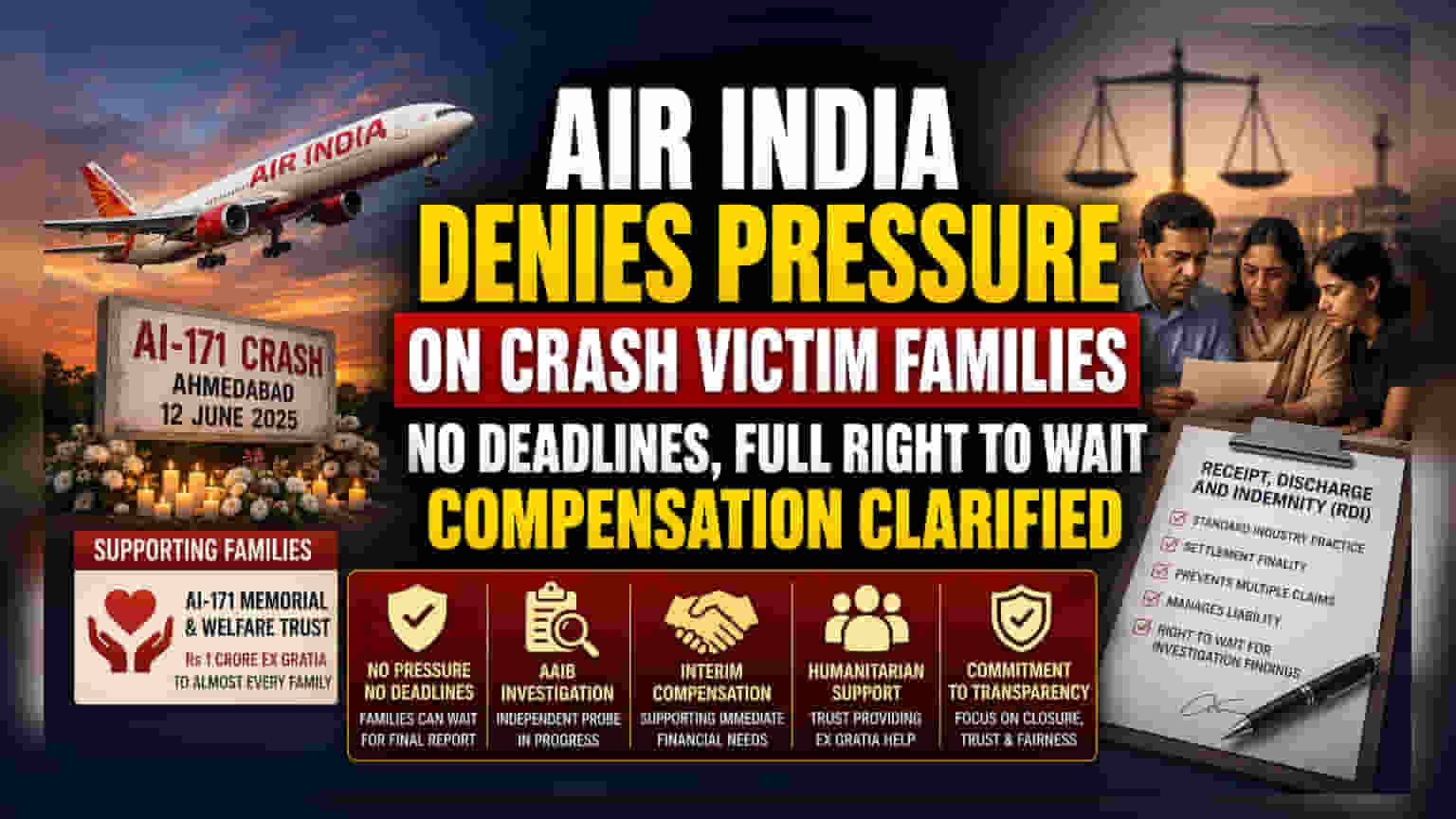


Air India has refuted allegations that it pressured families of AI-171 crash victims to sign compensation waivers. The airline stated there are no deadlines for settlement offers and that standard indemnity documents are used for legal finality, not to shield third parties. The company also highlighted ongoing support through the Tata Group’s welfare trust.
What Happened
Air India has issued a formal denial regarding reports that it is pressuring the families of victims involved in the AI-171 crash, which occurred in Ahmedabad on June 12, 2025. The airline stated that there is no pressure or deadline for families to accept its final compensation offers. This clarification comes in response to concerns raised by some affected families regarding the legal waivers they were asked to sign. The airline has maintained that families retain the full right to wait for the official investigation findings before making a final decision on their compensation settlements.
The Indemnity Clause Explained
At the center of the dispute is the Receipt, Discharge and Indemnity (RDI) document. Air India explained that this document uses standard language found across the global aviation industry. In legal terms, such documents are designed to ensure that a compensation settlement is final and prevents multiple or future claims for the same incident. The airline clarified that the objective of this legal text is to manage liability and bring closure to the settlement process, rather than to protect aircraft manufacturers or other third parties from their own legal obligations. By signing such a document, the claimant typically agrees to end legal action in exchange for the payout.
Supporting Affected Families
Following the accident, Air India began providing interim compensation to support the immediate financial needs of the families. In addition to the standard insurance-led compensation process, the Tata Group established the AI-171 Memorial and Welfare Trust. This trust has provided ex gratia assistance of Rs 1 crore to almost every family impacted by the tragedy. This effort highlights the dual approach taken by the airline: managing legal settlement processes while attempting to address humanitarian concerns through the trust.
Investigation and Timeline
The official investigation into the June 2025 crash is being conducted by the Aircraft Accident Investigation Bureau (AAIB). This independent government body is responsible for determining the root cause of the accident. Air India has stated that it does not have information regarding when the final report will be published. Because the investigation remains open, some families have chosen to wait for these findings before deciding whether to sign the settlement waivers, a path that the airline has officially confirmed is permissible.
How Investors May Read This
For the aviation sector, the handling of accident settlements is a critical issue that involves both legal liability and brand reputation. When a major airline faces such incidents, the process of providing compensation is closely watched by regulators and the public. A transparent and empathetic settlement process is essential to maintaining trust and avoiding long-term reputational damage. While legal indemnity documents are standard practice in the insurance-heavy aviation industry, the way they are communicated to grieving families remains a sensitive matter. The key monitorable for the business remains the outcome of the AAIB investigation, as the findings could have implications for future liability and operational safety protocols within the airline.