

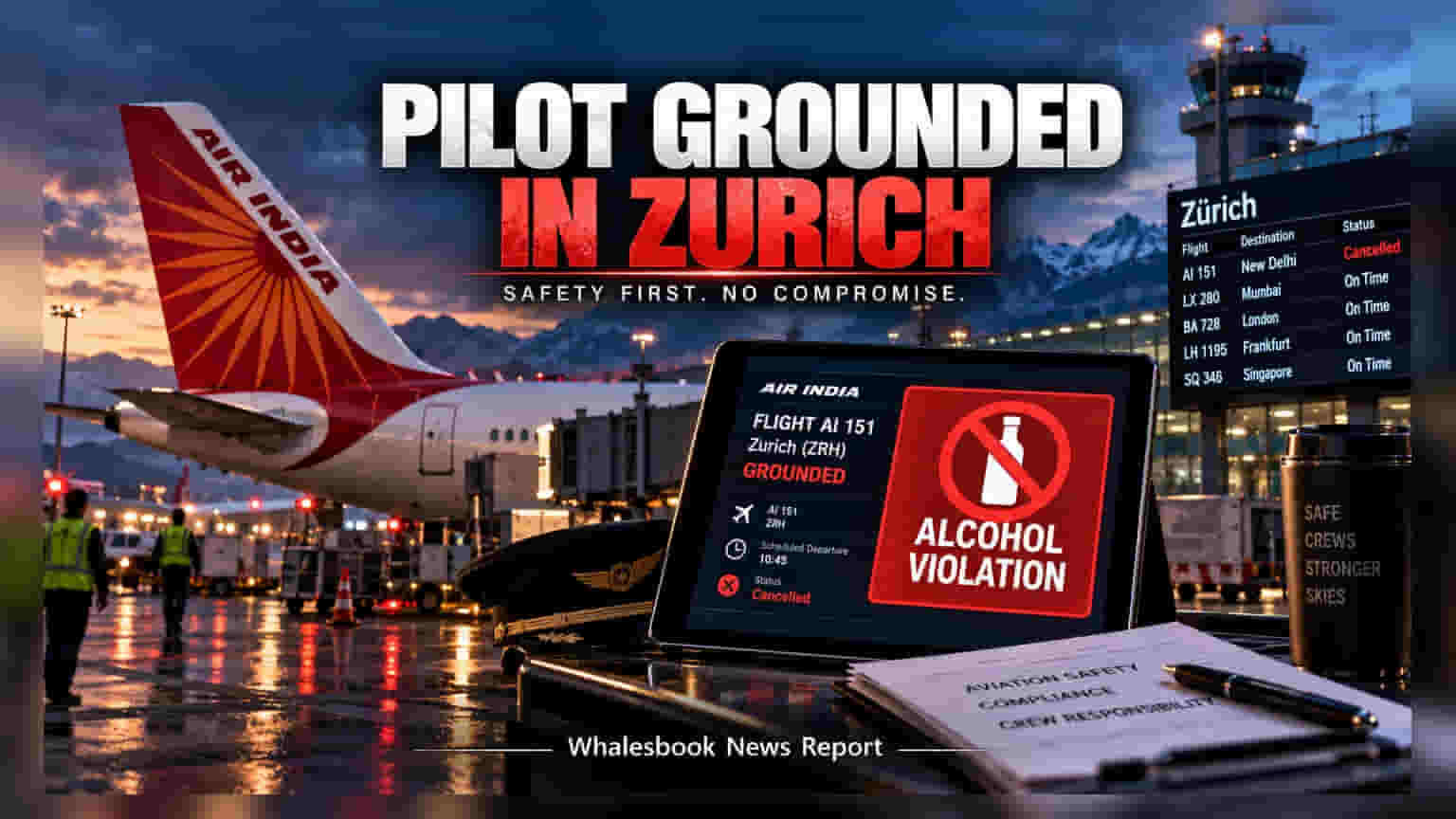
A pilot was removed from Air India flight AI 151 in Zurich on September 6 after failing a sobriety test. The incident has been reported to the DGCA and occurs just before a critical US Federal Aviation Administration audit, heightening scrutiny on the airline’s safety compliance and crew training protocols.
An Air India pilot was removed from duty on September 6 in Zurich after failing a mandatory sobriety test, leading to the grounding of flight AI 151. The Swiss Federal Office of Civil Aviation (FOCA) confirmed the incident, stating that the pilot’s blood alcohol levels exceeded permitted limits. The event has been formally reported to India’s Directorate General of Civil Aviation (DGCA), which oversees the operational licenses of Indian carriers.
This incident arrives at a sensitive time for Indian aviation as the DGCA prepares for an upcoming audit by the US Federal Aviation Administration (FAA). The FAA audit is significant because it assesses the safety oversight capabilities of the Indian aviation regulator. Any lapses in safety compliance can lead to operational restrictions on international routes, specifically those flying to the United States. For airlines like Air India, which are currently undergoing major fleet expansion and network growth under Tata Group ownership, maintaining strict international compliance is critical to protecting these high-value routes.
While the company maintains that its internal safety reporting systems are robust—noting that ground staff intervened before the flight could depart—the incident has reignited discussions regarding the balance between aggressive corporate growth and the maintenance of safety culture. Some industry observers have pointed to a need for more rigorous crew training and wellness programs to mitigate risks as the airline scales up its operations rapidly.
Air India has reiterated its zero-tolerance policy regarding safety violations, confirming that it will take disciplinary action against the personnel involved in line with both internal corporate governance and national aviation regulations. The airline is currently increasing its focus on professional responsibility training for its flight crews to prevent similar occurrences in the future.
For stakeholders and industry analysts, the key monitorable remains how the DGCA addresses this breach in its reporting to the FAA. Regulatory findings often influence whether an airline can continue seamless international operations or if it faces intensified inspections that could lead to delays or operational costs. Investors and regular passengers may watch for further updates from the airline regarding its safety committee findings and any systemic changes implemented to strengthen crew oversight.