

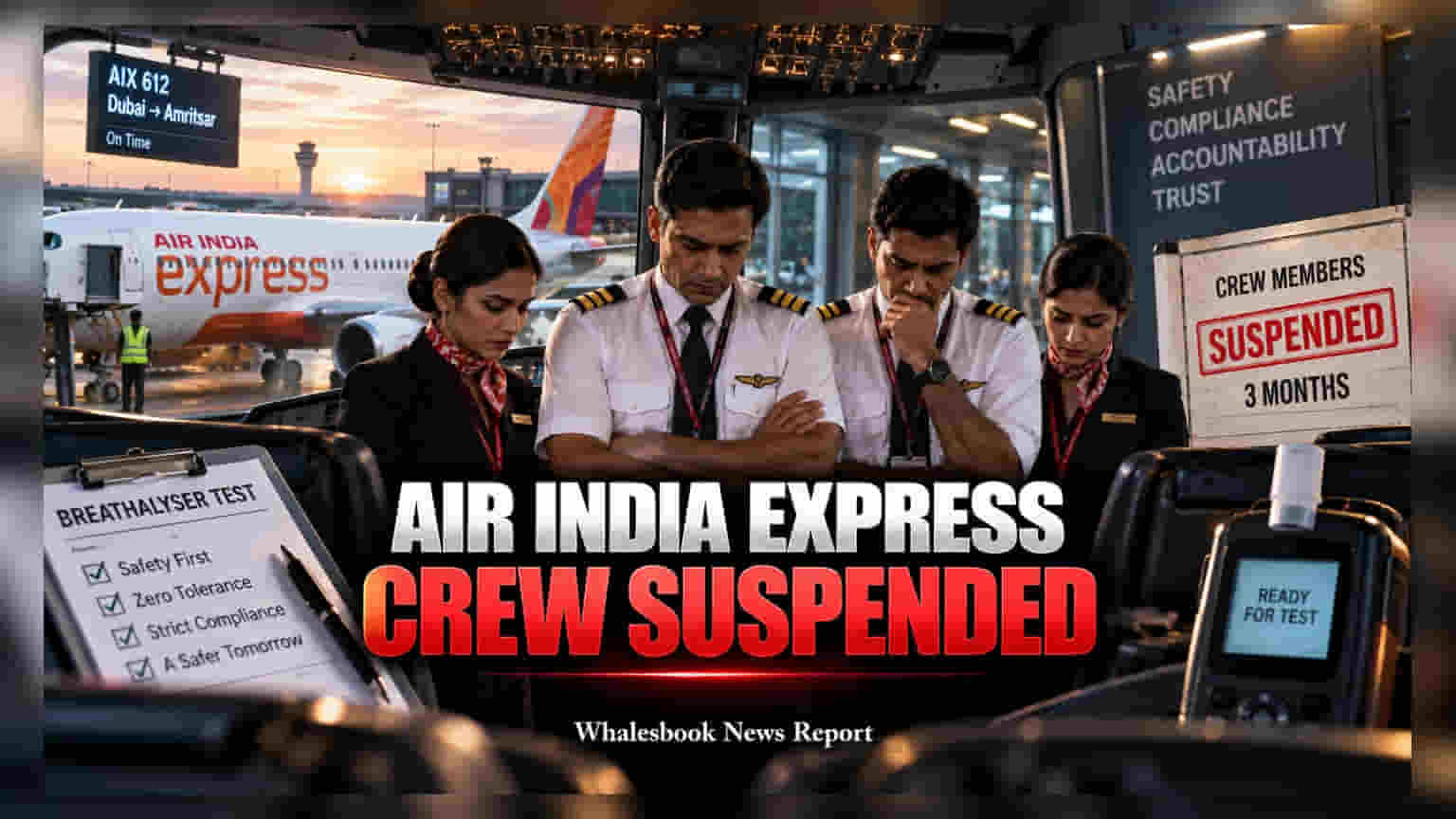
Air India Express has suspended eight crew members for three months after a delay in completing mandatory post-flight breathalyser tests. The airline reported the incident to the Directorate General of Civil Aviation as part of a move to tighten safety protocols. This reflects an industry-wide push for stricter compliance and substance testing in the Indian aviation sector.
Air India Express has taken disciplinary action against eight crew members, suspending them from duty for three months following a procedural lapse. The incident occurred on an August 2 flight from Dubai to Amritsar, where the crew failed to report for a mandatory post-flight breathalyser test within the required two-hour window. The team missed the deadline by 35 minutes, a deviation from standard safety guidelines.
While the breathalyser tests eventually showed that none of the eight crew members had consumed alcohol, the airline chose to self-report the delay to the Directorate General of Civil Aviation. This action highlights a shift toward rigid enforcement of safety protocols within the Air India group, which is currently under the ownership of the Tata Group. The airline has stated that this move is part of an intensified oversight effort aimed at maintaining safety standards.
The suspension comes during a period of increased regulatory scrutiny for the airline. The group has been working to improve its safety culture following a recent incident involving an Airbus A320 flight from Phuket to Delhi. In that case, a significant altitude drop led to substance testing, which revealed the pilot-in-command had traces of prohibited substances. This incident triggered a formal inquiry by the Aircraft Accident Investigation Bureau and prompted the airline to expand its testing policies.
Following these developments, the aviation group has adopted more comprehensive screening measures. These tests are now conducted during training sessions, post-flight briefings, and at key base locations. The broader aviation sector in India is also seeing a push for updated safety regulations. Civil Aviation Minister K Rammohan Naidu has indicated that the government is evaluating a transition toward annual mandatory dope tests for all pilots, which would replace the current system of random sampling. This shift is intended to improve safety reporting and reduce operational risks across the industry.
For investors in the aviation sector, these changes are significant. Tightening regulatory requirements can lead to higher operational costs due to increased compliance, auditing, and training needs. Additionally, any safety-related lapse can lead to reputational risks that may affect brand perception. While the domestic aviation market is growing, regulatory compliance remains a critical factor for airlines, including listed players like InterGlobe Aviation, as authorities prioritize safety. Investors may continue to monitor how effectively airlines manage these stricter safety regimes and whether such measures lead to increased scrutiny or potential operational delays in the future.