 Whalesbook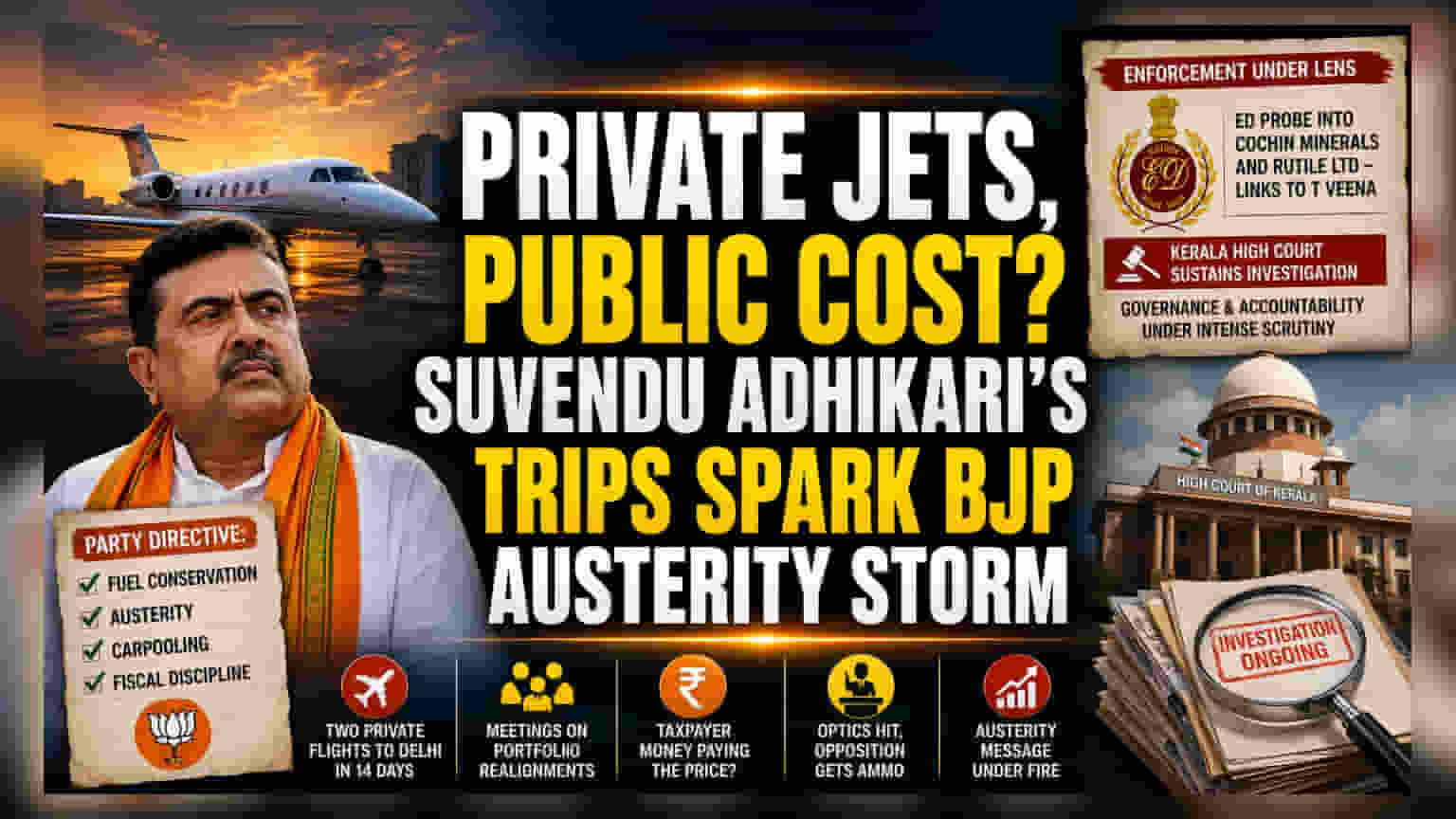


The Optics of Excess
The recent travel patterns of West Bengal Chief Minister Suvendu Adhikari have initiated an internal narrative crisis within the Bharatiya Janata Party. By opting for private aviation for two rapid-fire trips to the national capital in less than fourteen days, Adhikari has inadvertently compromised the party's primary messaging directive: the promotion of national fuel conservation and austerity. While the official stance encourages ministerial carpooling and fiscal discipline, the decision to bypass commercial alternatives suggests a disconnect between executive behavior and the party’s public-facing austerity doctrine.
Strategic Misalignment
Beyond the environmental and fiscal optics, the high-frequency travel raises tactical concerns regarding the decision-making process. Internal sources suggest these meetings focused on sensitive portfolio realignments, yet the lack of transparency surrounding their urgency leaves a vacuum filled by speculative commentary. In a political environment where every resource allocation is scrutinized for its impact on public approval ratings, the choice to utilize premium transportation for non-emergency consultations provides opposition entities with significant ammunition to challenge the party’s moral authority on spending habits. This behavior stands in contrast to the increasingly disciplined fiscal monitoring seen in other BJP-led state administrations, where operational expenses are currently undergoing rigorous audits to align with broader federal directives.
The Enforcement Variable
This climate of internal scrutiny is compounded by broader institutional pressures currently impacting the political arena. The Enforcement Directorate’s ongoing activity, particularly the probe into the financial ties between Cochin Minerals and Rutile Ltd and the firm linked to T Veena, has shifted the conversation toward governance and financial accountability. The Kerala High Court’s decision to sustain this investigation underscores a systemic hardening of regulatory oversight that transcends individual state politics. As investigators intensify their focus on corporate-political entanglements, the pressure on high-profile figures to maintain impeccable optics regarding public funds becomes absolute. Any perceived lapse in financial propriety, whether related to personal travel or institutional governance, risks drawing immediate, undesirable attention from federal oversight bodies currently emboldened by their investigative momentum.
Long-Term Governance Risks
The conflict between Adhikari’s logistical choices and the central leadership’s austerity mandates highlights a growing fragmentation in governance styles. If internal party discipline cannot reconcile these differing approaches to resource utilization, it may lead to further administrative friction. Observers are now looking for whether the party will implement formal travel restrictions for state-level executives or continue to tolerate these deviations at the risk of undermining their own policy platform.