

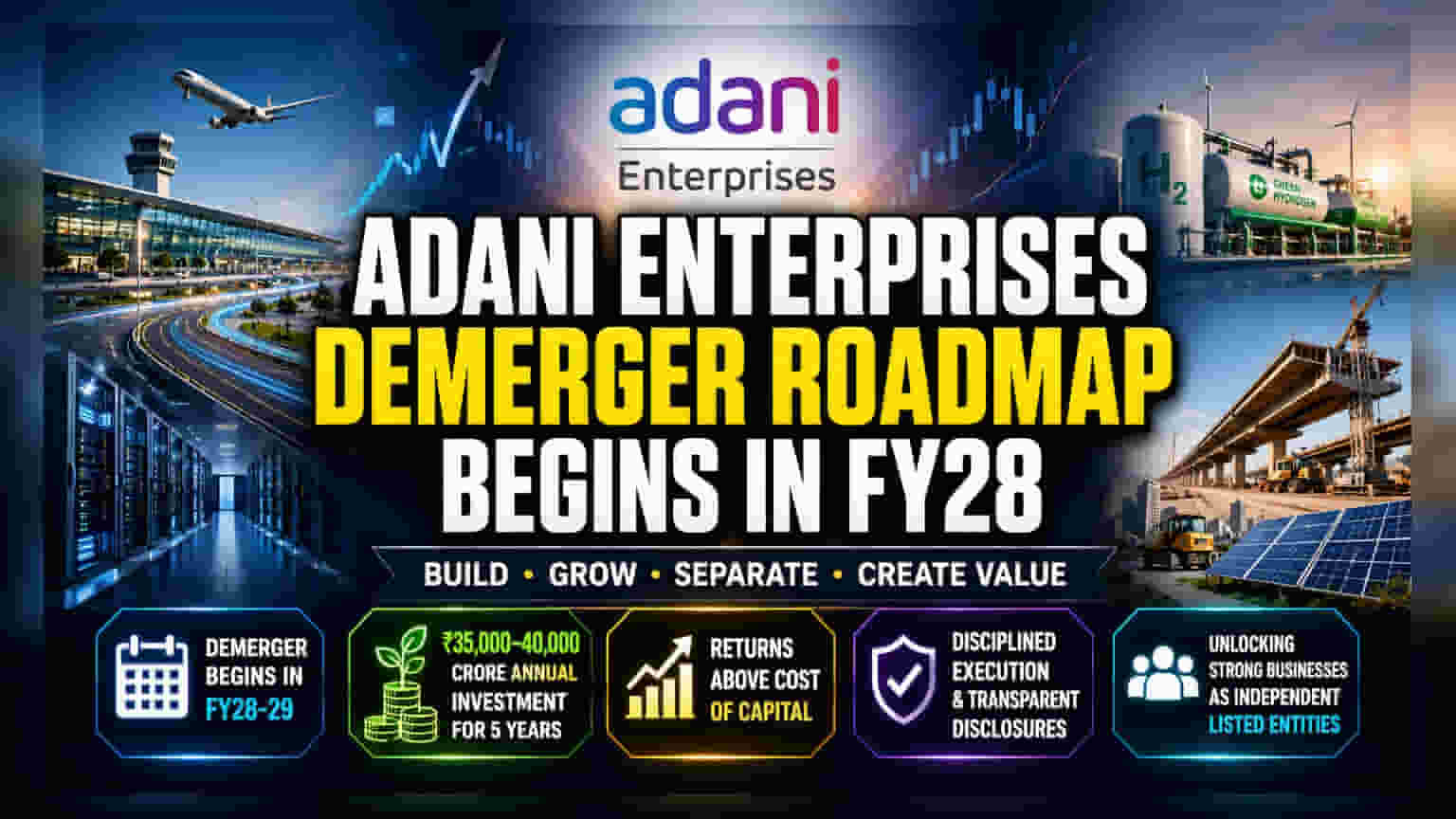
Adani Enterprises (AEL) has announced plans to spin off its incubated businesses, such as airports and data centers, into separate entities starting in fiscal year 2028. The company is also set to invest ₹35,000-40,000 crore annually over the next five years. This strategy marks a pivot in the company’s capital allocation as it matures its infrastructure ventures.
What Happened
Adani Enterprises (AEL) has outlined a roadmap to demerge its incubated businesses beginning in the fiscal year 2028. The company currently functions as the group's incubator, developing large-scale projects in infrastructure and utility sectors before they reach a stage where they can operate as independent, listed entities. During the annual general meeting, management confirmed that this process is expected to begin in the FY28-29 period.
The Business Builder Model
Adani Enterprises operates a unique model where it nurtures new business ventures in fields like airports, road construction, data centers, and green hydrogen. Once these businesses achieve operational stability and scale, they are separated from the parent company. This strategy allows the incubated projects to eventually stand on their own as independent companies. For investors, this structure often serves as a way to gain exposure to early-stage growth projects within the Adani ecosystem, which are later unlocked as standalone investments.
Capital Allocation Strategy
The company has committed to a large investment plan, earmarking ₹35,000-40,000 crore annually for the next five years to fuel growth. This spending is focused on expanding its portfolio of infrastructure and utility assets. Management has emphasized that they are strictly focusing on projects where the projected returns are expected to exceed the cost of capital. This is a critical financial metric for investors to watch, as heavy spending in infrastructure often requires significant debt. Maintaining a return on assets that stays above the cost of capital is essential for long-term financial health and shareholder value.
Why Investors Are Watching
The announcement of the demerger timeline provides clarity to shareholders regarding the company's long-term structure. However, the success of this strategy relies heavily on the company's ability to execute large projects on time and within budget. Infrastructure development involves high capital costs, and investors typically keep a close eye on how such expansion impacts the company's overall debt levels and cash flow. The management has also addressed concerns regarding recent stock price volatility, reiterating a commitment to transparency and timely disclosure of material information to the market.
What Investors Should Track Next
The most important monitorable for investors will be the specific details of which business units are selected for the initial demerger and the timing of these spin-offs. Furthermore, investors will likely track the company's ability to manage its debt-to-equity ratio while maintaining the planned pace of capital spending. Financial updates in upcoming quarterly results regarding the return on invested capital will provide a clearer picture of whether the aggressive expansion strategy is delivering the promised results.