

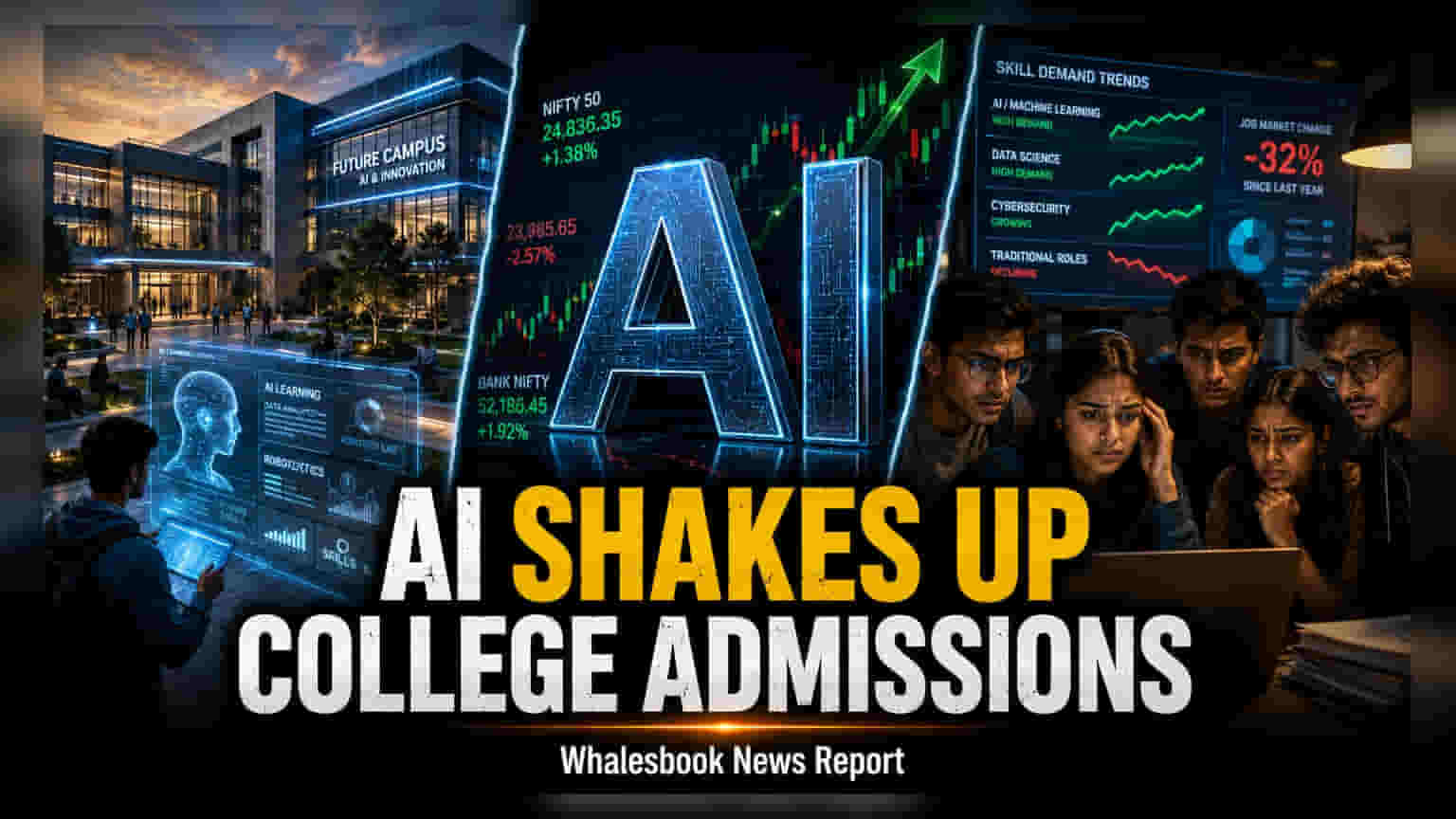
India's engineering education model is evolving as artificial intelligence reshapes employer requirements. Companies now prioritize practical AI literacy and problem-solving skills over traditional academic records. For students and families, evaluating curriculum relevance and industry partnerships has become more important than relying solely on legacy college rankings.
Detailed Coverage
The traditional path for Indian engineering students—securing a seat at a top-ranked institution followed by a standard campus placement—is undergoing a major transition. As artificial intelligence moves from an experimental technology to a core business tool, the expectations of recruiters across sectors like manufacturing, finance, and logistics are changing rapidly.
Evolving Employer Priorities
Modern employers are increasingly moving away from hiring based strictly on theoretical knowledge. With the rise of Global Capability Centers (GCCs) across India, companies are actively searching for graduates who can bridge the gap between academic theory and real-world application. These organizations are building specialized teams for cybersecurity, data analytics, and AI development, necessitating a workforce that is comfortable with automation and data-driven decision-making.
Industry experts indicate that the shift is already reflecting in recruitment processes. Recruiters are now placing higher weightage on a student's ability to utilize AI tools to automate workflows and solve complex business problems. This change means that academic performance, while still important, is being viewed alongside practical portfolios, internship experiences, and exposure to emerging technologies.
Strategic Choices for Students
For prospective students and their families, the approach to selecting an engineering college is becoming more complex. The historical focus on placement records and college brand names is increasingly being balanced with detailed inquiries into curriculum structure. Today, the focus is on whether a college provides access to hands-on industry projects, specialized faculty, and direct partnerships with technology firms. Institutions that fail to update their syllabus to include AI as a core competency may find their graduates at a disadvantage in the long-term job market.
Economic Impact and Skills Gap
Data from the World Economic Forum suggests that a significant portion of global workforce skills will undergo transformation by 2030, largely driven by AI adoption. In India, where the IT and services sector serves as a massive employment engine, this transition is particularly critical. The challenge for educational institutions lies in the speed of these changes; industry technology often evolves faster than traditional university curriculum approval processes.
Colleges that are successfully navigating this transition are those creating interdisciplinary programs where AI is embedded across various engineering streams, from mechanical to civil. This shift is also leading to the emergence of specialized, AI-focused educational initiatives. For investors and market observers, the trend indicates a growing divide between institutions that adapt to these shifts and those that remain tethered to outdated models. The next few years will likely see a clearer separation in placement outcomes and career success between graduates from forward-looking institutions and those who lack exposure to these critical new-age skills.