

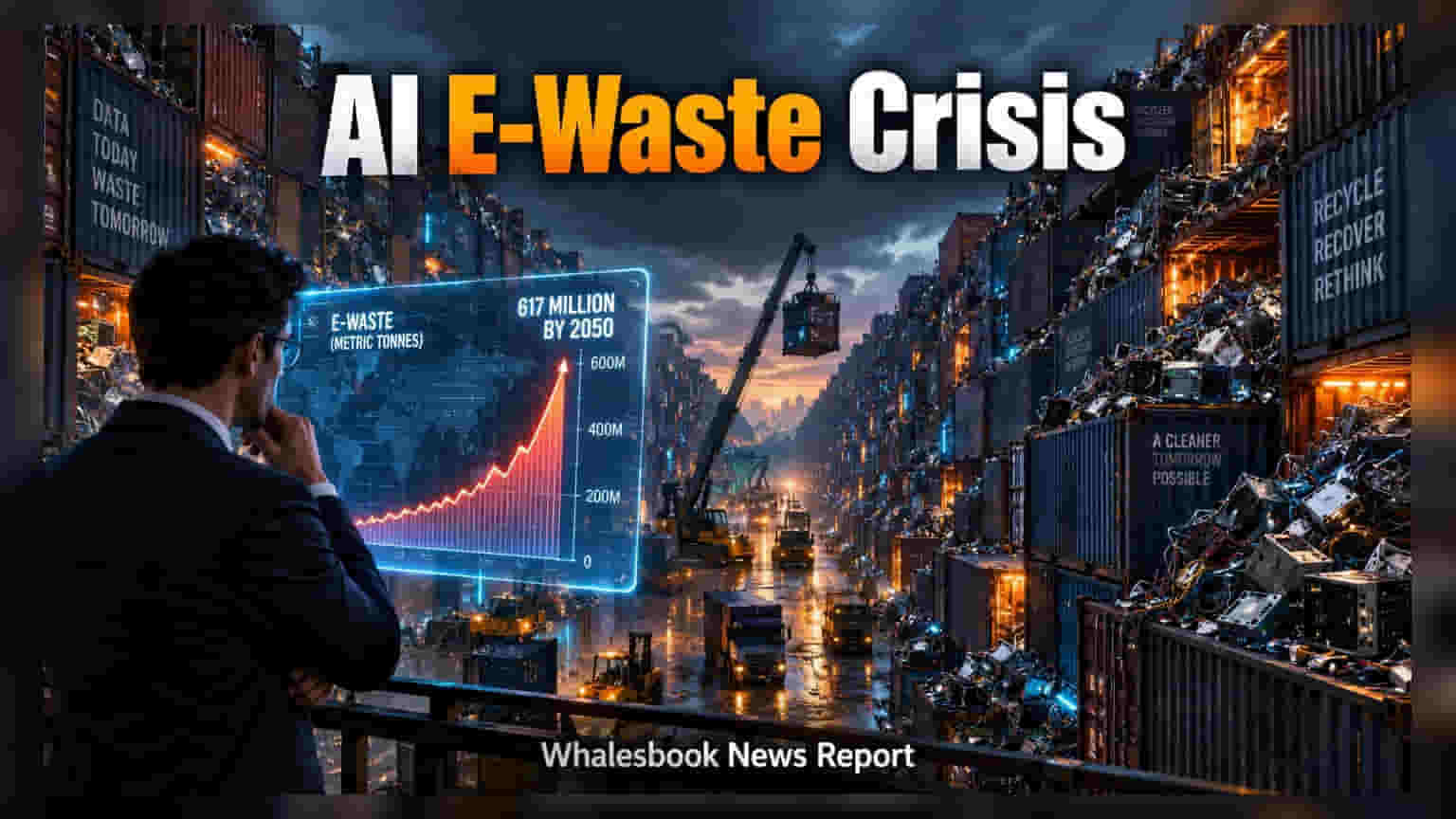
A report from the Basel Action Network warns that rapid AI growth could create 617 million metric tonnes of e-waste by 2050. This figure includes servers, cooling systems, and power infrastructure. For investors, this trend signals a looming sustainability cost and potential regulatory pressure for data center operators and technology companies.
The rapid deployment of artificial intelligence infrastructure is creating a massive, long-term waste management challenge. According to a new analysis by the Basel Action Network (BAN), the volume of retired hardware associated with the global AI boom could reach between 395 million and 617 million metric tonnes by 2050. To put this scale in perspective, the upper estimate would fill 23 million large shipping containers, enough to form a chain that could circle the Earth multiple times.
Historically, market analysis regarding data center hardware focused primarily on computing chips like GPUs and central servers. The BAN report broadens this scope to include the industrial-scale infrastructure required to support high-performance AI, such as advanced liquid cooling systems, power distribution units, and massive networking hardware. By including this supporting equipment, the annual e-waste output is projected to rise to between 8.6 million and 13.1 million metric tonnes.
For investors, this research highlights a significant operational and ESG (Environmental, Social, and Governance) risk for companies rapidly building out data center capacity. As current global recycling capacity handles less than 25% of electronic waste, data center operators may face increasing pressure to adopt circular economy practices. This involves managing the full lifecycle of their hardware, from procurement to decommissioning. Failure to properly manage the disposal of hazardous materials found in high-density chips and power components could lead to regulatory scrutiny and increased compliance costs.
While the AI sector continues to see aggressive capital investment, the physical footprint of this expansion is now becoming a point of concern. Companies that integrate end-of-life planning and recycling into their data center strategies may be better positioned to handle future waste regulations. Conversely, those that ignore the sustainability aspect of their hardware lifecycles could face rising costs if disposal policies become stricter.
This trend also presents a growth opportunity for specialized waste management and recycling companies capable of handling industrial-grade electronic equipment. As the sector matures, the ability to recover high-value rare earth metals and components will likely become a key indicator of operational efficiency. Investors tracking the data center space should monitor whether companies provide transparent details on their hardware disposal policies, recycling partnerships, and long-term sustainability commitments in their annual ESG disclosures.