

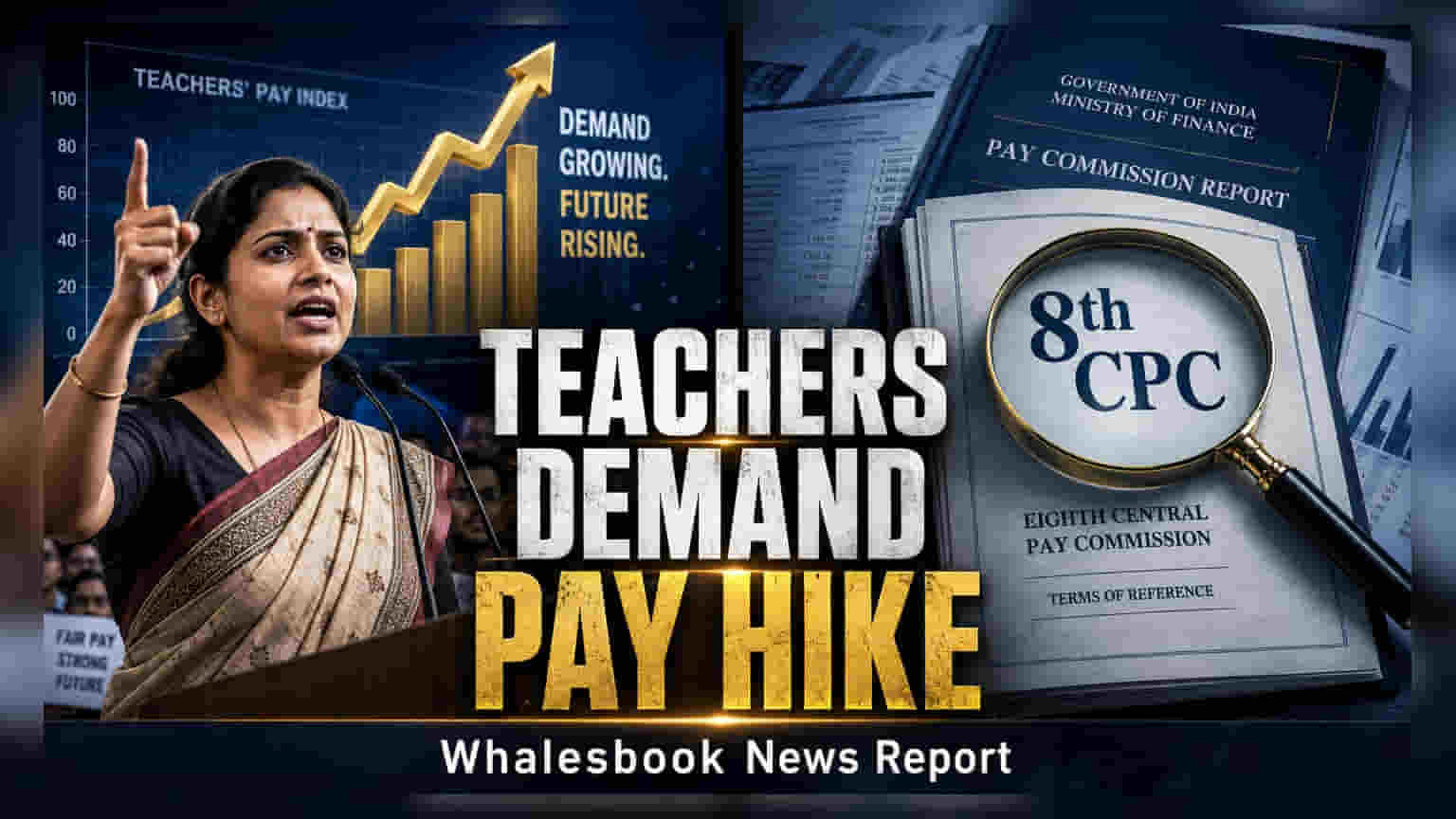
The Pragatisheel Shikshak Nyaya Manch has formally submitted a list of demands, including a minimum basic pay hike and restoration of the Old Pension Scheme, to the 8th Central Pay Commission. Investors track these developments for their potential impact on the national fiscal budget and government expenditure patterns, which can influence broader economic sentiment.
The Pragatisheel Shikshak Nyaya Manch (PSNM), representing Central Government teachers, has formally presented a comprehensive set of demands to the 8th Central Pay Commission (8th CPC). The submission marks a significant step in the ongoing consultation process as the commission evaluates compensation structures for the central government workforce.
Among the primary requests, the union has proposed a new minimum basic pay of Rs 47,210 per month. The proposal also includes a 6% annual increment and a fitment factor of 2.62. These figures are part of a broader push to standardize service conditions across the country. Additionally, the union has advocated for the restoration of the Old Pension Scheme (OPS) or an equivalent structure, along with a uniform retirement age of 65 years for teachers across primary, secondary, and university levels.
Impact on Government Finances
While these demands are specific to the teaching community, the outcome of the 8th Central Pay Commission holds broader importance for the Indian economy. When the government revises salary and pension structures, it leads to a significant increase in the national wage bill. For investors and market analysts, this translates into potential pressure on the government’s fiscal budget. Large increases in non-productive expenditure, such as salaries and pensions, can limit the funds available for capital investment, such as infrastructure development, or influence the government's borrowing plans.
Furthermore, economists often monitor large-scale government pay revisions for their impact on domestic inflation. Higher disposable income among millions of government employees can increase consumer demand, which may influence price trends in the wider market. Consequently, the progress of the 8th CPC is a key indicator for understanding the government's future spending flexibility.
Other Proposed Reforms
In addition to basic pay and pensions, the union has requested structural changes to employment benefits. This includes a revamped leave policy, such as 30 days of earned leave, 20 days of medical leave, and a five-day work week for government school teachers. The union has also sought an increase in the Earned Leave encashment limit from 300 to 400 days.
Other allowances, such as House Rent Allowance (HRA) and Transport Allowance, have also been targeted for revision, with requests to link them more closely to Dearness Allowance levels. Additionally, the union proposed increasing the Child Education Allowance to a minimum of Rs 7,000 per month and requested an upgraded insurance coverage of up to Rs 2 crore for employees.
The 8th Central Pay Commission is currently in its consultation phase, gathering feedback from various unions and stakeholders. There is no direct link between these administrative discussions and the performance of individual stocks, as this is a policy matter affecting government operations. The next critical update for observers will be the final recommendations of the commission, which will detail the actual impact on the central government’s exchequer.