

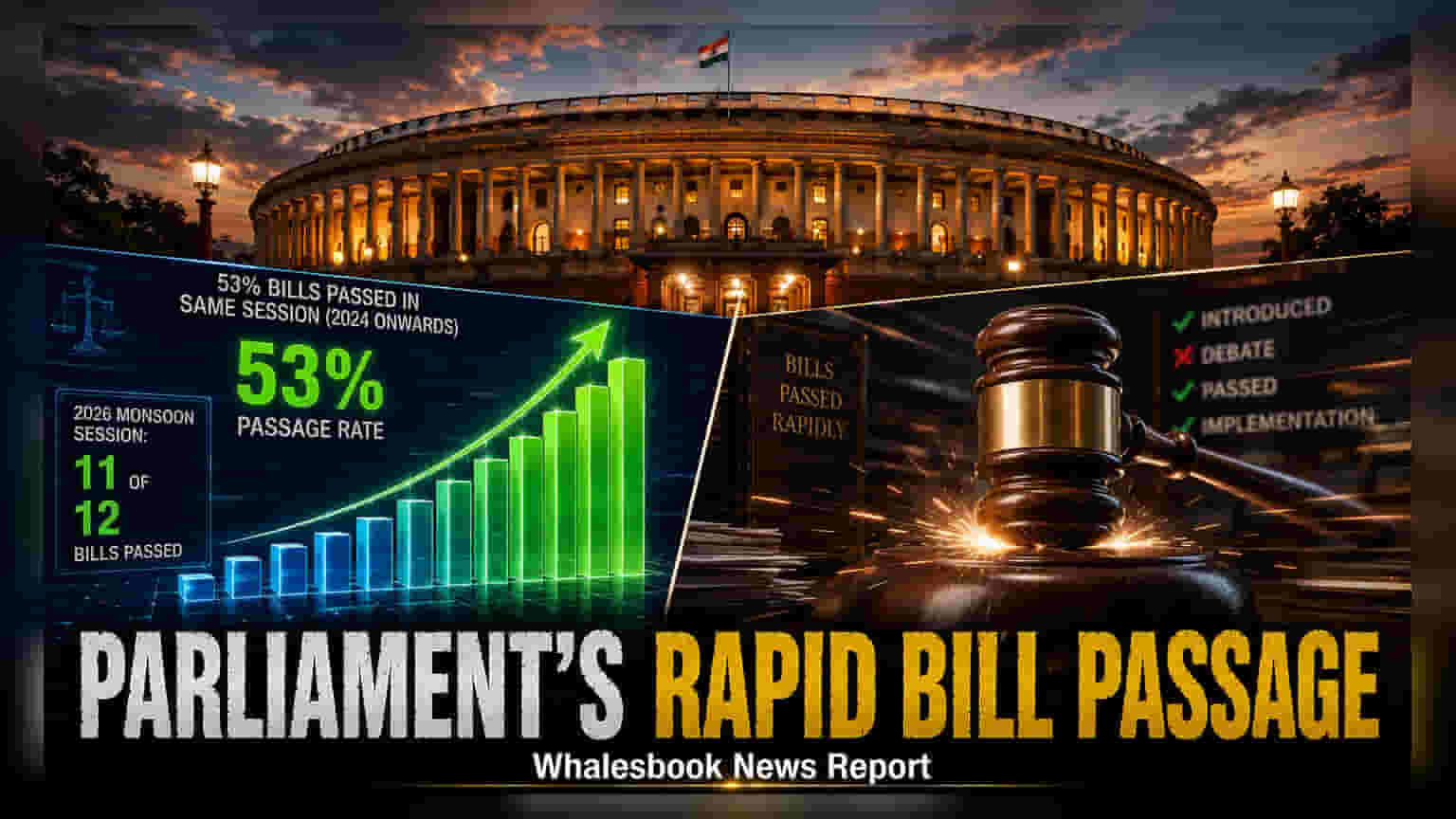
Data from PRS Legislative Research shows that 53% of bills introduced in the 18th Lok Sabha were passed in the same session. While this indicates rapid legislative output, the reduced time for debate and low parliamentary functioning raise questions about policy scrutiny for businesses and investors.
The legislative pace in the 18th Lok Sabha has shifted significantly, with a growing number of bills being passed during the same session in which they were introduced. According to analysis from PRS Legislative Research, 53% of all bills introduced since 2024 have been cleared in their introductory session. This marks a notable acceleration in lawmaking speed compared to previous parliamentary terms.
The trend toward faster legislative passage became more pronounced in recent sessions. During the 2026 Monsoon Session, which concluded in August, 11 of the 12 introduced bills were passed before the session ended. This rapid pace stands in contrast to the earlier months of the 18th Lok Sabha, which saw a slower start to legislative business.
For investors and corporate stakeholders, the speed of legislation carries two sides. On one hand, faster passage can mean quicker implementation of economic reforms, infrastructure projects, and regulatory updates, which can reduce the wait time for policy clarity. On the other hand, the trend toward rapid passage—often with limited or no debate—can impact the depth of stakeholder consultation and scrutiny.
The Monsoon Session of 2026 serves as an example, where nine bills were passed without any debate. When complex economic or sectoral laws are passed without extensive review, there is a risk that they may require later amendments or result in unintended regulatory hurdles for businesses. The quality of secondary legislation—the specific rules and guidelines framed under these laws—becomes the next important monitorable for industries affected by these policies.
While legislative output has remained high, the overall productivity of the Lok Sabha has faced challenges. The recent Monsoon Session functioned for only 15% of its scheduled time due to frequent disruptions. Furthermore, Question Hour, which is a key mechanism for legislative oversight and gathering information on government actions, operated for only 1% of its allocated time.
The combination of rapid lawmaking and low parliamentary functioning time creates a unique environment for the Indian economy. Investors often rely on detailed parliamentary discussions to gauge the government's stance on key sectors, such as banking, taxation, and manufacturing. With limited debate occurring on the floor of the House, the market now looks to government notifications, ministerial statements, and official rulebooks to understand the fine print of new regulations.