

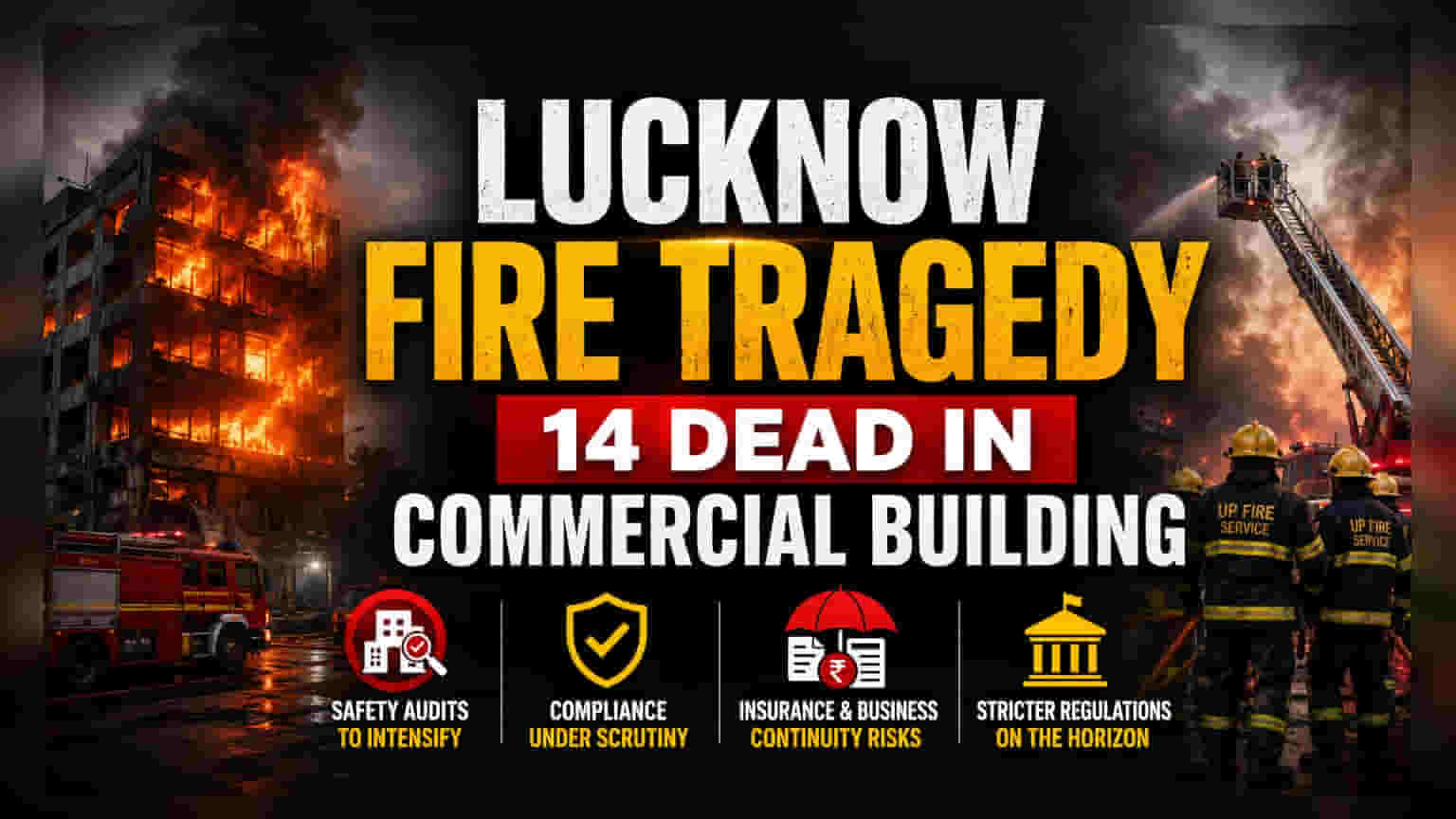
A tragic fire at a commercial building in Lucknow has claimed 14 lives, including many students. The incident highlights critical safety risks in mixed-use commercial properties, which may lead to stricter regulatory audits and increased compliance requirements for businesses and landlords across Indian cities.
What Happened
A devastating fire broke out in a three-story commercial building in Lucknow, Uttar Pradesh, on Monday, resulting in the deaths of at least 14 individuals. The structure, which served as a hub for various activities, housed an animation studio, a library, and a veterinary clinic. Emergency services faced significant challenges containing the blaze, which originated on the middle floor and was fueled by dense smoke that complicated rescue operations. According to official reports, firefighters had to breach walls to access the interior and locate survivors.
Impact on Commercial Real Estate Compliance
While this is a tragedy involving human lives, such incidents often trigger a cycle of regulatory action in the Indian real estate and commercial sector. Following fire-related disasters, local municipal corporations and state fire departments frequently initiate widespread safety audits. For investors and business owners, this often translates to increased scrutiny of occupancy certificates, fire safety compliance, and building exit norms. Buildings failing these audits may face temporary closures, operational restrictions, or requirements for immediate capital expenditure to upgrade fire safety systems.
Business Continuity and Insurance Risks
Businesses operating in older or mixed-use commercial buildings may experience increased pressure regarding insurance premiums and operational continuity. If regulatory bodies mandate stricter safety adherence, tenants might face sudden disruptions or demands from landlords to upgrade infrastructure. Companies that rely on high footfall, such as training institutes, educational centers, or retail outlets, must monitor whether their facilities meet updated safety standards to avoid legal penalties or business suspension.
The Broader Regulatory Context
In India, the frequency of fires in commercial establishments has historically pressured authorities to enforce stricter building codes. Investors in the real estate sector typically track these events because they can impact the valuation and occupancy potential of commercial assets. When safety standards are tightened, older assets that require significant retrofitting may see their net asset value or rental yield affected if the cost of compliance outweighs the benefit.
What To Watch Next
Investors and business stakeholders should monitor upcoming government circulars regarding fire safety in Lucknow and potentially across Uttar Pradesh. Key indicators to track include: the release of any mandatory fire safety audit directives, potential crackdowns on properties lacking proper occupancy permits, and any industry-wide updates from municipal authorities regarding fire-fighting infrastructure requirements for commercial complexes. Compliance with these evolving safety norms will likely become a non-negotiable factor for operational stability in urban commercial spaces.