

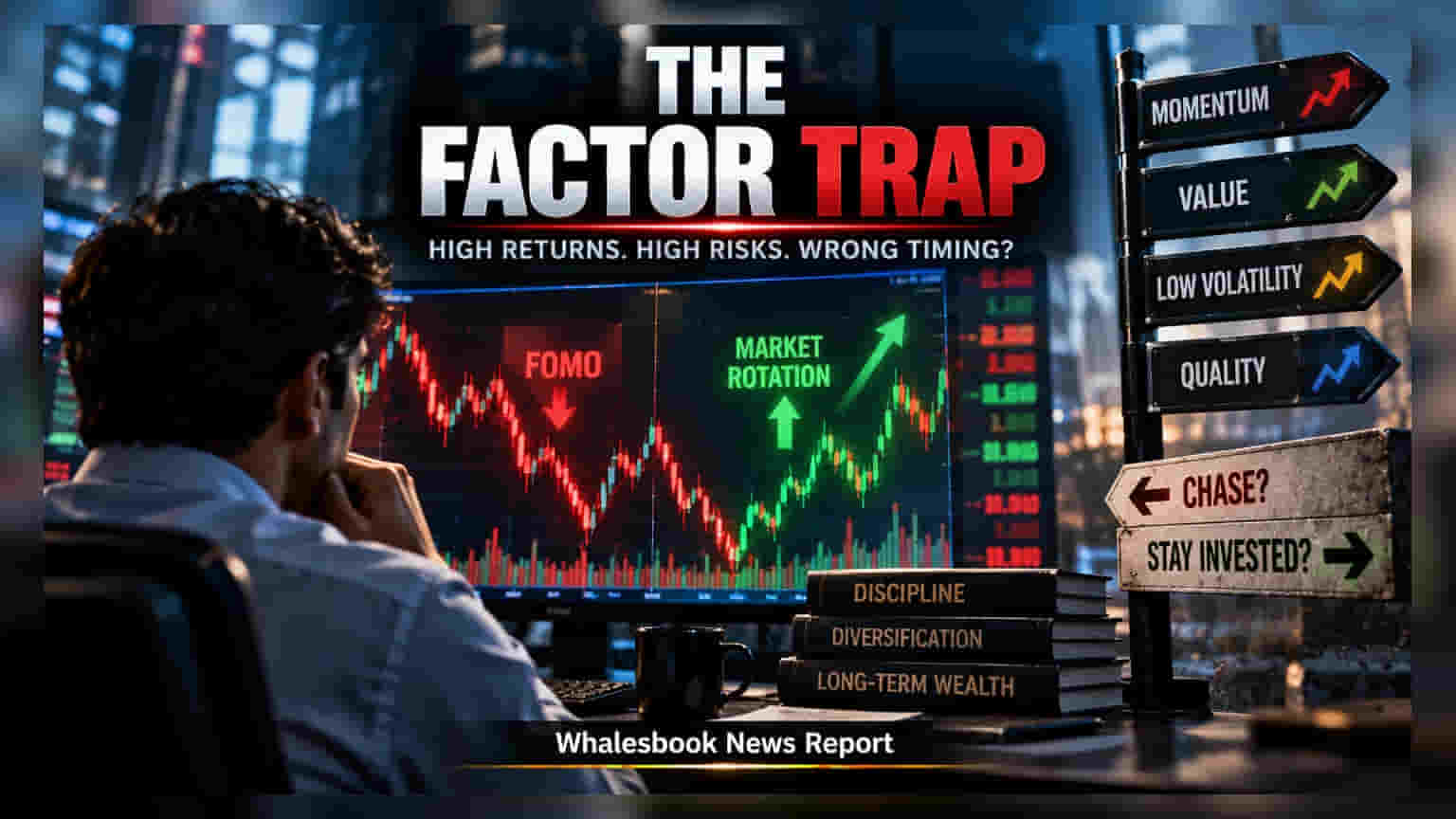
Chasing high-performing factor indices often leads to poor portfolio results because market trends rotate. Data from indices like the Nifty 200 Momentum 30 shows that even top performers experience sharp pullbacks, making tactical timing difficult for most investors.
Many Indian investors are turning to factor-based investing, often called smart-beta indices, to try and outperform standard market benchmarks. These funds select stocks based on specific traits—such as momentum, value, or low volatility—rather than just company size. While this approach offers a different way to diversify, it also carries a significant risk: the tendency to chase recent market winners. Relying on past returns to pick these funds can be counterproductive because market leadership often rotates.
The Nifty 200 Momentum 30 Index provides a clear example of this volatility. After delivering a 53 percent return in 2021, the index fell 5 percent in 2022. While it saw strong gains in 2023 and 2024, it experienced another 5 percent decline in 2025. These erratic swings illustrate why trying to time the market by jumping into a factor only after it has performed well is difficult. By the time an investor shifts capital into a specific factor, the cycle may have already peaked, leaving them exposed to a market correction.
The Trap of Treating Passive Funds as Active Bets
Some investors treat factor funds as tools for active market timing, moving money between momentum, value, and other strategies based on recent headlines. Chintan Haria of ICICI Prudential Asset Management Company has noted that factor cycles can persist for several years, which makes the exact point of transition between them extremely hard to predict. Trying to catch the trend often transforms what should be a passive, long-term investment into an active bet, which frequently happens at the wrong time.
It is also important to understand how these indices differ from traditional market indices like the Nifty 50. Standard indices rely on the total market value of companies, while factor indices are built to favor specific characteristics. This creates natural periods of underperformance. For instance, value-focused indices can underperform the broader market for years before recovering, as seen in past declines of 18 percent and 9 percent in 2018 and 2019.
For investors, the utility of a factor fund depends on having a long-term perspective rather than reacting to the most recent annual performance numbers. Sustaining through periods of underperformance requires patience and a clear understanding that no single factor will consistently lead the market. The next step for investors is to focus on whether the specific factor aligns with their long-term financial goals, rather than simply looking for the highest recent return.