 Whalesbook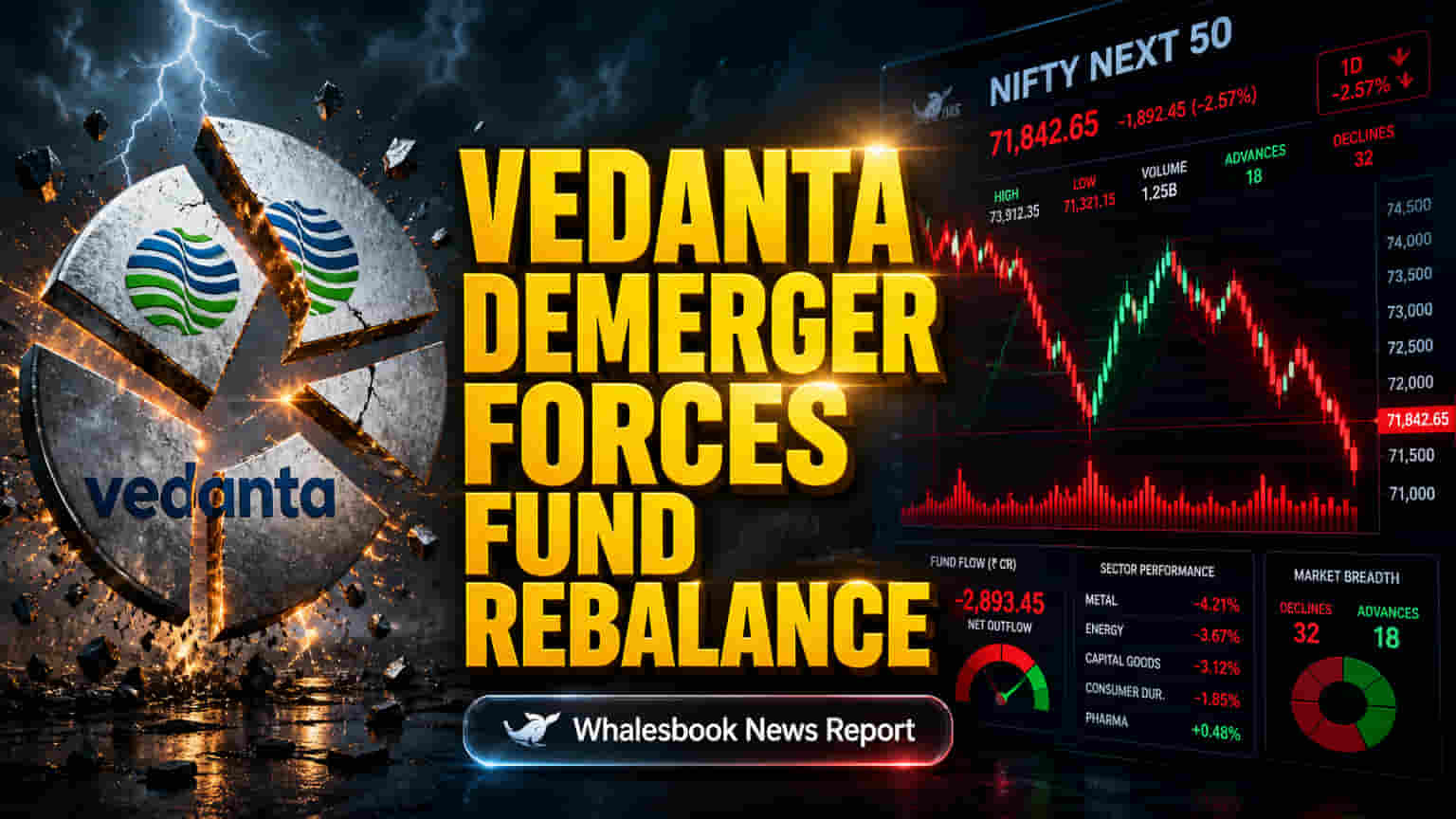


Index Funds Face Big Adjustments
Vedanta Limited's split into five separate listed companies marks a major shift. Investors in index funds face significant portfolio changes. Vedanta's weighting in the Nifty Next 50 index has been reduced, forcing exchange-traded funds (ETFs) and index funds to sell shares to match the benchmark. This large sale was partly absorbed during a special trading session on April 30, 2026, where Vedanta's price dropped sharply to about ₹289.50 from over ₹770.
Investors are now in a four-to-eight-week period before the four demerged businesses—Vedanta Aluminium, Vedanta Power, Vedanta Oil & Gas, and Vedanta Steel & Ferrous—officially list. During this time, these new entities appear in indices but cannot be traded, affecting how funds track their benchmarks. While their value can be estimated for fund Net Asset Value (NAV) calculations, the inability to trade them creates potential tracking differences for passive funds.
New Opportunities for Active Investors
At the same time, active investors are reassessing their Vedanta holdings. The main Vedanta entity now focuses mainly on its stake in Hindustan Zinc. This split allows active managers to evaluate the demerged companies on their own merits. For example, Vedanta Aluminium can now be directly compared with competitors like Hindalco Industries Ltd. and National Aluminium Co Ltd. (Nalco), potentially leading to a "pure-play premium" as these companies build their own trading records.
Vedanta Aluminium is estimated to be valued at over ₹400 per share upon listing. This change allows investors to invest based on individual business performance, growth, and margins, rather than a diversified group structure. Vedanta's total market value, previously around $27 billion, is expected to grow as the five entities are valued separately. As of April 2026, Vedanta Limited's market capitalization was about ₹1.15 trillion, with a Trailing Twelve Months (TTM) P/E ratio around 15.4.
Risks and Challenges Remain
Despite the demerger's goals, risks remain. Vedanta Resources, the parent company, has a history of high debt. While some new entities like Oil & Gas and Iron & Steel are expected to start with little net debt, questions linger about the financial health of the remaining structures and their ability to meet group debt obligations. The parent company's plan to hold up to 50% of each demerged firm could also impact their valuations and how they operate.
Breaking apart such a complex operation carries significant execution risk. The new companies will also face strong competition. Vedanta Aluminium, despite being India's largest producer, must compete with global firms. The company's past performance has been inconsistent, with sales growth of -2.28% over five years and concerns about interest costs. The current transition period adds volatility for passive funds, and active investors must carefully judge if these new companies can perform well on their own.
What's Next for Vedanta's New Companies
The new Vedanta entities are expected to begin trading by mid-June 2026, pending final approvals from exchanges and SEBI. This restructuring aims to simplify Vedanta's structure, allowing each business to pursue its own growth and attract investors focused on specific sectors. The potential for "pure-play premiums" will depend on how well these companies perform as independent, listed entities.