

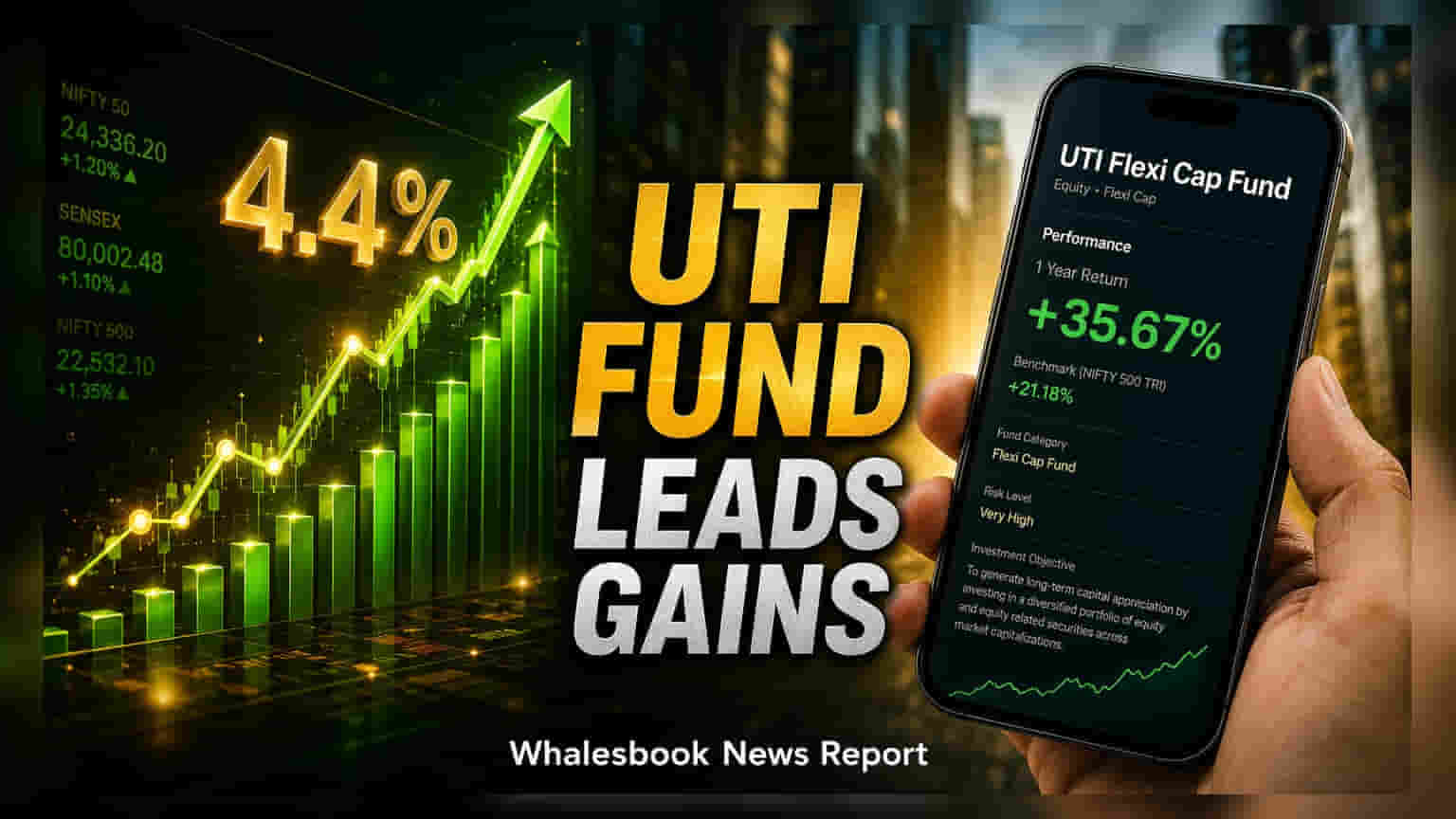
UTI Flexi Cap Fund recorded the highest returns among flexi-cap mutual funds with over Rs 1,500 crore in assets, delivering 4.4% in the last month. This performance outperformed its benchmark index, which saw a marginal decline. Investors should note that mutual fund rankings change across different timeframes, with other funds leading over six-month or three-year periods.
UTI Flexi Cap Fund has recorded the highest returns in the flexi-cap mutual fund category over the past month, delivering a gain of 4.4%. Data as of July 28, 2026, covering funds with assets under management of more than Rs 1,500 crore, shows this fund outperformed other prominent options in the segment. For comparison, the Motilal Oswal Flexi Cap Fund posted a 4.0% return, while the WOC Flexi Cap Fund delivered 2.2% during the same one-month period.
The fund’s recent performance is notable because it managed to outpace its benchmark index significantly. While the benchmark index saw a slight dip of 0.1% over the past month, the fund achieved a positive return of 4.4%, marking a difference of 4.5 percentage points. This gap between the fund's returns and the index suggests that the fund's specific investment choices in this period effectively shielded it from the benchmark's decline.
Mutual fund performance is often dynamic and can change depending on the timeframe examined by investors. While UTI Flexi Cap Fund topped the charts for the one-month period, different funds have demonstrated strength over longer durations. For instance, the ICICI Pru Flexicap Fund has shown lead performance over a six-month horizon with a return of 5.7%. Meanwhile, the Aditya Birla SL Flexi Cap Fund leads the one-year performance category with a 9.4% return.
Investors looking at longer-term wealth creation often prioritize three-year or five-year performance records over monthly fluctuations. In the three-year category, the Motilal Oswal Flexi Cap Fund has been a strong performer with a return of 18.0%. These variations across different periods highlight that short-term leadership can be temporary and may not reflect the long-term strategy of a fund manager. When evaluating these funds, investors may track the consistency of returns against market benchmarks over several years rather than focusing only on one-month or short-term gains.