

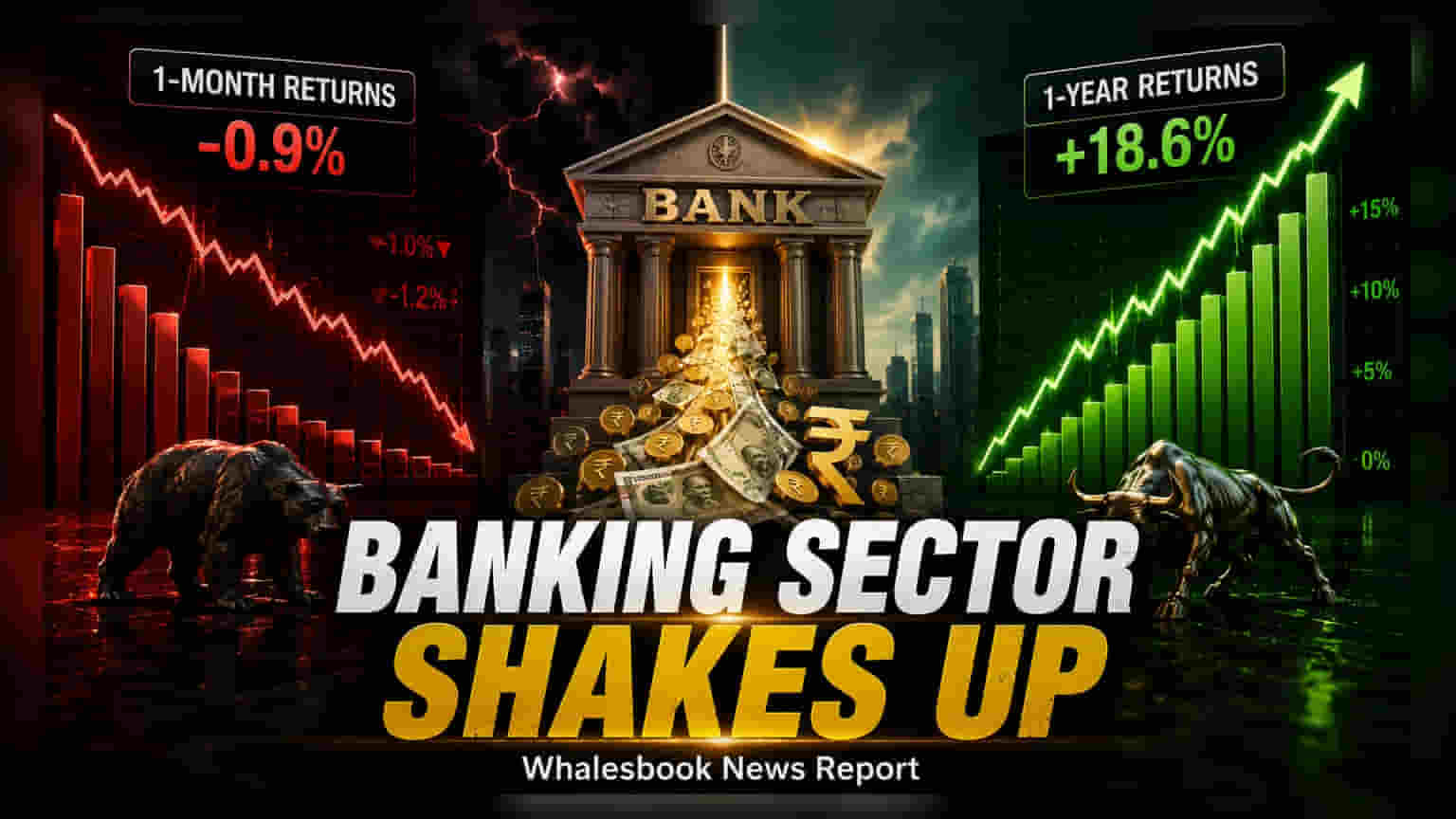
The Tata Banking & Financial Services Fund recorded a -0.9% return for the month ending August 10, 2026, yet outperformed several peers in the category. While this relative performance highlights its recent stability, investors should note the fund's 'Very High' risk rating and the inherent volatility of sector-specific investments.
The Tata Banking & Financial Services Fund has emerged as the relative leader among banking and financial services sector mutual funds over the one-month period ending August 10, 2026. Although the fund posted a negative return of -0.9%, this figure was stronger compared to several major competitors in the category. For context, data from the period shows peers such as the Mirae Asset Banking and Financial Services Fund and the Aditya Birla Sun Life Banking & Financial Services Fund recorded steeper declines of -1.0% and -1.2%, respectively.
Understanding Sectoral Fund Volatility
It is important for investors to interpret these short-term performance numbers carefully. Sectoral funds, by design, concentrate at least 80% of their assets in companies within a specific industry, such as banking and finance. This concentration means that if the broader banking index faces pressure, the fund’s performance is directly impacted. Because these funds do not have the flexibility to move money into other sectors to hedge against risks, they are classified as 'Very High' risk. A single-month return, whether positive or negative, reflects the immediate sentiment of the financial sector rather than the fund's long-term business strategy or fundamental health.
Fund Scale and Long-Term Objectives
As of June 30, 2026, the Tata Banking & Financial Services Fund manages an asset base of approximately ₹3,170 crore. While comparing this to larger peers—such as the SBI Banking & Financial Services Fund, which holds over ₹10,000 crore in assets—provides a sense of scale, size alone does not determine performance. The primary objective of the Tata scheme remains long-term capital appreciation. Financial experts consistently suggest that investors should evaluate these funds over a three-to-five-year horizon rather than focusing on monthly or quarterly fluctuations. A fund that leads the pack in one month may not necessarily be the strongest performer over a longer cycle.
Investor Monitorables
Investors currently holding or considering sectoral funds should remain aware of a few practical constraints. First, there is an exit load of 0.25% applied to redemptions made within 30 days of the investment, which is a cost factor for those looking to exit quickly. Second, performance metrics such as benchmark outperformance can vary significantly between the one-year and three-year periods. For example, while short-term returns are currently muted, long-term trends remain the primary indicator of how well the fund management team handles sector-specific cycles. The most useful approach for investors is to monitor the health of the underlying banking sector, interest rate trends, and the fund's ability to consistently beat its benchmark over multi-year periods, rather than reacting to short-term volatility.