

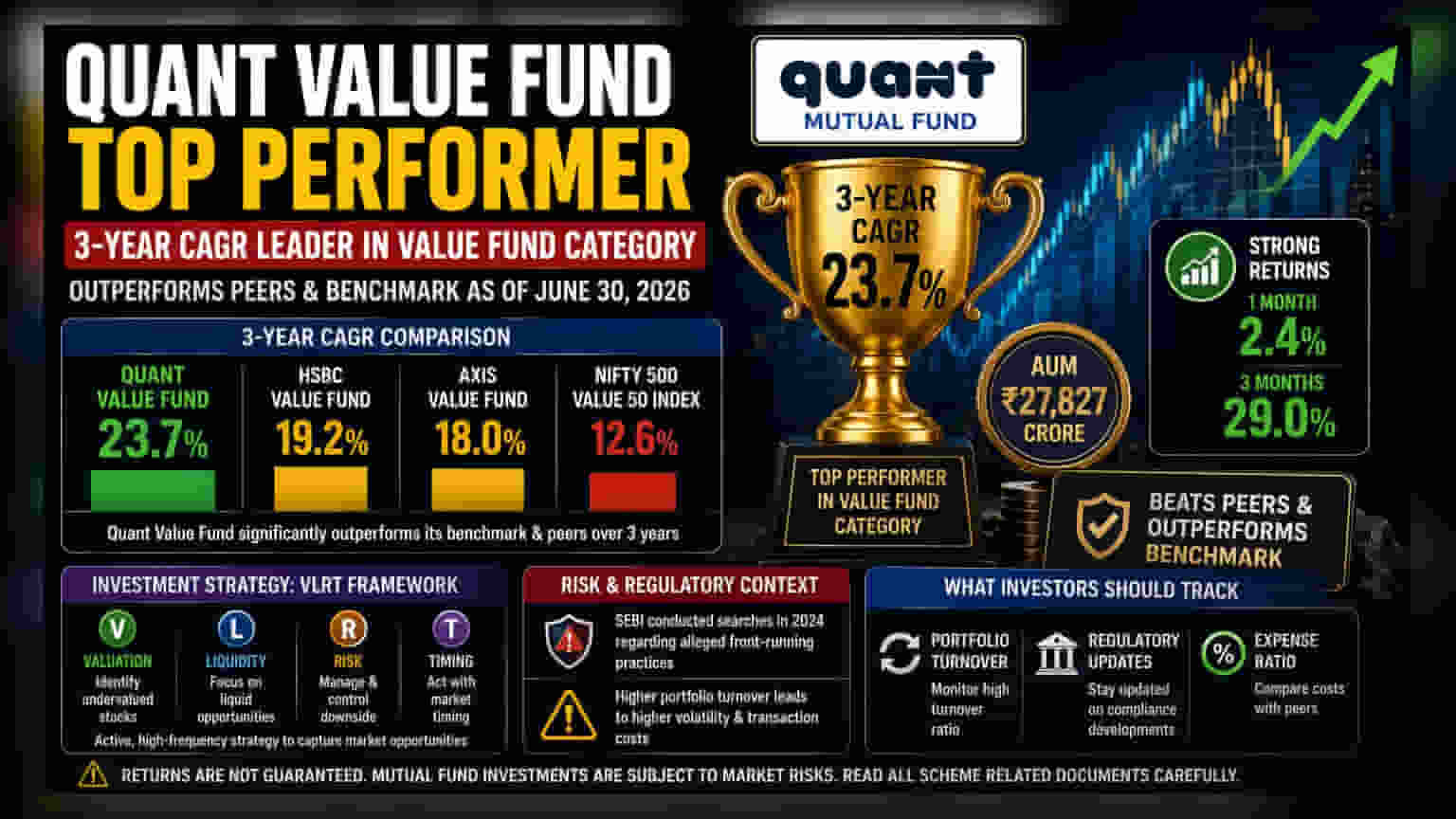
Quant Value Fund has delivered a 23.7% annual growth rate over the last three years, leading its category peers. While the fund has significantly beaten benchmark indices, investors should also weigh the fund’s active investment style and its history of regulatory inquiries.
What Happened
Quant Value Fund has emerged as the top performer in the value mutual fund category, recording a three-year compound annual growth rate (CAGR) of 23.7% as of June 30, 2026. This growth rate, which measures the annual return an investment earns over a specific period, has put the fund ahead of its direct competitors. Data indicates the fund has not only beaten its peer group but also significantly outperformed its benchmark index, which delivered much lower returns over the same three-year window.
Performance Against Peers
The fund’s performance stands out when compared to other major players in the value fund segment. According to industry data, while Quant Value Fund delivered 23.7%, other funds such as HSBC Value Fund and Axis Value Fund posted three-year returns of 19.2% and 18.0%, respectively. This gap highlights the fund's recent ability to capture market gains more effectively than some of its peers. The fund also showed strength in the short term, with a 2.4% return over the past month and a 29.0% gain over the last three months.
The Investment Strategy
Quant Mutual Fund is known for its distinct investment approach, often referred to as the 'VLRT' framework—Valuation, Liquidity, Risk, and Timing. This strategy involves active, high-frequency changes to the portfolio based on market conditions. While this approach has helped the fund achieve significant outperformance in bullish market phases, it also means the portfolio undergoes more frequent turnover compared to traditional buy-and-hold value funds. For investors, this higher activity level usually leads to greater volatility, meaning the value of the investment can fluctuate more sharply over short periods.
Risk And Regulatory Context
When evaluating a fund based on its returns, it is essential for investors to look at the broader business and regulatory context. Quant Mutual Fund has previously navigated regulatory inquiries, including searches by the Securities and Exchange Board of India (SEBI) in 2024 regarding alleged front-running practices. While the fund has continued its operations and delivered strong returns, such events are material to investors. It serves as a reminder to look beyond just the return figures and consider the governance, compliance track record, and the risks associated with an aggressive, high-churn investment style.
What Investors Should Track
Investors looking at this fund may want to monitor several key factors beyond past returns. First, track the fund's portfolio turnover ratio, which shows how often the manager buys and sells stocks. High turnover can lead to higher transaction costs. Second, keep an eye on any regulatory or compliance updates regarding the fund house, as this can affect investor confidence. Finally, compare the fund's expense ratio with its peers, as higher management fees can eat into returns over the long term. Returns are never guaranteed, and the fund's future performance will depend on the manager's ability to maintain this strategy in different market conditions.