

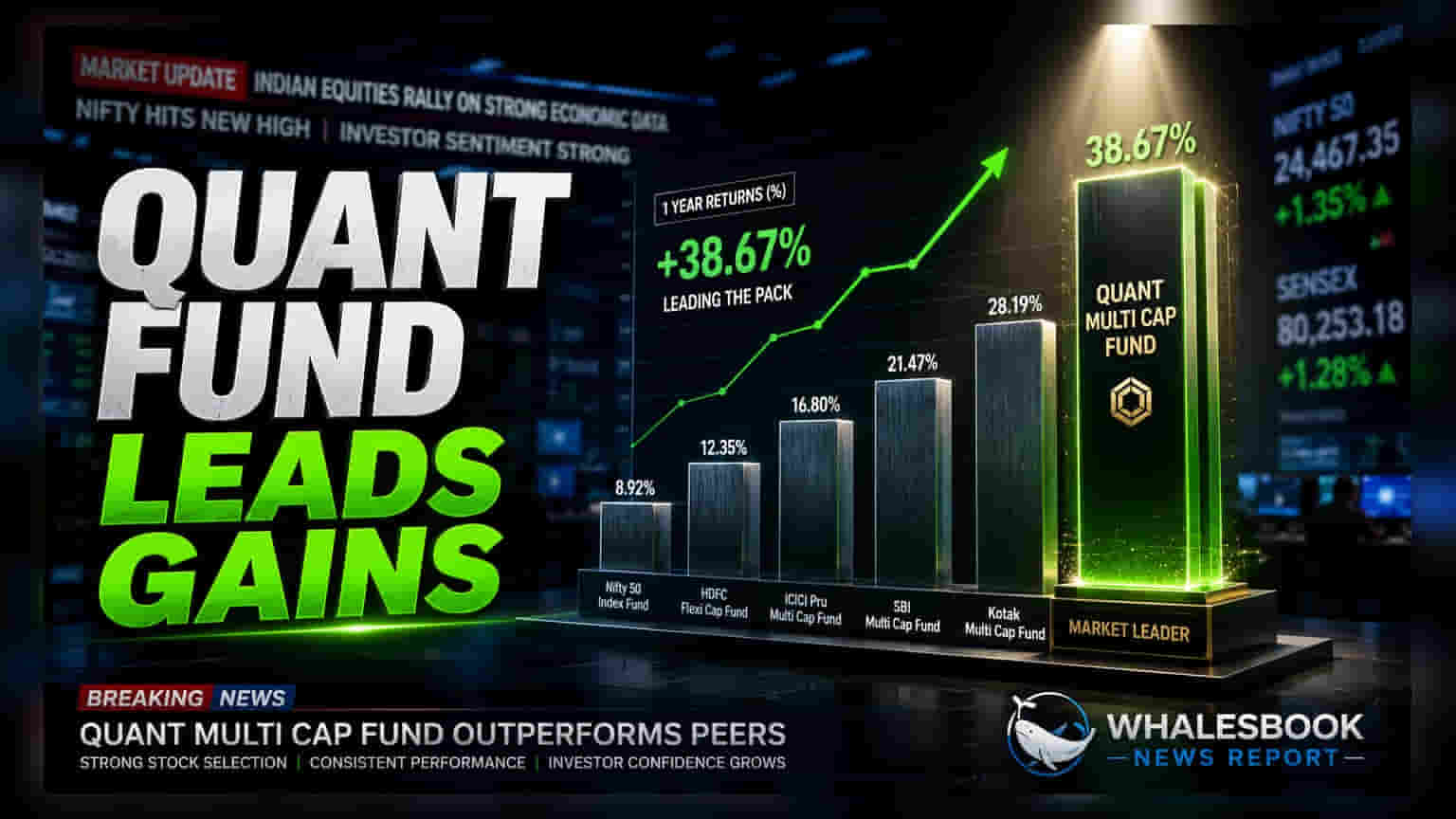
Quant Multi Cap Fund delivered a 7.8% return over the last six months, outperforming competitors like ICICI Pru Multicap Fund and LIC MF Multi Cap Fund. The fund has also shown a strong track record of beating its benchmark over one and three-year periods, reflecting its active management style in the multi-cap category.
Quant Multi Cap Fund has secured the top position among multi-cap mutual funds for the six-month period ending July 2, 2026, recording a 7.8% return. This performance notably exceeds the returns of key industry peers, such as ICICI Pru Multicap Fund and LIC MF Multi Cap Fund, which posted 5.2% and 4.8% gains, respectively. These figures are based on data from ACE MF for funds managing at least Rs 1,500 crore in assets.
Benchmark Outperformance Over Time
The fund’s ability to generate returns beyond its benchmark index remains a focal point for investors. Over the past year, Quant Multi Cap Fund achieved a 3.9% return compared to a negative 4.0% return from its benchmark, representing a performance gap of 7.8 percentage points. This trend of outpacing the index extends to the three-year horizon, where the fund delivered 12.5% against the benchmark's 9.2%. Such data indicates that the fund's internal strategy has successfully captured market opportunities that the broader index did not during these specific timeframes.
Comparing Strategies and Market Leadership
While Quant Multi Cap Fund demonstrates leadership in the six-month and three-month performance categories, investor preferences and fund strategies vary across the sector. For instance, while ICICI Pru Multicap Fund trailed in the six-month returns, it manages a significantly larger corpus of Rs 17,675.8 crore, making it a prominent player by size. Meanwhile, leadership is not static across all durations; LIC MF Multi Cap Fund recorded the highest one-month return of 6.6%, and HSBC Multi Cap Fund led the three-year category with a 20.3% return. These shifts highlight that different funds often perform differently depending on the specific investment horizon and market conditions.
Investors evaluating these funds may consider that short-term performance is often a result of specific sector allocations and active trading strategies. Because multi-cap funds are required to invest across large, mid, and small-cap stocks, the performance of these funds is highly sensitive to the relative movement of these market segments. Future performance will depend on how the fund manager continues to adjust allocations between these company sizes as market trends change. Investors should look at both the consistency of these returns over longer periods and the volatility the fund experienced to reach these gains.