

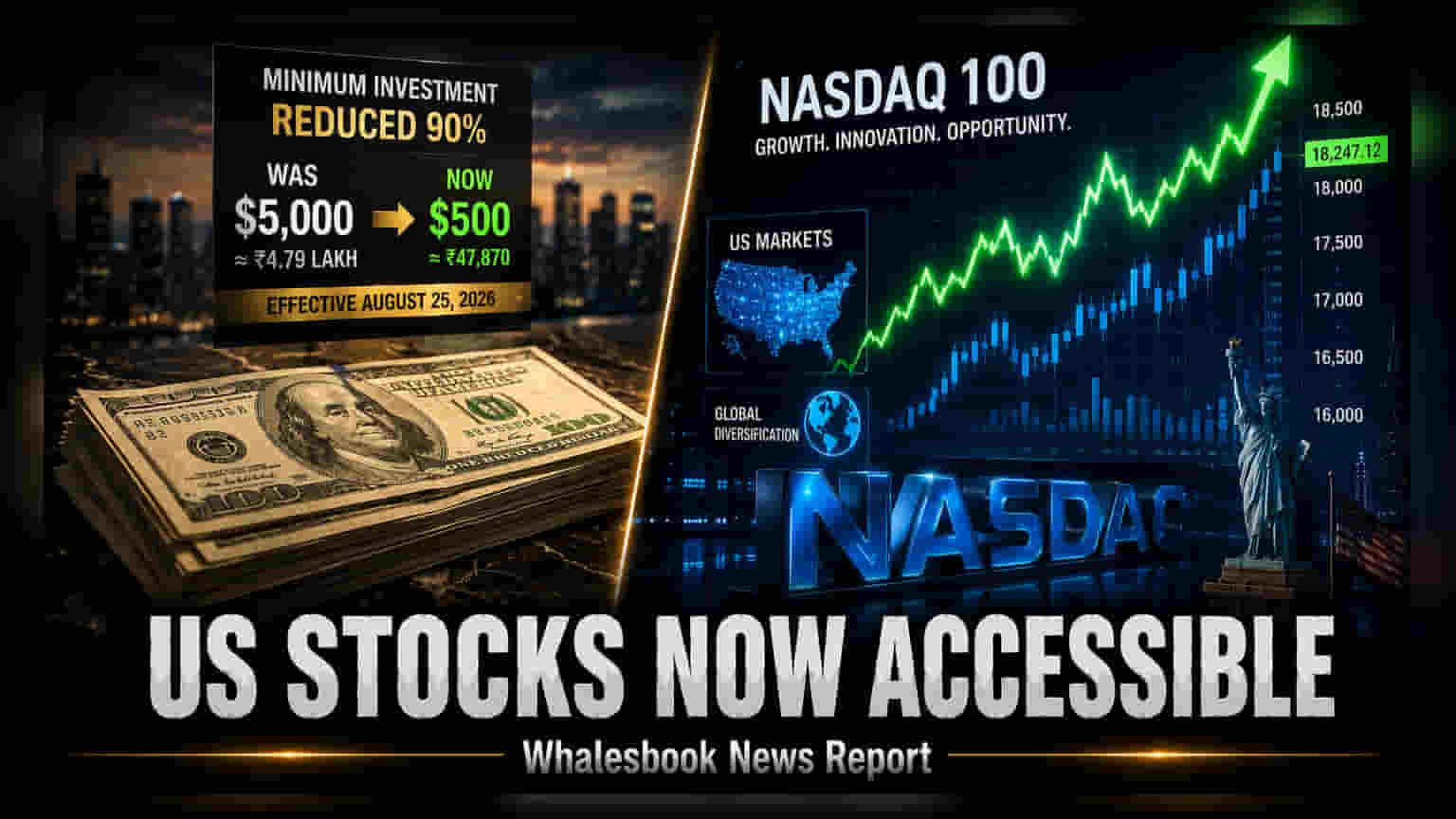
PPFAS GIFT has reduced the minimum investment for its S&P 500 and Nasdaq 100 Funds of Funds by 90%, cutting the entry barrier from $5,000 to $500. This change makes it easier for Indian retail investors to access US markets through GIFT City without needing a foreign brokerage account.
PPFAS GIFT has lowered the minimum investment threshold for two of its US-focused funds, the Parag Parikh IFSC S&P 500 Fund of Fund and the Parag Parikh IFSC Nasdaq 100 Fund of Fund. Effective August 25, 2026, the minimum initial investment has been reduced by 90%, dropping from $5,000 to $500.
This shift significantly lowers the financial barrier for investors who want to gain exposure to American indices. At current exchange rates, the entry requirement has decreased from approximately ₹4.79 lakh to roughly ₹47,870. The change is designed to make global portfolio diversification more achievable for retail investors who may not have been able to allocate large lump sums to international markets.
Why GIFT City Access Matters
These funds operate out of the International Financial Services Centre (IFSC) in GIFT City, Gujarat. This structure allows Indian investors to invest in US dollar-denominated assets directly. Because these funds are based in the IFSC, they operate under different regulations than standard Indian mutual funds. They are not restricted by the industry-wide overseas investment ceilings that have previously limited the availability of other international fund options in India. Additionally, investors do not need to open a complex foreign brokerage account to participate, as the entire process is handled within the GIFT City framework.
Understanding the Investment Risks
While the lower entry price makes these funds more accessible, the risks of investing in international markets remain unchanged. The primary risk is market volatility. Since these are passive funds that track the S&P 500 and Nasdaq 100, their performance is tied directly to the performance of these major US indices. If US stock markets face a downturn, the value of the investment will fall accordingly.
Currency risk is another factor investors must consider. Because the funds are denominated in US dollars, any change in the value of the Indian rupee against the dollar will affect the total returns for an Indian investor. If the rupee strengthens against the dollar, the investment value in rupee terms may decrease, even if the underlying US stocks perform well. Furthermore, the Nasdaq 100 fund has a high concentration in technology and growth sectors. This sector-specific focus can lead to steeper price swings compared to broader market indices like the S&P 500.
Investors looking to utilize this new, lower entry threshold may want to focus on their long-term goals and asset allocation. Since these funds track indices, they serve as a tool for passive global diversification rather than a way to beat the market. Tracking the performance of the underlying US indices and keeping an eye on currency trends will be the main factors for investors to follow moving forward.