

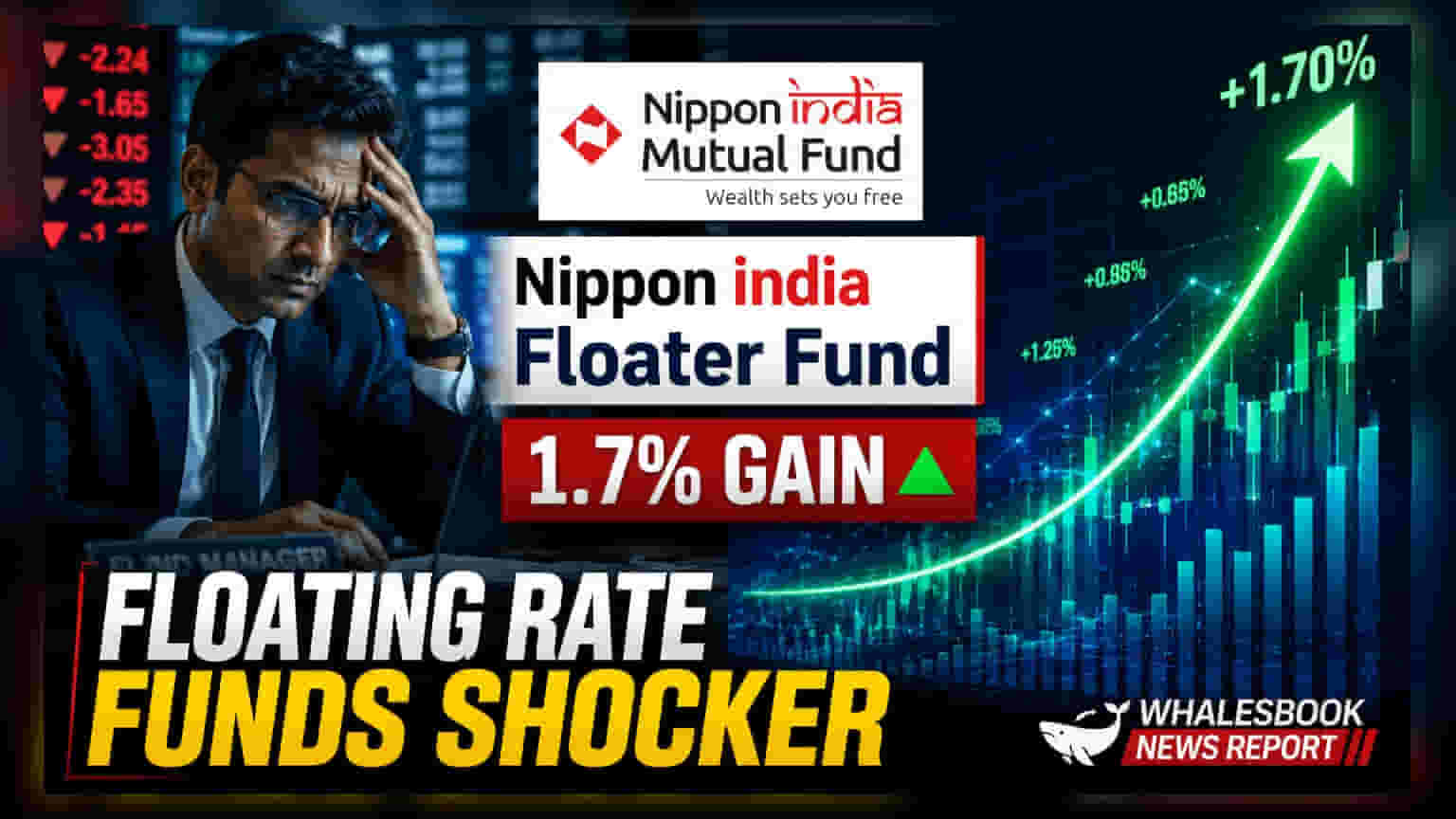
Nippon India Floater Fund posted a 1.7% gain in the past month, outperforming peers like Kotak and HDFC in the short term. While it leads current rankings, the fund trailed its benchmark over the same period, highlighting the importance of looking beyond monthly data.
What Happened
Nippon India Floater Fund recorded a 1.7 percent return over the past month, ranking as the top performer in the floating-rate mutual fund category according to data available as of July 2, 2026. This segment includes funds managing at least Rs 1,500 crore in assets under management. During the same period, Kotak Floating Rate Fund and HDFC Floating Rate Debt Fund recorded returns of 1.7 percent and 1.6 percent, respectively.
Why Benchmark Performance Matters
While Nippon India Floater Fund led the pack on a monthly basis, investors should look at benchmark comparisons to understand the context. Over the one-month period, the fund underperformed its specific benchmark by 0.8 percentage points, as the benchmark index delivered a 2.5 percent return. However, zooming out to a one-year window, the fund showed different results, outperforming its benchmark by 3.4 percentage points, with the benchmark returning 2.4 percent.
Understanding Floating-Rate Funds
Floating-rate funds invest in debt instruments that have variable interest rates. These rates are typically reset periodically based on market benchmarks. Because the interest rates on the underlying bonds change with market conditions, these funds are often used by investors to manage interest rate risk in their portfolios. When interest rates rise, the yield on these bonds can increase, which may help the fund's performance over time.
The Importance of Time Horizons
Comparing fund performance requires looking at multiple periods, as short-term leaders often change over the medium and long term. For instance, while Nippon leads on a one-month basis, other funds show strength over longer windows. HDFC Floating Rate Debt Fund, which manages the largest corpus among the top five at Rs 16,405.2 crore, leads in the six-month period with a 3.3 percent return and in the three-year category with a 7.8 percent return. Meanwhile, ICICI Pru Floating Interest Fund topped the one-year performance chart with a 6.5 percent gain.
What Investors Should Track
When reviewing these funds, investors may monitor the fund’s expense ratio, which impacts net returns, and the credit quality of the bonds held in the portfolio. Because these funds hold debt, the credit risk of the issuers is a key factor. Additionally, tracking the consistency of returns against benchmarks over 1, 3, and 5-year periods provides a clearer picture of a fund’s performance than looking at monthly fluctuations alone.