

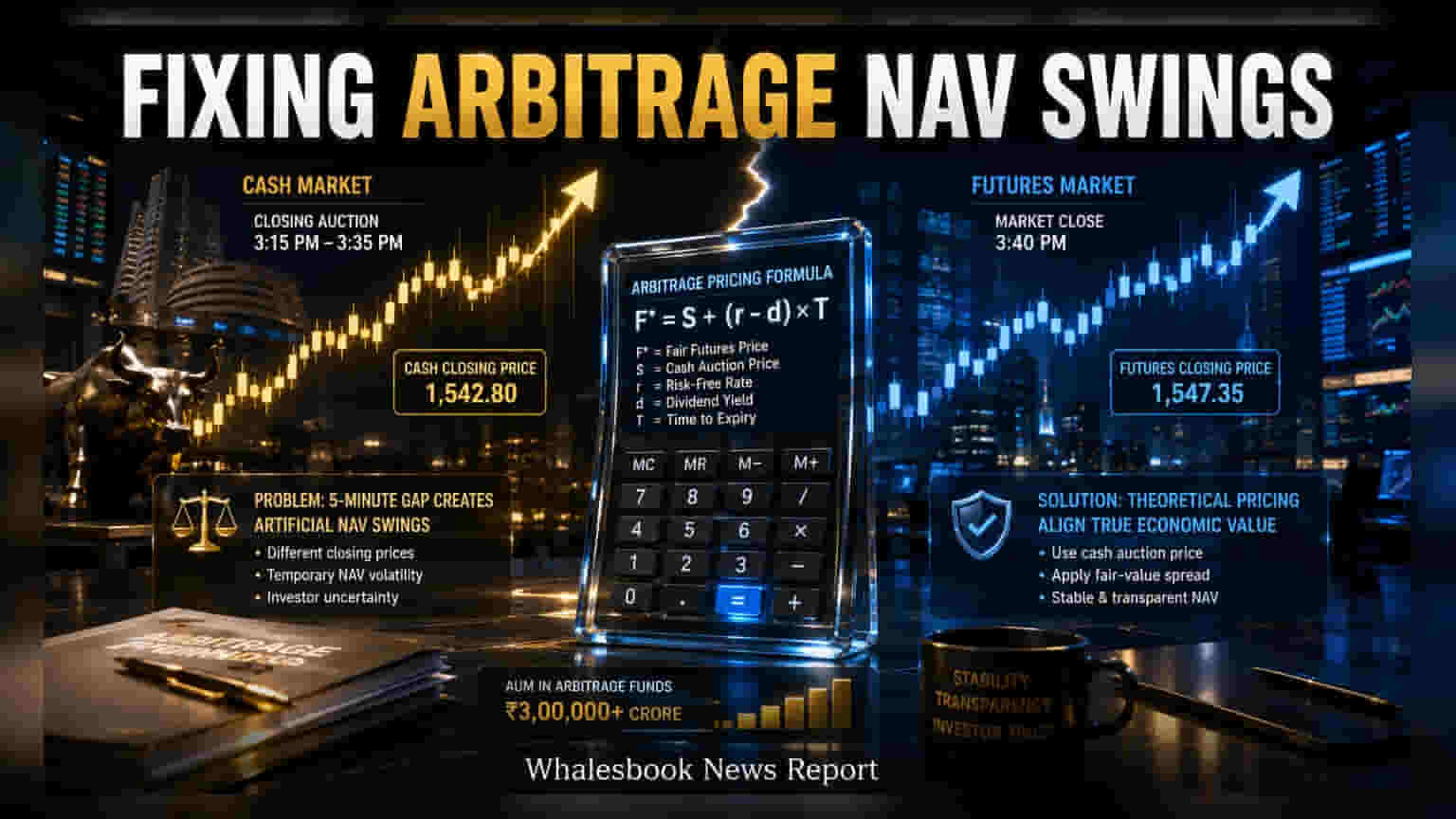
The mutual fund industry has requested a new valuation method for futures contracts to stop price gaps affecting arbitrage fund NAVs. The request follows SEBI’s introduction of a new closing auction session on August 3, 2026, which created temporary valuation mismatches. For investors, this move aims to prevent artificial swings in the value of their holdings.
Since August 3, 2026, when the market regulator SEBI introduced a new closing auction session for certain stocks, mutual funds managing arbitrage schemes have faced a technical challenge. These funds, which rely on the price difference between cash stocks and futures to generate returns, have seen erratic movements in their Net Asset Value (NAV). The NAV is the daily price at which an investor buys or sells a fund unit.
The problem stems from a timing mismatch between the two market segments. The cash market now concludes through a specific auction mechanism between 3:15 PM and 3:35 PM. However, the futures market, which arbitrage funds use to hedge their positions, remains open until 3:40 PM. This five-minute gap often results in different closing prices for the same underlying stock. Because arbitrage funds must value their holdings daily, this gap can lead to temporary, artificial gains or losses in their NAV, even when the fund's actual market-neutral position remains unchanged.
Why Theoretical Pricing is Proposed
To solve this, the industry is lobbying for a theoretical pricing framework. Under this model, instead of using the raw futures closing price, funds would use the final cash auction price combined with a pre-calculated, fair-value spread. This would mathematically align the two markets, ensuring the fund's valuation reflects the true economic position rather than the technical price difference caused by the timing of the closing auction. With over Rs 3 lakh crore managed in these arbitrage schemes, fund houses are seeking this stability to ensure the product remains attractive to low-risk investors.
While NAVs have largely stabilized as the market has adapted to the new rules, fund managers remain concerned about transparency. A sudden dip in NAV, even if technical, can cause panic among retail investors who might mistake the price movement for a real loss. Additionally, fund managers have been cautious about participating in the new closing auction itself due to price uncertainty. This hesitation can sometimes lead to lower liquidity in the closing auction, which ironically makes the price discovery process even harder.
The industry is now waiting for regulatory clarity on whether this valuation method can be standardized across the board. Until a formal change is made, investors in arbitrage funds might still see minor day-to-day fluctuations due to these technical gaps. The next key update to track will be whether the regulator accepts the industry's proposal to link the valuation of these two market segments.