

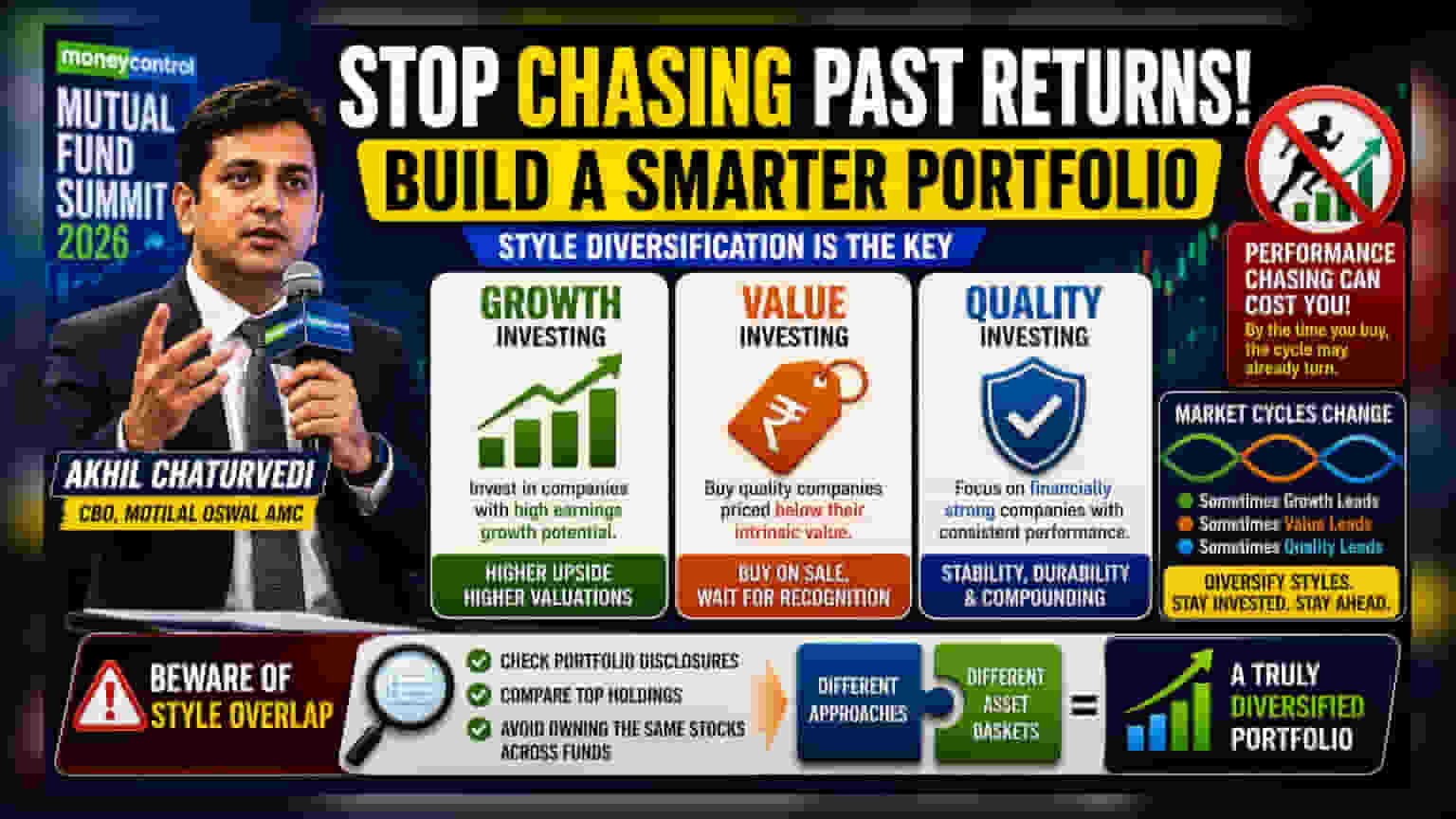
Akhil Chaturvedi of Motilal Oswal AMC suggests that investors should focus on mixing investment styles—growth, value, and quality—rather than chasing short-term performance. This approach aims to reduce portfolio volatility and provide more consistent returns through different market cycles.
What The News Means for Investors
At the recent Moneycontrol Mutual Fund Summit 2026, Akhil Chaturvedi, Chief Business Officer at Motilal Oswal Asset Management, highlighted a common mistake many Indian investors make: choosing mutual funds based solely on how well they have performed in the last one or three years. Instead of chasing recent winners, he suggests a strategy of 'style diversification.' This means holding a mix of funds that follow different investment philosophies—specifically growth, value, and quality—to create a more stable portfolio.
The Trap of Chasing Performance
Many investors feel tempted to move money into a fund that has delivered high returns recently. This is often referred to as 'performance chasing.' The problem with this approach is that market conditions constantly change. A fund that performs exceptionally well in a growth-focused market may struggle when the economic cycle shifts toward value. By the time an investor moves money into a top-performing fund, the market cycle may have already turned, causing them to buy at a peak and experience poor returns thereafter.
Understanding Investment Styles
To build a diversified portfolio, investors must understand the three main styles mentioned:
Growth Investing focuses on companies expected to grow their earnings faster than the average market rate. These stocks often carry higher valuations but offer significant upside potential.
Value Investing targets companies that are priced lower than what the investor believes is their intrinsic worth. The goal is to buy these assets 'on sale' and wait for the market to realize their true value.
Quality Investing looks for companies with strong balance sheets, consistent earnings, and competitive advantages, often prioritizing stability over rapid growth or deep value.
Why Market Cycles Make Diversity Necessary
Markets are rarely static. There are periods where growth stocks lead the rally, and other periods—often during economic shifts or rising interest rates—where value or quality stocks take the lead. Holding only one style means the portfolio’s performance is entirely dependent on that specific style being in favor. By blending these approaches, a portfolio becomes less dependent on a single market trend, which can help in smoothing out volatility over the long term.
What Investors Should Track
While diversifying styles is a solid concept, investors should be aware of a common risk known as 'style overlap.' Just because two funds have different names or labels does not mean they hold different stocks. Some 'growth' and 'quality' funds may end up holding many of the same large-cap stocks.
Before making changes to a portfolio, investors can look at the 'portfolio disclosure' documents or fact sheets of their mutual funds to see the top stock holdings. If most of the funds in a portfolio are holding the same 10-15 stocks, the portfolio may not be as diversified as the investor assumes, regardless of the investment style mentioned in the fund's name. The goal is to ensure that the different funds bring truly different approaches and asset baskets to the table.