

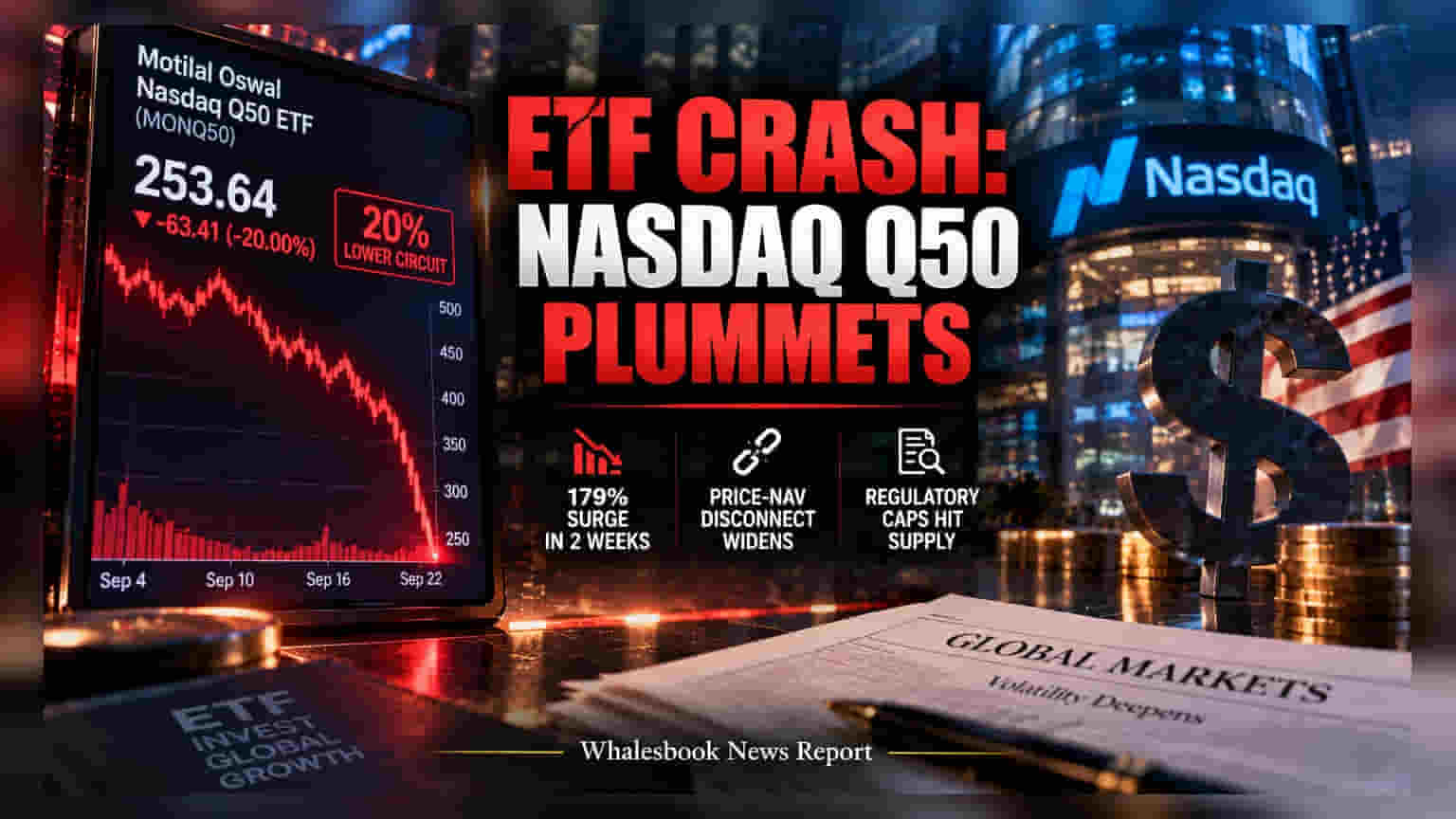
The Motilal Oswal Nasdaq Q50 ETF fell 20% on September 22 to Rs 253.64 after a recent price rally created a massive gap with its actual asset value. RBI caps on international investments have restricted unit creation, making it difficult for market makers to align prices. Investors should check the indicative NAV before trading to avoid buying at inflated premiums.
The Motilal Oswal Nasdaq Q50 ETF (MONQ50) experienced a sharp correction on September 22, hitting a 20 percent lower circuit on the National Stock Exchange at Rs 253.64. This decline marks a significant shift after an unusual period of volatility where the ETF price surged nearly 179 percent in just two weeks, moving from Rs 141.93 on September 4 to a high of Rs 471.99 on September 21.
The Gap Between Price and Value
The central issue causing this movement is a widening disconnect between the market price of the ETF units and the actual value of the underlying US stocks they represent, known as the Net Asset Value or NAV. Typically, market makers bridge this gap by creating or redeeming units to keep the ETF price close to its NAV. However, this mechanism has stalled due to strict regulatory limits. The Reserve Bank of India has placed caps on total overseas investments by domestic mutual funds, which prevents asset management companies from creating new units to satisfy high investor demand. With no new supply of units possible, the market price has been trading at a steep premium compared to the true value of the portfolio.
Impact of Price Band Changes
The situation was further complicated by a change in how the exchange determines daily price limits. Since September 7, the reference point for calculating these price bands was moved from the NAV to the previous day’s volume-weighted average price. This change effectively allowed the market price to follow its own trend rather than staying tethered to the underlying asset value, giving more room for the price to detach from reality during periods of high buying activity.
What This Means for Investors
Investors looking to trade international ETFs should exercise caution. When an ETF trades at a high premium to its NAV, buyers pay significantly more than the value of the assets held in the fund. If the market price corrects to match the NAV, investors may face substantial losses. Before placing any orders, it is essential to check the indicative NAV (iNAV) provided by the fund house on its website. The current environment indicates that the ETF may remain volatile until the premium gap narrows. The primary monitorable for investors going forward will be the status of overseas investment caps and the consistency of the ETF's trading price relative to its iNAV.