

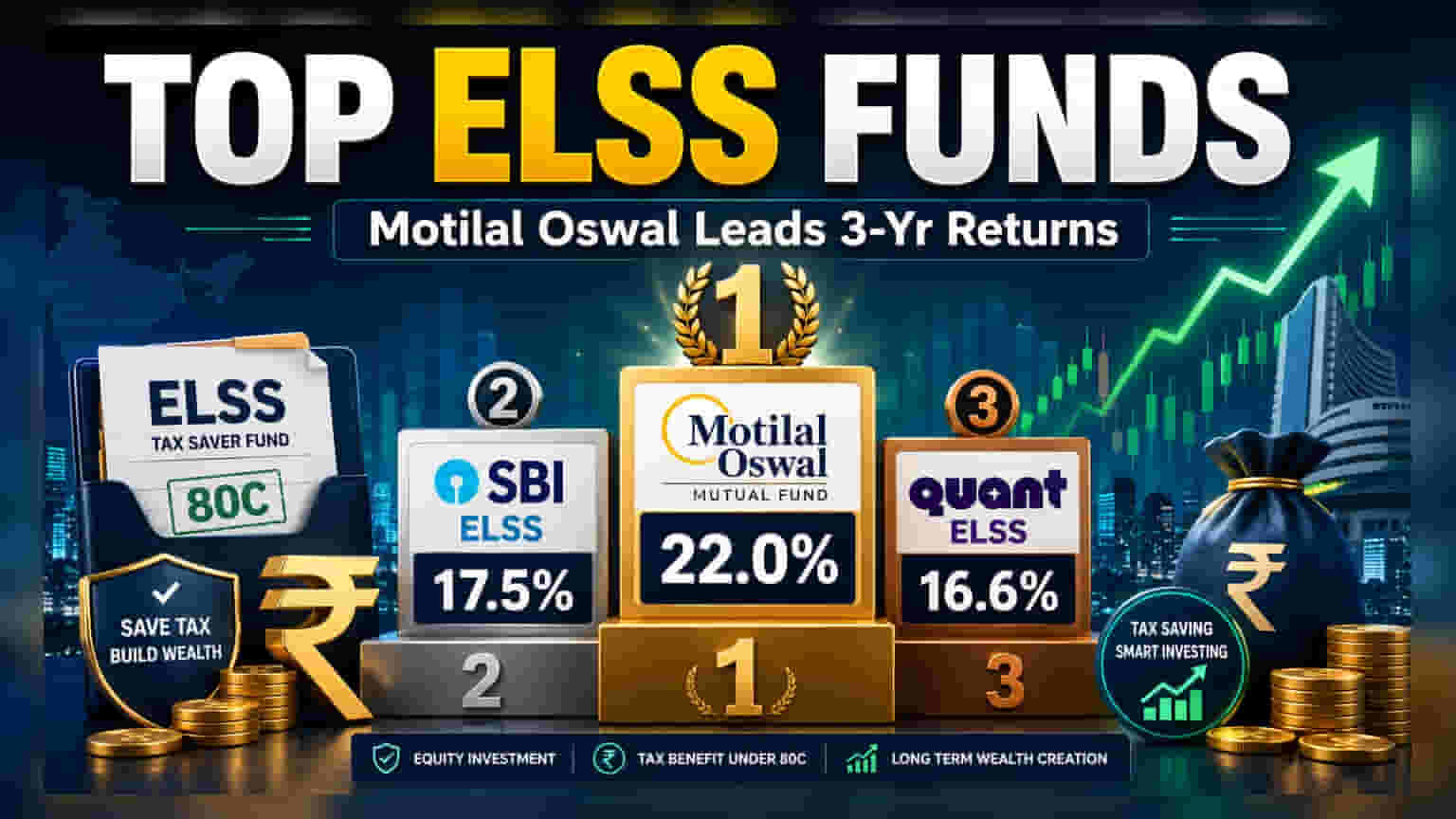
Motilal Oswal ELSS Tax Saver Fund delivered a 22% three-year CAGR, leading the ELSS category as of June 30, 2026. SBI and Quant ELSS Tax Saver funds followed with 17.5% and 16.6% returns. This ranking covers funds managing over Rs 1,500 crore. While performance numbers are significant, investors should look beyond recent gains to assess long-term consistency and fund risk.
What The Rankings Show
As of June 30, 2026, the Motilal Oswal ELSS Tax Saver Fund has secured the top position in the Equity Linked Savings Scheme (ELSS) category based on three-year compound annual growth rate (CAGR). The fund delivered a return of 22.0% over this period, comfortably beating its benchmark, which returned 8.8%.
Among funds with at least Rs 1,500 crore in assets under management (AUM), the SBI ELSS Tax Saver Fund ranked second with a 17.5% three-year return. The Quant ELSS Tax Saver Fund followed in third place with a 16.6% return. Notably, the SBI fund maintains the largest corpus among the top five, managing Rs 30,955 crore.
The Shift Between Short And Long-Term Performance
While the Motilal Oswal fund leads on a three-year basis, market performance often shifts depending on the time frame measured. For example, the Quant ELSS Tax Saver Fund leads the one-year performance chart with a 7.7% return.
This difference highlights an important reality for investors: fund rankings are not static. A fund that performs well over one year may have a different strategy than one that excels over three years. Market cycles, sector exposure, and stock-picking styles can cause performance to fluctuate significantly. Investors often use longer time frames, like three or five years, to get a better sense of a fund manager's ability to navigate different market phases.
Understanding ELSS Funds
ELSS funds are equity-based mutual funds that offer tax benefits under Section 80C of the Income Tax Act. They come with a mandatory three-year lock-in period, which is the shortest among all tax-saving investment options. Because these funds invest primarily in the stock market, they carry market risk, meaning returns are not guaranteed and can vary based on the performance of the underlying stocks.
What Investors Should Track
When evaluating a top-performing fund, it is helpful to look at more than just the past returns.
Performance volatility is one key monitorable; a fund that delivers high returns but with large swings in price may carry higher risk. Investors should also review the expense ratio, which is the fee charged by the fund house to manage the money. A lower expense ratio can help improve net returns over the long term.
Furthermore, consistency is usually more important than a single period of high growth. Tracking how a fund manager has handled market downturns in the past can provide insight into how the fund might behave during future periods of market stress. Before investing, it is standard practice to review the fund's investment strategy and ensure it aligns with one's personal risk appetite.