

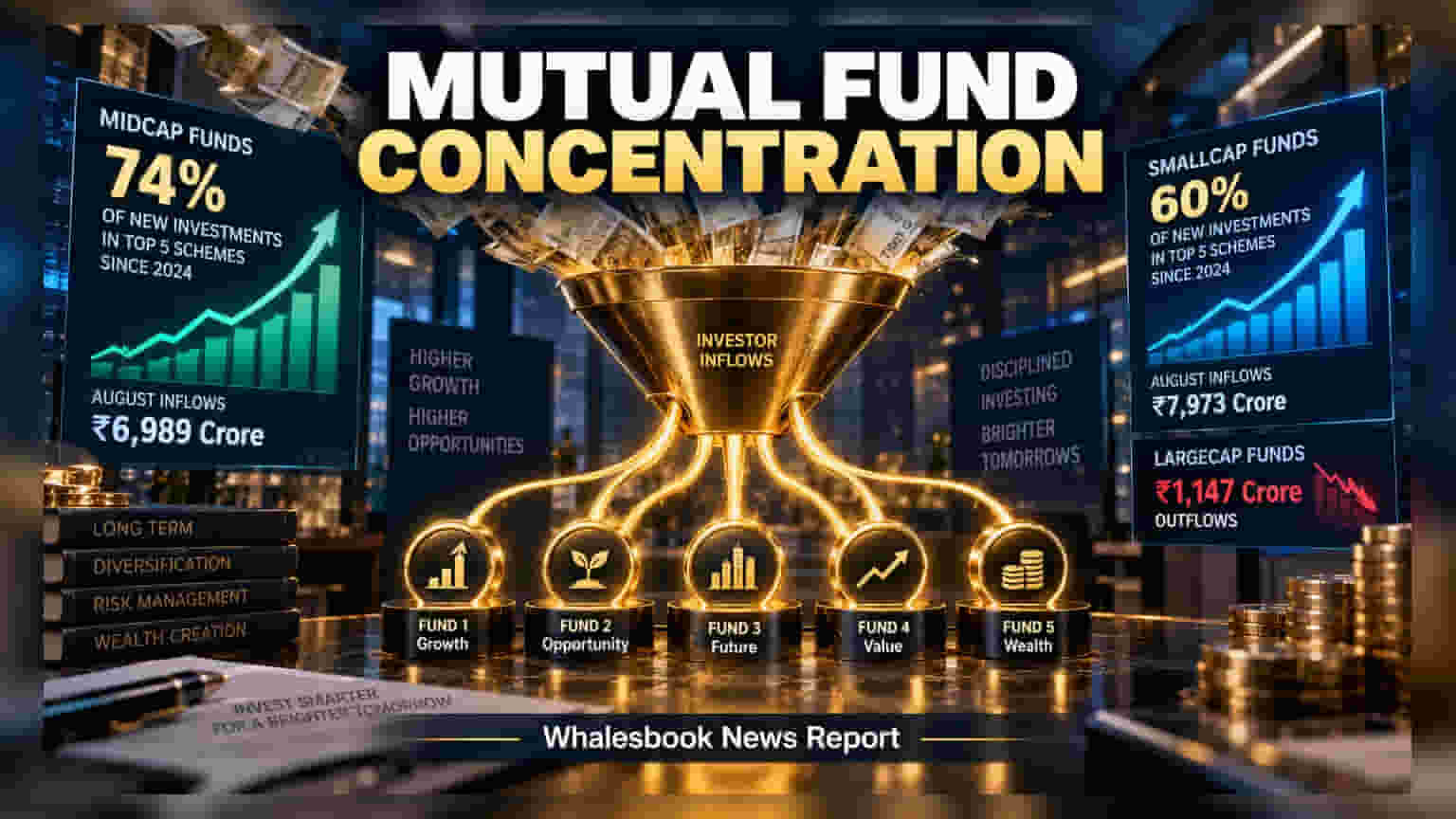
Investor capital is funneling into a few top mid and smallcap mutual funds, with five schemes capturing 74% and 60% of inflows respectively in 2024. This trend signals a risky shift toward performance-chasing, where investors often gain less than the fund's published returns due to poor entry timing.
Indian investors are increasingly pouring money into a very small number of midcap and smallcap mutual fund schemes, often ignoring the broader market. Recent data shows that the top five schemes in the midcap category alone captured 74% of all new investments since the start of 2024. A similar trend is visible in the smallcap category, where the top five funds attracted 60% of the total new capital. This high level of concentration suggests that investors are avoiding the wider range of options available and are instead focusing heavily on a few popular names that have been in the news for recent high growth.
The preference for these aggressive growth segments was clear in the data for August. Midcap funds recorded inflows of Rs 6,989 crore, while smallcap funds saw Rs 7,973 crore. These figures represent the highest monthly inflows for smallcaps in the period between February and August. In contrast, large-cap funds witnessed outflows of Rs 1,147 crore for the second month in a row. This shift in sentiment shows that investors are moving away from established large companies to hunt for higher returns in the mid and small segments.
While many investors chase these funds based on their recent high growth numbers, the actual returns they earn often tell a different story. There is a significant gap between the published growth of a fund, measured by its Net Asset Value, and the actual returns earned by the average investor. For the five largest midcap schemes, while the reported compound annual growth rate was near 14%, the returns earned by the average investor languished closer to 4%. This gap occurs because many investors wait for a fund to deliver a strong performance before they invest. By the time they enter, the stock prices held by the fund are often already high. Buying at a market peak significantly reduces the benefit of any subsequent growth, leading to poor returns for the investor compared to the fund's headline performance.
This trend of concentrating money in a few funds creates risks for both the mutual fund houses and the investors. When a fund receives a sudden, massive influx of cash, the fund manager is forced to deploy that money quickly. If the mid and smallcap market is already expensive, the manager may have to buy stocks at inflated prices to put the money to work, which can weigh on the fund's future performance. Furthermore, regulatory bodies like SEBI have previously raised concerns regarding liquidity in smallcap funds, noting that massive inflows into a specific set of stocks can make it difficult for fund managers to manage exits during periods of market stress.
Investors should look beyond just the short-term return charts before selecting a fund. The main monitorable for investors is to avoid chasing funds simply because they have been in the spotlight for recent performance. A disciplined approach, such as investing through systematic investment plans regardless of market volatility, helps average out the purchase cost over time. Investors should also pay attention to the fund house's process, the risk management style of the fund manager, and whether the fund's size is becoming too large to handle effectively. Staying focused on long-term goals rather than trying to time the market based on the latest performance figures remains the most effective strategy for managing risks in volatile segments.