

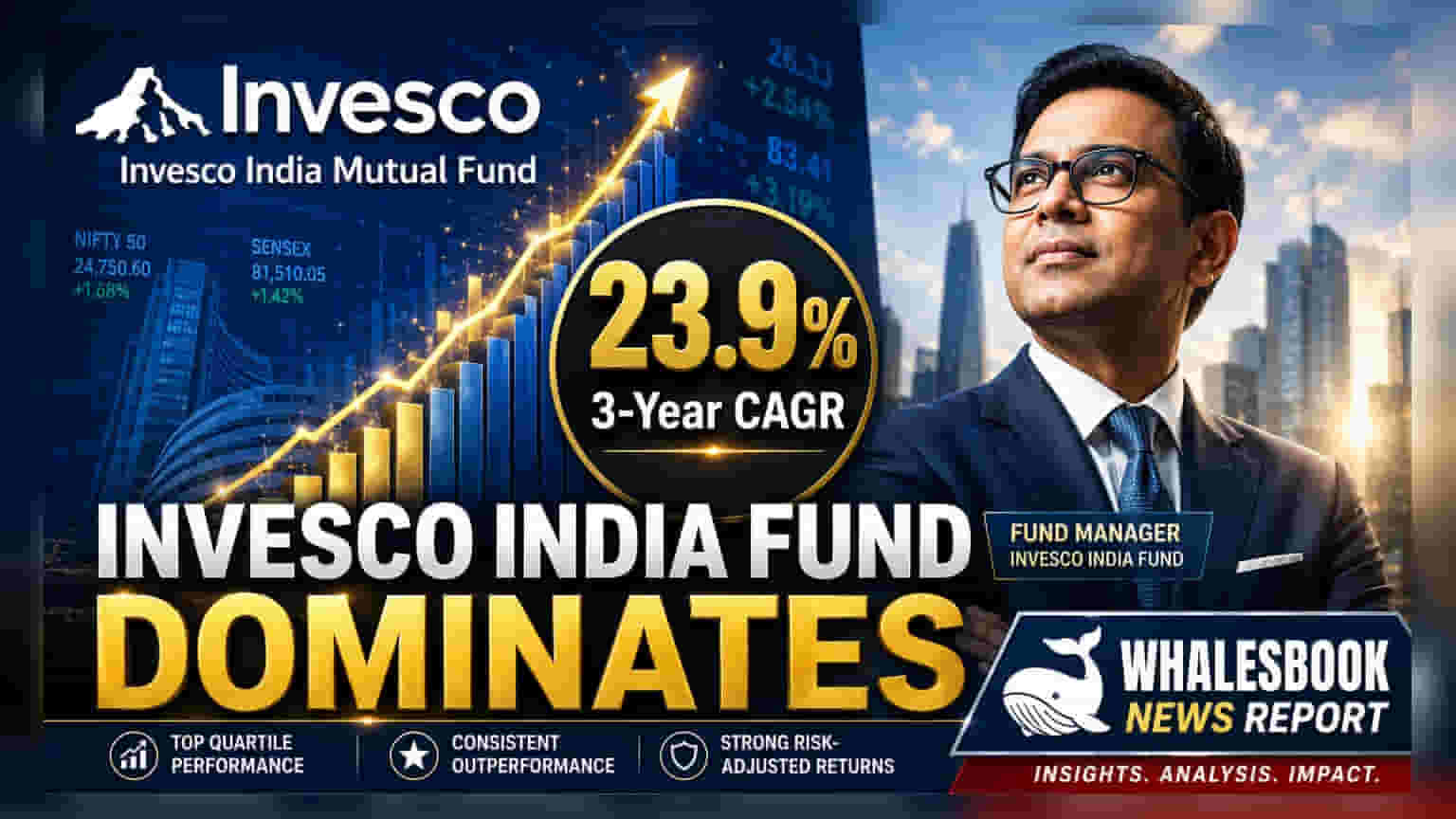
Invesco India Large & Mid Cap Fund has become the top performer in its category, delivering a 23.9% three-year annual return. This performance has significantly outpaced its benchmark, which grew by 9.2% over the same timeframe.
What Happened
Invesco India Large & Mid Cap Fund has secured the leading position among peers in the Large & Mid Cap category based on three-year performance data. The fund delivered a compound annual growth rate (CAGR) of 23.9% over the past three years. This result stands well above its benchmark index, which recorded a return of 9.2% for the same duration. The fund also showed strength in shorter periods, achieving a 9.8% return over the past month and 24.0% over the last three months.
Peer Comparison And Fund Size
When looking at the broader category, other funds also show notable performance. Motilal Oswal Large & Midcap Fund recorded a 23.0% three-year CAGR, while Bandhan Large & Mid Cap Fund followed with a 20.1% return. It is important for investors to note the difference in scale between these funds. Bandhan Large & Mid Cap Fund currently manages a larger corpus with assets under management (AUM) of Rs 17,460.9 crore, compared to Rs 10,152.7 crore managed by Invesco India Large & Mid Cap Fund.
Why Performance Windows Matter
Ranking leaders can change depending on the time frame chosen for analysis. While the Invesco fund has demonstrated strong long-term performance, other funds may perform differently in the short term. For example, HSBC Large & Mid Cap Fund was noted as the leader over a one-year period with a 9.9% return. This variance highlights that market conditions often cause different funds to excel at different times, rather than one fund consistently leading across every time window.
Understanding The Investment Strategy
Large-and-mid-cap funds are structured to provide a balance between the stability often found in large, established companies and the growth potential typically associated with mid-sized businesses. Investors choosing this category seek to capture value from both market segments. However, because these funds invest in mid-sized enterprises, they are often subject to higher market volatility than pure large-cap funds. Success in this category generally depends on the fund manager's ability to select high-growth stocks while managing the risks inherent in smaller company valuations.
What Investors Should Track
Investors evaluating these funds should look beyond just the top-ranking lists. Key factors to monitor include the fund's expense ratio, the consistency of the manager's investment style, and the overall volatility of the portfolio. Because rankings fluctuate based on recent market trends, reviewing the fund's performance across multiple market cycles is often more helpful than focusing solely on the most recent 3-month or 3-year data.