

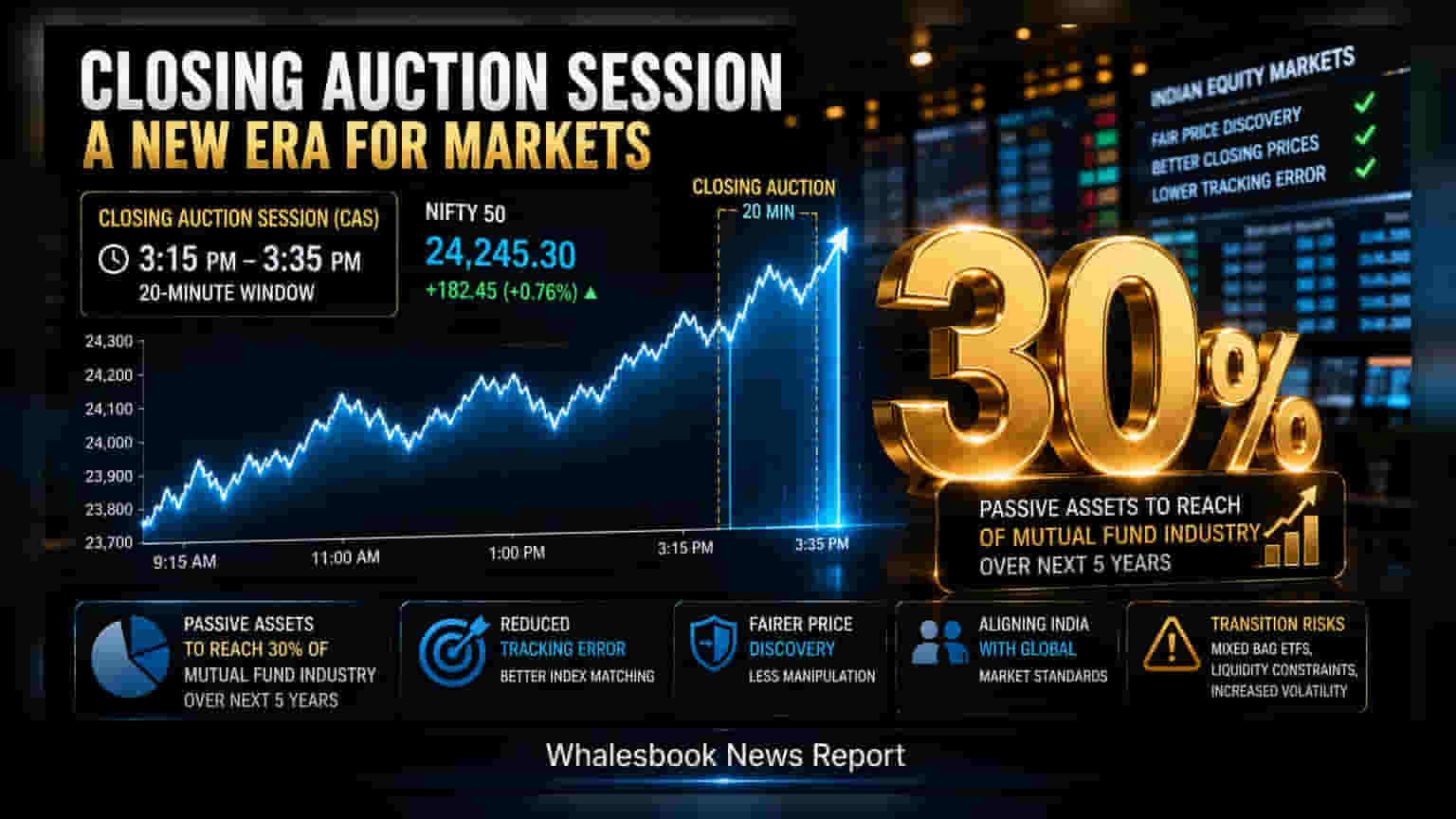
SEBI’s implementation of the Closing Auction Session on August 3, 2026, aims to improve price discovery for F&O-eligible stocks. While this reform supports the long-term growth of passive investing, investors should note potential initial volatility and pricing mismatches that could affect ETFs.
The implementation of the Closing Auction Session (CAS) by the Securities and Exchange Board of India (SEBI) on August 3, 2026, represents a major change in how equity markets close for the day. By replacing the older Volume-Weighted Average Price (VWAP) method for F&O-eligible securities, the regulator has introduced a 20-minute window, from 3:15 PM to 3:35 PM, designed to ensure that closing prices are determined by genuine market demand rather than a simple average of trades.
Why This Matters for Passive Investing
For the growing segment of passive investors, the closing price is critical. Exchange-Traded Funds (ETFs) and index funds, which aim to mirror their benchmark indices, rely heavily on accurate closing prices to manage their portfolios and ensure they stay as close to their target index as possible. By improving the reliability of the closing price, the new system aims to reduce potential manipulation and help these funds execute large orders more efficiently. If a fund can better match its benchmark's closing price, it reduces 'tracking error'—a measurement that shows how closely the fund follows its index.
Industry experts, including Anil Ghelani of DSP Mutual Fund, project that passive assets could grow to represent 30% of the total Indian mutual fund industry over the next five years, rising from the current levels of around 17% to 18%. This growth is expected to be fueled by investors moving toward low-cost index products and sophisticated factor-based strategies, such as those tracking momentum or quality, which have already seen their asset base expand significantly in recent years.
Risks and Operational Challenges
While the shift aligns India with global market standards, the transition has not been without friction. Investors should be aware of a specific challenge affecting certain ETFs. Many ETFs hold a 'mixed bag' of stocks—some that are part of the F&O segment (now under the new auction rules) and some that are not (which still follow the older pricing model). This difference can create pricing mismatches or confusion during the transition, as the calculation methods for these two categories of stocks now differ at the end of the day.
Furthermore, the initial phase has brought increased volatility. As market participants adjust their strategies to the 20-minute auction window, there is a risk of liquidity constraints, particularly for those who are used to the older system. While SEBI has indicated that it is gathering feedback to refine the process, the learning curve for both retail investors and fund managers remains an important factor.
For investors, the long-term benefit of the new session lies in fairer price discovery. However, the next few months will be important to track how effectively fund houses manage their tracking errors under the new system and whether the operational friction stabilizes as the market matures.