

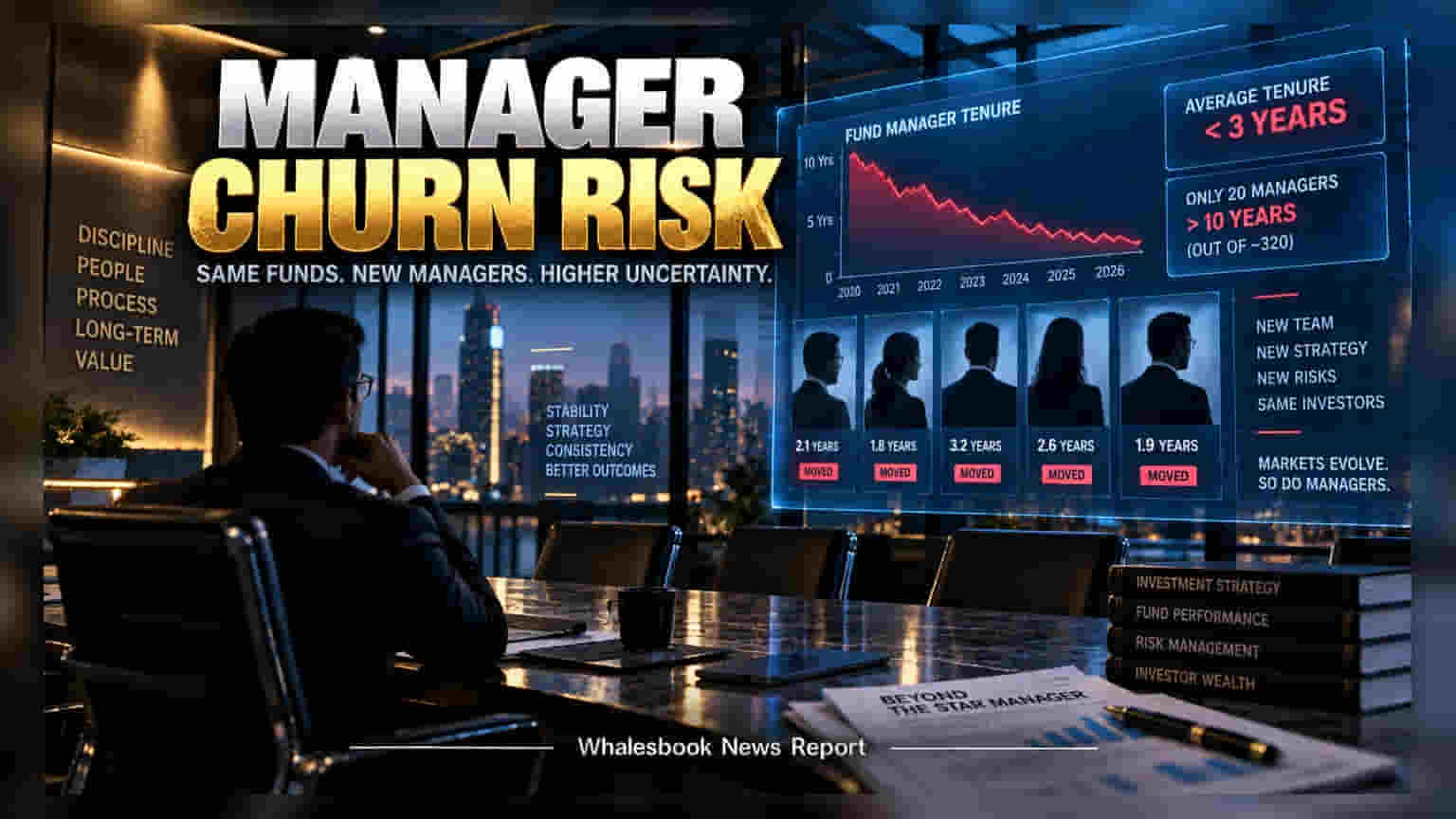
A September 2026 report by DSP Mutual Fund shows that most equity fund managers in India hold their roles for under three years, with fewer than 7% having over a decade of experience. This high turnover rate challenges the practice of choosing funds based solely on historical track records. Investors now need to look closer at an asset manager's internal processes and team continuity to gauge long-term stability.
The landscape of the Indian mutual fund industry is undergoing a shift, as new data reveals that the era of the long-term, iconic fund manager may be fading. A September 2026 analysis by DSP Mutual Fund covering approximately 320 active equity fund managers shows that only 20 of them have more than 10 years of experience managing a scheme. With the average tenure for fund managers across all equity categories falling below three years, the industry is witnessing a consistent trend of high turnover.
This rapid churn creates a significant challenge for retail investors who traditionally rely on historical performance charts to select their funds. When a fund manager leaves, the person responsible for the past returns that an investor may be chasing is no longer in the driver's seat. This disconnect raises risks for investors who may unknowingly attribute historical success to a manager who has already moved on, or to a strategy that is about to be changed by a successor.
The Risk of Strategy Drift
The primary risk arising from frequent leadership changes is known as strategy drift. When a new manager takes over a scheme, they may naturally alter the investment style, stock selection, or risk appetite to better align with their own philosophy. While this can sometimes improve performance, it can also lead to a deviation from the specific goals or risk profile that attracted the investor to the fund in the first place. For instance, a fund known for conservative large-cap bets might suddenly pivot to more aggressive mid-cap positions under new leadership, potentially changing the fund's risk-reward balance without the investor's immediate knowledge.
Another concern is the loss of institutional memory. High turnover can weaken the continuity of decision-making, especially during periods of market volatility. If a firm relies too heavily on the expertise of a single individual rather than a robust, team-based investment process, the departure of that individual can lead to a period of uncertainty while the new manager settles in.
Evaluating Funds Beyond the Manager
To navigate this environment, industry experts suggest that investors should prioritize the investment framework of the Asset Management Company (AMC) over the profile of a single star manager. A strong AMC typically has a well-defined investment philosophy, a research team that provides consistent inputs, and a Chief Investment Officer who ensures that the fund's core strategy remains intact regardless of who is managing the day-to-day decisions.
When a change in fund management is announced, it is rarely a reason for immediate alarm. Instead of making hasty decisions, investors should watch the scheme's performance and strategy for at least six to 12 months post-transition. This period allows time to determine if the new leadership is maintaining the fund's historical integrity or if the investment approach is shifting significantly. Monitoring the consistency of the fund's portfolio and ensuring it still aligns with your original investment objective remains the most effective way to manage the risks associated with leadership turnover.