

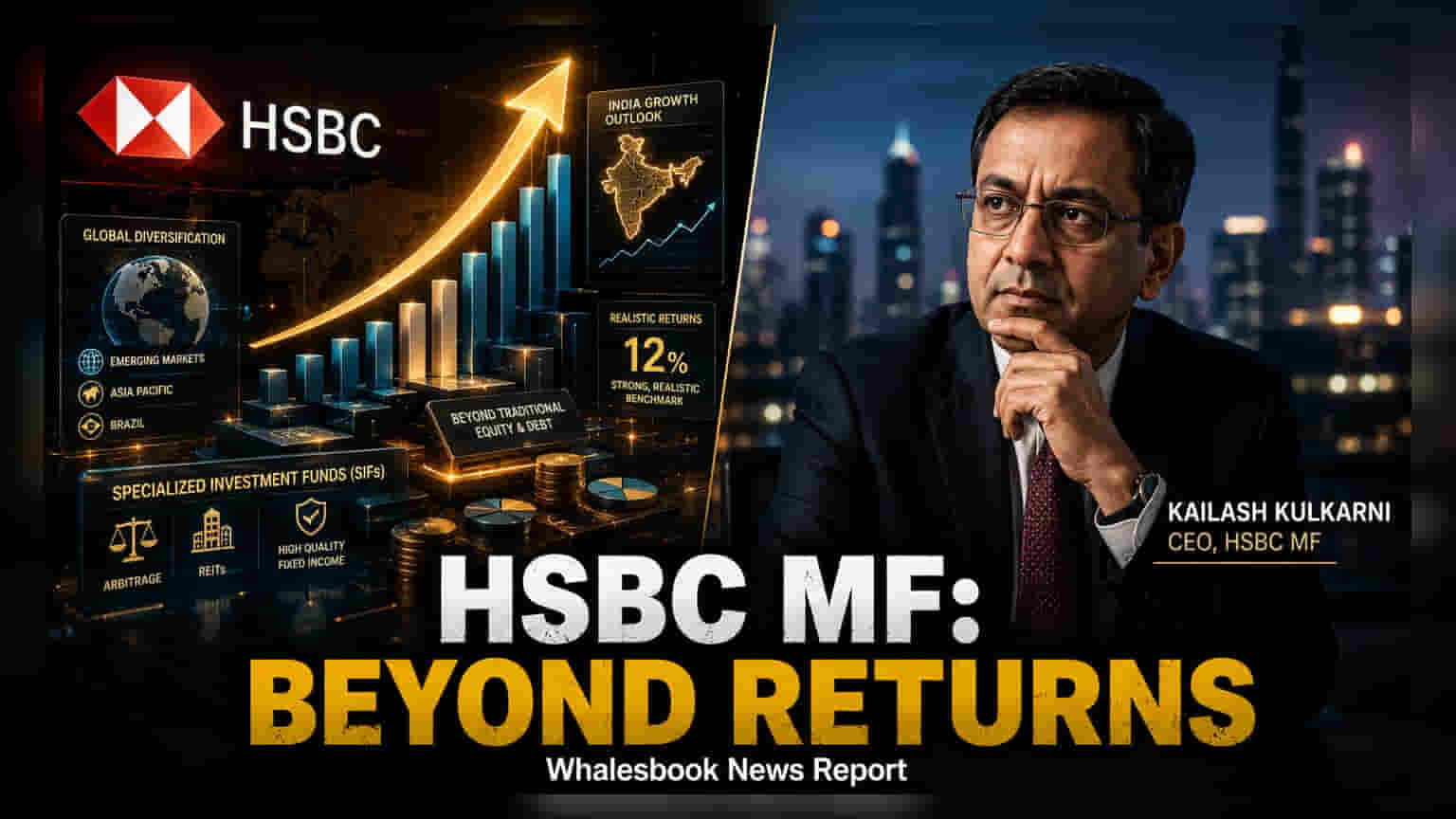
HSBC Asset Management India is shifting its strategy to focus on differentiated products and investor education rather than solely chasing asset growth. CEO Kailash Kulkarni emphasizes managing return expectations, suggesting investors target sustainable 12% equity returns. This move follows the recent reopening of the firm's international schemes, providing more avenues for global diversification.
HSBC Asset Management India is refining its strategic direction, moving away from aggressive pursuit of assets under management (AUM) toward a focus on niche product offerings and investor education. Since integrating the distribution network acquired from L&T Mutual Fund, the firm has leveraged a wider reach to introduce specialized investment solutions. CEO Kailash Kulkarni has indicated that the company’s current priority is to launch funds that fill specific market gaps rather than following the industry trend of launching new fund offers (NFOs) purely for volume.
Building a Distinct Portfolio
The firm is positioning itself by targeting the so-called "missing middle" in the Indian mutual fund landscape. This involves offering Specialized Investment Funds (SIFs) that provide a different risk-return profile compared to traditional equity or debt funds. For instance, some of these products utilize strategies like arbitrage and real estate investment trusts (REITs) alongside high-quality fixed income, aiming to offer an alternative for investors seeking returns that exceed standard fixed deposits.
Additionally, the company recently took a tactical step in global diversification by reopening three international schemes—the HSBC Global Emerging Markets Fund, the HSBC Asia Pacific (ex-Japan) Dividend Yield Fund, and the HSBC Brazil Fund—for fresh investments effective August 18, 2026. This reopening is subject to a cap of ₹2 lakh per PAN per month, allowing investors to regain access to global markets after previous regulatory pauses on overseas investments.
Managing Return Expectations
A central theme in the firm's current communication is the need for realistic return expectations. Kulkarni has publicly advocated for investors to look beyond trailing returns, which reflect past performance and may not repeat in the future. Instead, he suggests that a 12% annual return from equities is a strong, realistic benchmark for investors. This approach is intended to help younger or first-time entrants to the market align their investment horizon with the reality of market cycles rather than chasing short-term gains.
Risks and Market Context
While the firm promotes a long-term, disciplined approach, investors should remain aware of broader market pressures. The Indian mutual fund sector, including HSBC, faces risks linked to macroeconomic factors. These include potential volatility from elevated commodity prices, fluctuations in global growth, and supply-side shocks that can impact equity markets.
Furthermore, the performance of international funds remains sensitive to global market conditions and regulatory limits on overseas investments, which are periodically adjusted by the Reserve Bank of India. Investors choosing these funds should factor in currency risks and geopolitical shifts. Additionally, the firm’s focus on active management in the Indian market faces a challenge from the rising popularity of passive products like exchange-traded funds (ETFs), although the company maintains that active stock picking remains vital in the Indian context.
Moving forward, the key monitorable for investors will be the performance consistency of these specialized funds and how well the firm balances its product variety with the specific risk profiles of its growing retail client base. Discipline via Systematic Investment Plans (SIPs) remains the recommended route for those looking to mitigate market timing risks.