

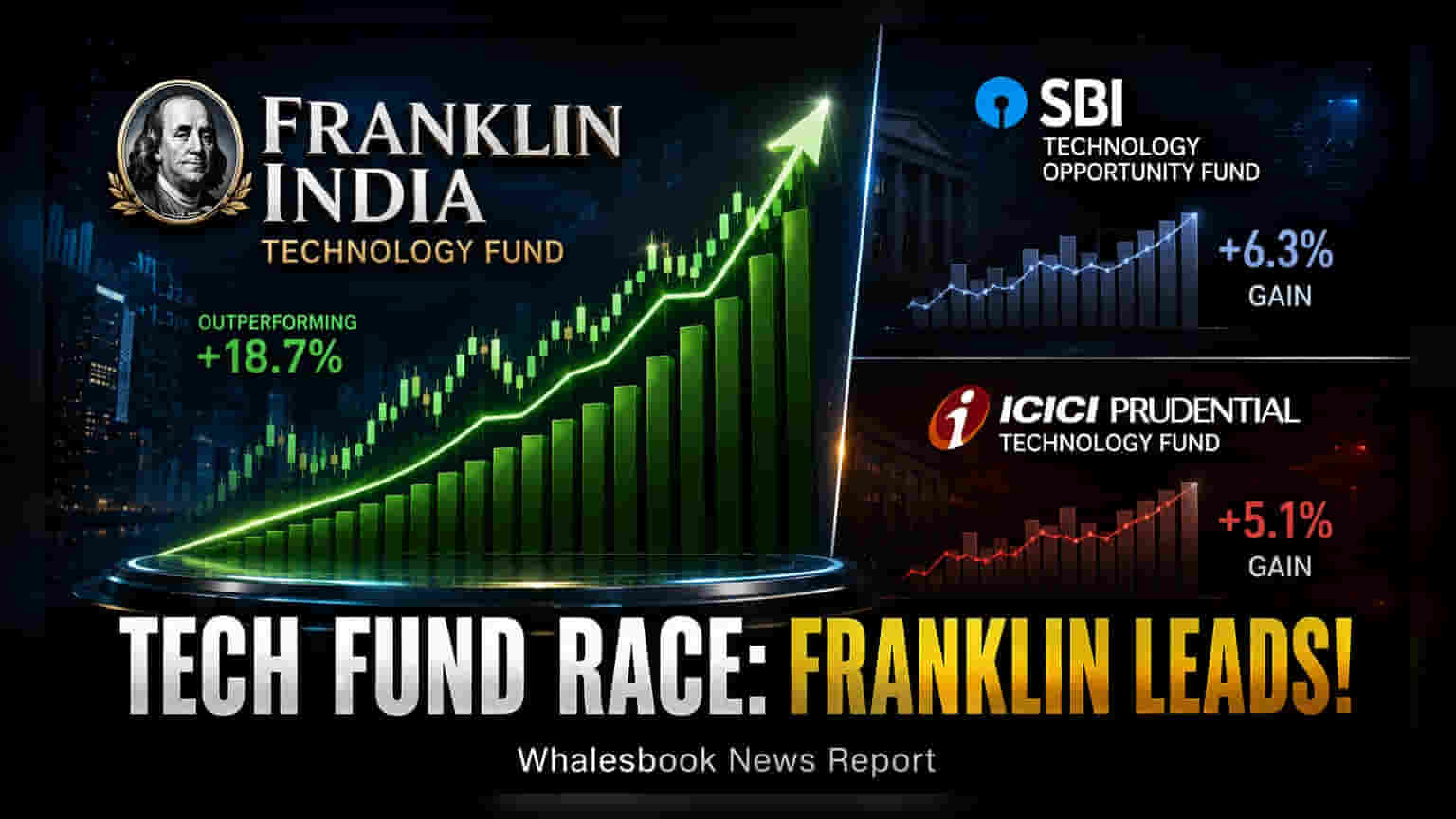
The Franklin India Technology Fund has outperformed major sectoral peers with a 3-year annualized return of 11.1%. While this highlights strong long-term performance, investors should be aware that technology sectoral funds carry significant concentration risks and market volatility, often differing sharply from diversified equity portfolios.
The Franklin India Technology Fund has secured the top position among technology sectoral mutual funds, recording a 3-year annualized return (CAGR) of 11.1%. This performance places it ahead of key competitors in the category, such as the SBI Technology Opportunities Fund and the ICICI Prudential Technology Fund, which reported returns of 10.7% and 8.4% respectively over the same three-year period.
Understanding the Sectoral Risk
While the fund's long-term performance is notable, investors must recognize that this is a thematic sectoral fund. Unlike diversified mutual funds that spread investments across various industries like banking, manufacturing, and consumer goods, a technology fund concentrates almost its entire portfolio in the IT, software, and hardware industries. This high concentration means the fund’s performance is directly tied to the fortunes of a single sector. When the technology industry experiences growth, these funds can outperform the broader market; however, when the sector faces headwinds—such as global spending cuts, currency fluctuations, or regulatory changes—the fund is susceptible to sharp volatility.
Benchmark Comparison and Volatility
Data indicates that the Franklin India Technology Fund has managed to outperform its benchmark, the BSE Teck Total Return Index (TRI), over the 3-year period. However, short-term performance metrics serve as a reminder of the inherent volatility in this space. While long-term charts may show steady growth, one-year returns for technology benchmarks can often slip into negative territory, as seen in recent cycles where the sector faced intense price correction. This contrast between short-term dips and long-term gains highlights why sector-specific funds are generally considered a high-risk investment suitable for those with a deep understanding of the industry cycle.
What Investors Should Monitor
Investors evaluating technology funds should look beyond just past returns. A critical factor is the expense ratio, which can be relatively high in sectoral funds, often ranging between 1.7% and 2.1%. This cost reduces the net returns delivered to the investor. Furthermore, the fund's management approach in selecting between large-cap IT giants and smaller, high-growth technology companies can significantly impact outcomes during different market cycles.
Before allocating capital to this category, it is useful to assess whether the IT sector’s current valuation and growth prospects align with one’s personal risk tolerance and investment timeline. Because technology funds are not diversified, they should generally form only a small portion of a balanced investment portfolio rather than acting as a primary holding.