

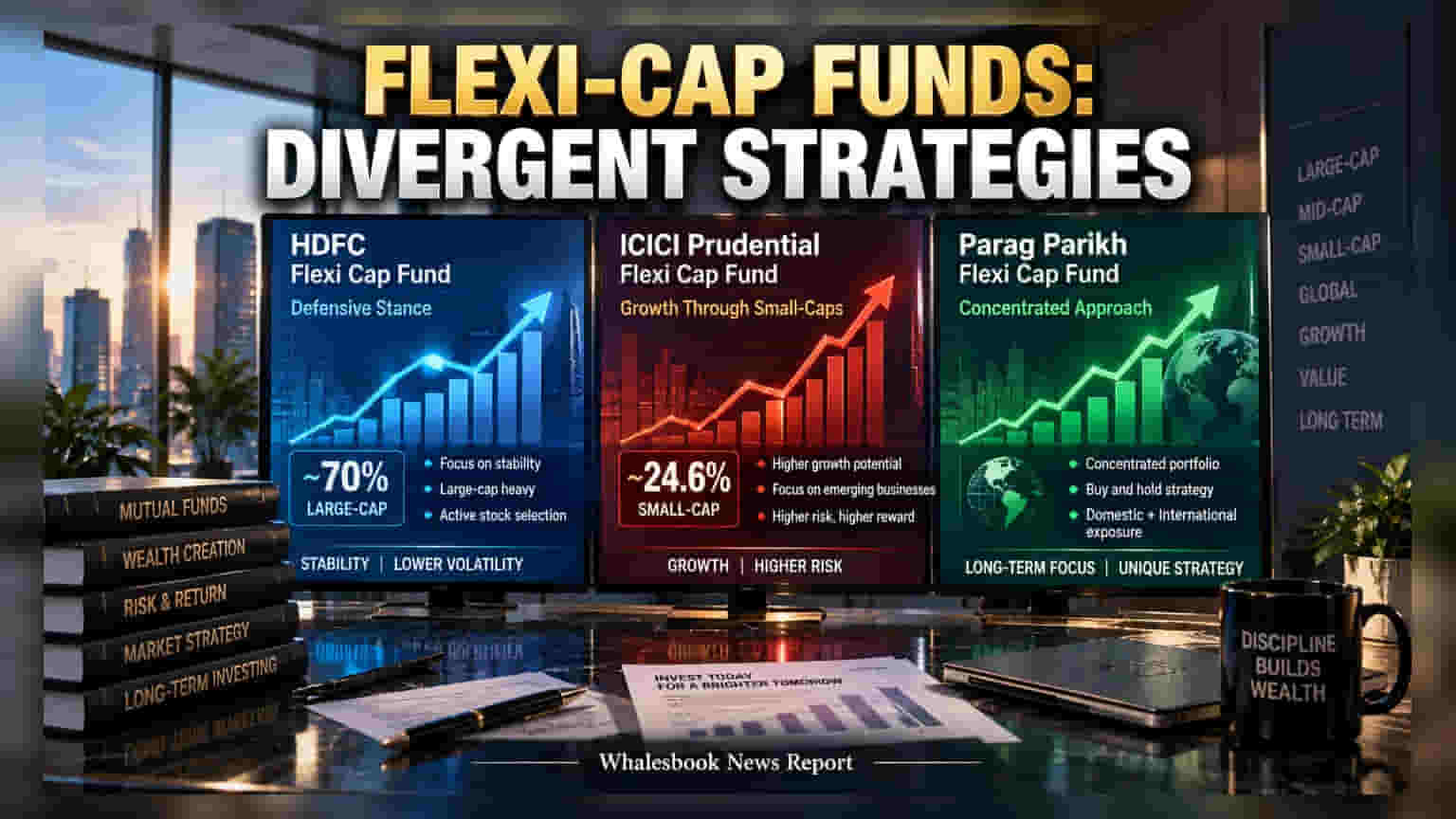
Major flexi-cap funds including HDFC, ICICI Prudential, and Parag Parikh each received roughly ₹1,100 crore in August 2026. Despite similar inflows, their underlying portfolios reveal different approaches, from defensive large-cap positioning to aggressive small-cap bets. Investors should recognize that the flexi-cap label allows for vastly different risk profiles, meaning performance may vary based on these internal strategy shifts.
The flexi-cap mutual fund category experienced a period of high demand in August 2026, with three major funds—HDFC Flexi Cap, ICICI Prudential Flexi Cap, and Parag Parikh Flexi Cap—each pulling in approximately ₹1,100 crore. While the flow of money into these funds was uniform, the actual management strategies inside these portfolios were quite different. Because a flexi-cap mandate allows fund managers the freedom to invest across large, mid, and small-sized companies, the specific risk and growth potential of each fund now rests heavily on the decisions of the fund manager.
HDFC Flexi Cap’s Defensive Stance
HDFC Flexi Cap Fund, which manages one of the largest asset bases in this category, maintained a focus on stability during August. Exchange filings and portfolio disclosures indicate that the fund kept nearly 70 percent of its investments in large-cap companies. This defensive posture suggests the fund is prioritizing established, lower-volatility businesses over more speculative growth stocks. While the fund added positions in companies like UltraTech Cement, it also pruned its portfolio by exiting others, reflecting an active approach to maintaining a high-quality, large-cap heavy base. For investors, this structure often means lower relative risk during market downturns, but potentially slower gains during a broad, small-cap-led rally.
ICICI Prudential’s Growth Through Small-Caps
In a clear shift from the defensive strategy of its peers, the ICICI Prudential Flexi Cap Fund has moved toward a more aggressive stance. By the end of August 2026, the fund's allocation to small-cap stocks had climbed to approximately 24.6 percent. This strategy seeks to capture higher returns by investing in smaller, faster-growing businesses, often in sectors like automobiles and financial services. While this can lead to stronger performance during growth cycles, it also brings higher risk. Small-cap stocks are generally more sensitive to market swings, meaning this portfolio can experience sharper fluctuations in value compared to those heavily focused on large-cap firms.
Parag Parikh’s Concentrated Approach
The Parag Parikh Flexi Cap Fund continues to stand apart by following a concentrated, buy-and-hold philosophy. Instead of widely diversifying across dozens of stocks, the fund keeps a high percentage of assets in its top holdings. In August, the fund added new positions, including DLF and Knowledge Realty Trust, while maintaining its structural commitment to keeping some exposure to international equities. This strategy results in a portfolio that looks very different from the rest of the market. Because it holds fewer stocks, the fund's performance is more closely tied to the success of its top bets. If these specific companies underperform, the impact on the fund's overall value can be more pronounced than in a highly diversified portfolio.
Understanding the Risks for Investors
For investors, the uniform inflows hide the reality that these funds operate with different risk appetites. A fund like HDFC, with its massive asset base, faces unique challenges in deploying such large sums of money without disrupting the market, particularly when it prefers large-cap stocks. Conversely, funds that tilt toward small-caps, like ICICI Prudential, introduce more 'beta'—a measure of how much a fund moves in relation to the market—which increases the risk of losses during sharp market corrections. Furthermore, concentrated portfolios like that of Parag Parikh leave investors vulnerable to company-specific risks. As markets remain volatile in 2026, investors should monitor monthly factsheets to see if these managers continue their current strategies or shift their allocations in response to changing market conditions.