

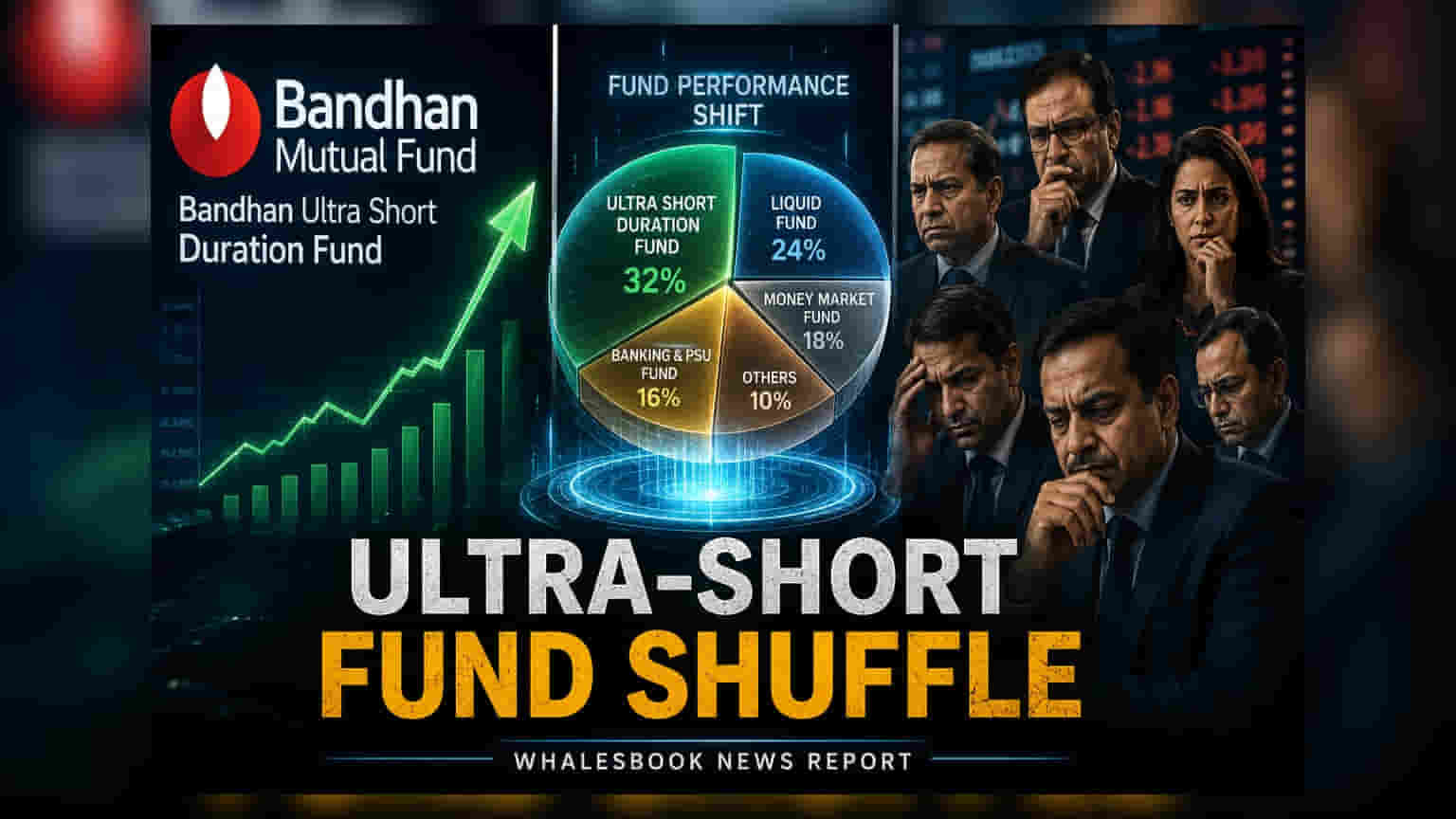
Bandhan Ultra Short Duration Fund delivered a 1.8% return over the last three months, outpacing several peers in the category. Investors should note that performance leadership shifts across different time horizons, with other funds performing better over six-month and one-year periods.
Bandhan Ultra Short Duration Fund has registered a 1.8% return over the recent three-month period, positioning it as a leading scheme within its peer group as of July 7, 2026. This performance analysis is based on data for funds with at least Rs 1,500 crore in assets under management. While the scheme has shown strong short-term results, data indicates that the ranking of top-performing funds in the ultra-short-duration category changes significantly depending on the time frame analyzed.
Comparing Performance Across Timeframes
When looking beyond the three-month window, different funds emerge as leaders. For example, the HSBC Ultra Short Duration Fund has delivered a 3.3% return over the past six months, placing it ahead of others in that specific period. Similarly, when extending the view to a one-year horizon, the Aditya Birla SL Savings Fund has demonstrated a stronger track record with a return of 6.3%. This trend persists over a three-year period, where the Aditya Birla SL Savings Fund has achieved a return of 7.3%.
Understanding Fund Benchmarks
Beyond peer comparison, the Bandhan Ultra Short Duration Fund has managed to exceed its benchmark index performance. On a one-year basis, the fund outperformed its benchmark by 1.9 percentage points, as the benchmark index returned 4.3% during the same timeframe. Over a three-year period, the fund also stayed ahead of its benchmark, which yielded 4.3%, by 0.6 percentage points. Such metrics help investors understand if a fund manager is generating returns above the broader market index for that specific investment category.
What Investors Should Monitor
These variations in returns highlight that short-term leadership in mutual fund rankings does not necessarily indicate consistent long-term performance. Because ultra-short-duration funds invest in debt instruments with low maturity periods to balance liquidity and return, they are often sensitive to interest rate movements and credit quality adjustments within their portfolios. Investors evaluating these funds might look beyond current top rankings and instead focus on consistency across multiple market cycles, expense ratios, and the credit quality of the underlying bonds. Assessing a fund against peers with identical investment mandates remains essential for a balanced view, as different strategies regarding risk and asset allocation can lead to varied outcomes over time.