

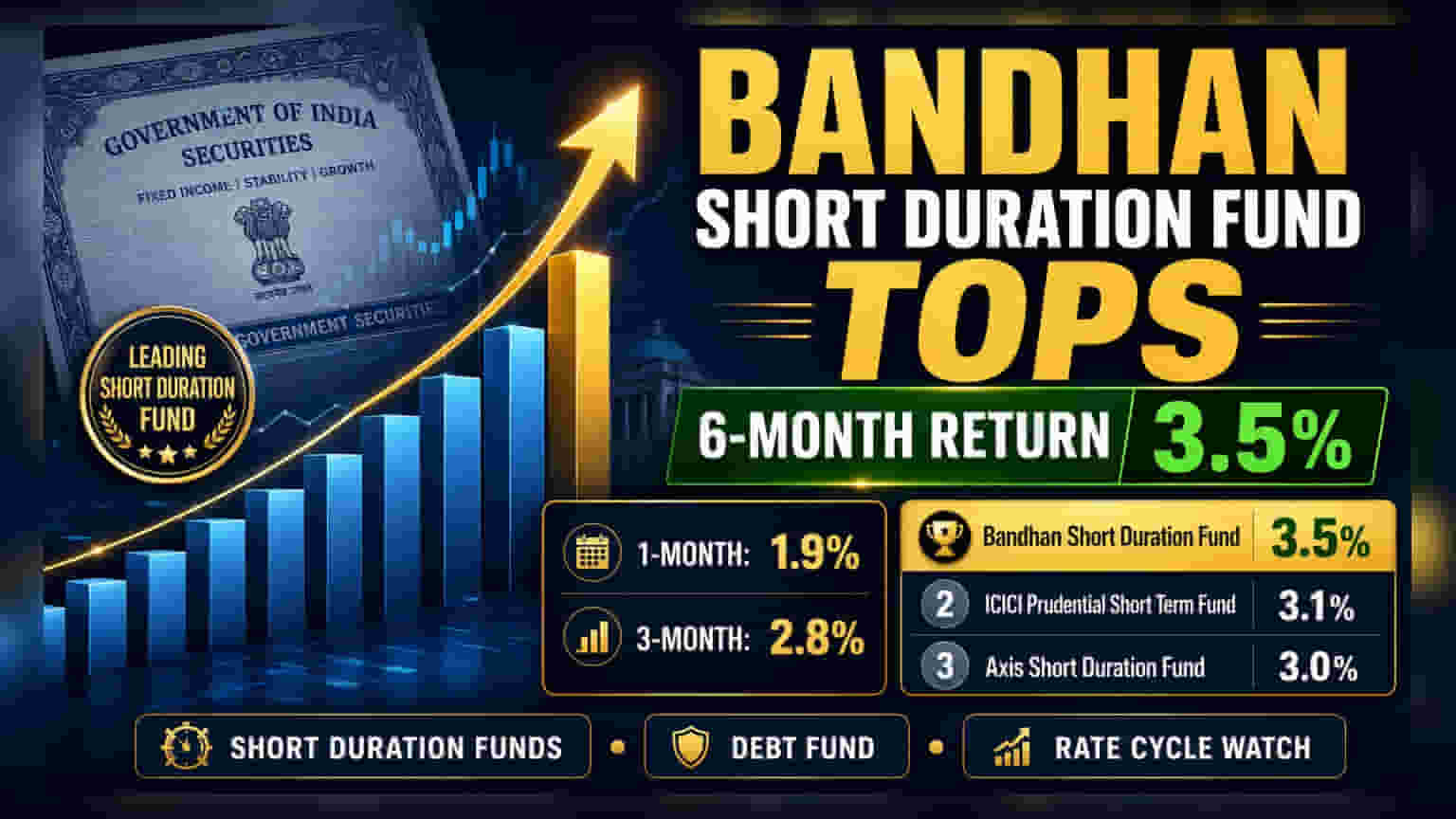
Bandhan Short Duration Fund has delivered a 3.5% return over the past six months, outperforming peers like ICICI Prudential and Axis, according to June 30 data. While this fund led the rankings in the short term, investors should note that performance leaders can shift over longer periods, with different funds holding the edge in three-year performance.
What Happened
Bandhan Short Duration Fund has emerged as the top performer among short-duration mutual funds for the six-month period ending June 30, 2026. The fund recorded a 3.5% return, according to data from ACE MF. This ranking focuses on funds with an assets under management (AUM) exceeding Rs 1,500 crore. In comparison, other major peers in this segment, such as the ICICI Prudential Short Term Fund and Axis Short Duration Fund, posted returns of 3.1% and 3.0%, respectively, during the same timeframe.
Performance Across Time Horizons
While the six-month performance highlights the recent momentum of the Bandhan Short Duration Fund, performance data can change significantly depending on the time window selected. The fund also demonstrated consistency in the very short term, topping the list for one-month returns at 1.9% and three-month returns at 2.8%.
However, it is important for investors to look beyond these short-term snapshots. When analyzing a longer three-year period, the rankings shift. For instance, the ICICI Prudential Short Term Fund has delivered a 7.5% return over three years, which outpaces the performance of several peers over that longer duration. This contrast serves as a reminder that debt funds are often influenced by the interest rate cycles and market conditions present during specific windows of time.
The Peer Context and AUM
The scale of a mutual fund can also impact how it manages its portfolio. The ICICI Prudential Short Term Fund remains one of the largest in this category, managing a corpus of Rs 21,228.5 crore as of the reported date. Larger funds may face different challenges in managing liquidity and portfolio churn compared to smaller funds, which can influence how they navigate shifts in bond yields.
Risks To Consider
Investors in short-duration debt funds are exposed to two primary risks: interest rate risk and credit risk. Short-duration funds invest in debt papers with maturities typically ranging between one to three years. If interest rates rise, the value of existing bonds in the portfolio may fall, impacting the fund's net asset value (NAV). Additionally, these funds hold corporate or government debt, and the credit quality of these holdings determines the risk of default. A fund's performance is often a reflection of how the fund manager has positioned the portfolio to handle these risks relative to the benchmark.
What Investors Should Monitor
When assessing these funds, investors should not rely solely on past returns. Instead, it is helpful to monitor the following:
- Portfolio Credit Quality: Check the fund fact sheet for the credit ratings of the bonds held in the portfolio.
- Duration Strategy: Understanding whether the manager is keeping the portfolio duration short or long provides a clue on how the fund might react to central bank interest rate decisions.
- Expense Ratio: This is the annual cost charged by the fund, which directly eats into the returns provided to the investor.
- Benchmark Performance: Compare the fund's returns against its specific benchmark index rather than just peer rankings, as different funds may have different mandate restrictions.