

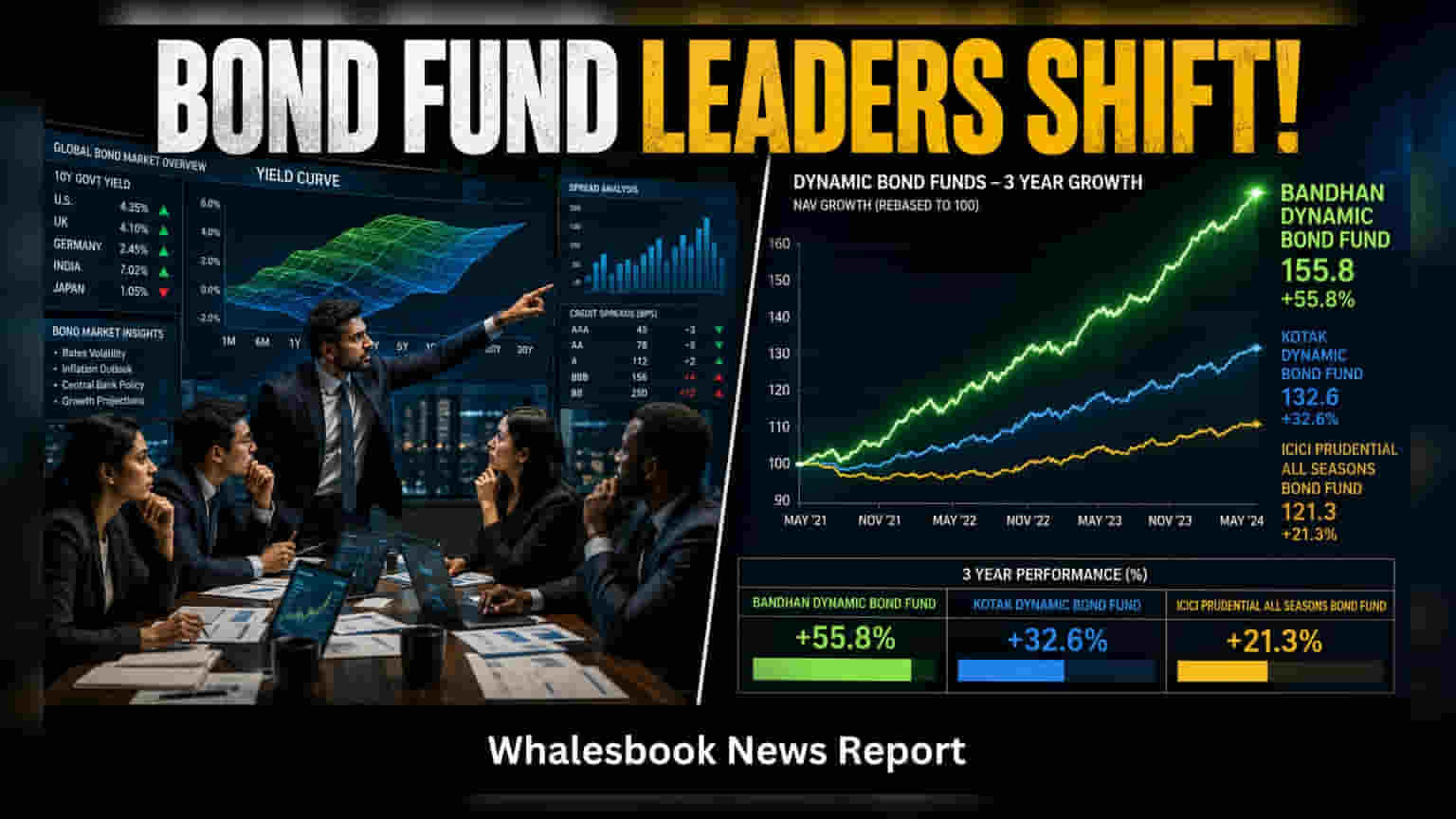
Bandhan Dynamic Bond Fund has recorded a 7.6% one-year CAGR, outperforming its benchmark. While this represents a strong short-term gain, performance in the dynamic bond category frequently shifts across different time horizons, requiring investors to look beyond single-year returns.
Bandhan Dynamic Bond Fund has outperformed its peers in the dynamic bond category over the past year, delivering a one-year compound annual growth rate (CAGR) of 7.6% as of mid-August 2026. This performance significantly outpaced its benchmark, the NIFTY Composite Debt Index A-III, which returned 3.0% over the same period.
In the competitive landscape of dynamic bond funds, other notable performers include Kotak Dynamic Bond Fund, which posted a 7.1% return, and ICICI Prudential All Seasons Bond Fund, which recorded a 5.9% one-year CAGR. While these figures highlight recent success, the leadership rankings within this category are fluid and often change depending on the chosen measurement period.
Understanding Dynamic Bond Fund Strategy
Unlike standard debt funds that may stick to a fixed maturity profile, dynamic bond funds are actively managed. The fund manager has the flexibility to change the portfolio's duration—which measures sensitivity to interest rate changes—based on their outlook for the economy and interest rates. When managers correctly anticipate interest rate movements, the fund can generate higher returns. However, if the interest rate environment shifts contrary to the manager's view, the fund’s performance can be adversely affected.
This inherent flexibility is why performance is not uniform. For example, while Bandhan Dynamic Bond Fund leads in the one-year window, other funds may show better consistency over longer periods, such as the three-year mark. A fund that thrives in a falling interest rate environment might lag when rates are rising or stable.
Investor Considerations and Risks
Investors often view debt funds as safer alternatives to equities, but it is important to distinguish them from fixed deposits. Dynamic bond funds are market-linked instruments. Their net asset value (NAV) fluctuates based on the underlying bond prices, which move inversely to interest rates. Consequently, these funds carry interest rate risk, credit risk—associated with the ability of bond issuers to repay debt—and liquidity risk.
Before investing, one should analyze performance across multiple market cycles rather than relying solely on a one-year return snapshot. Factors such as the fund manager's track record, the fund's expense ratio, and the volatility of the portfolio over three to five years provide a more accurate picture of how the fund handles different economic conditions. Investors should also note that there is no exit load for the Bandhan Dynamic Bond Fund, providing liquidity for those who may need to redeem units.