

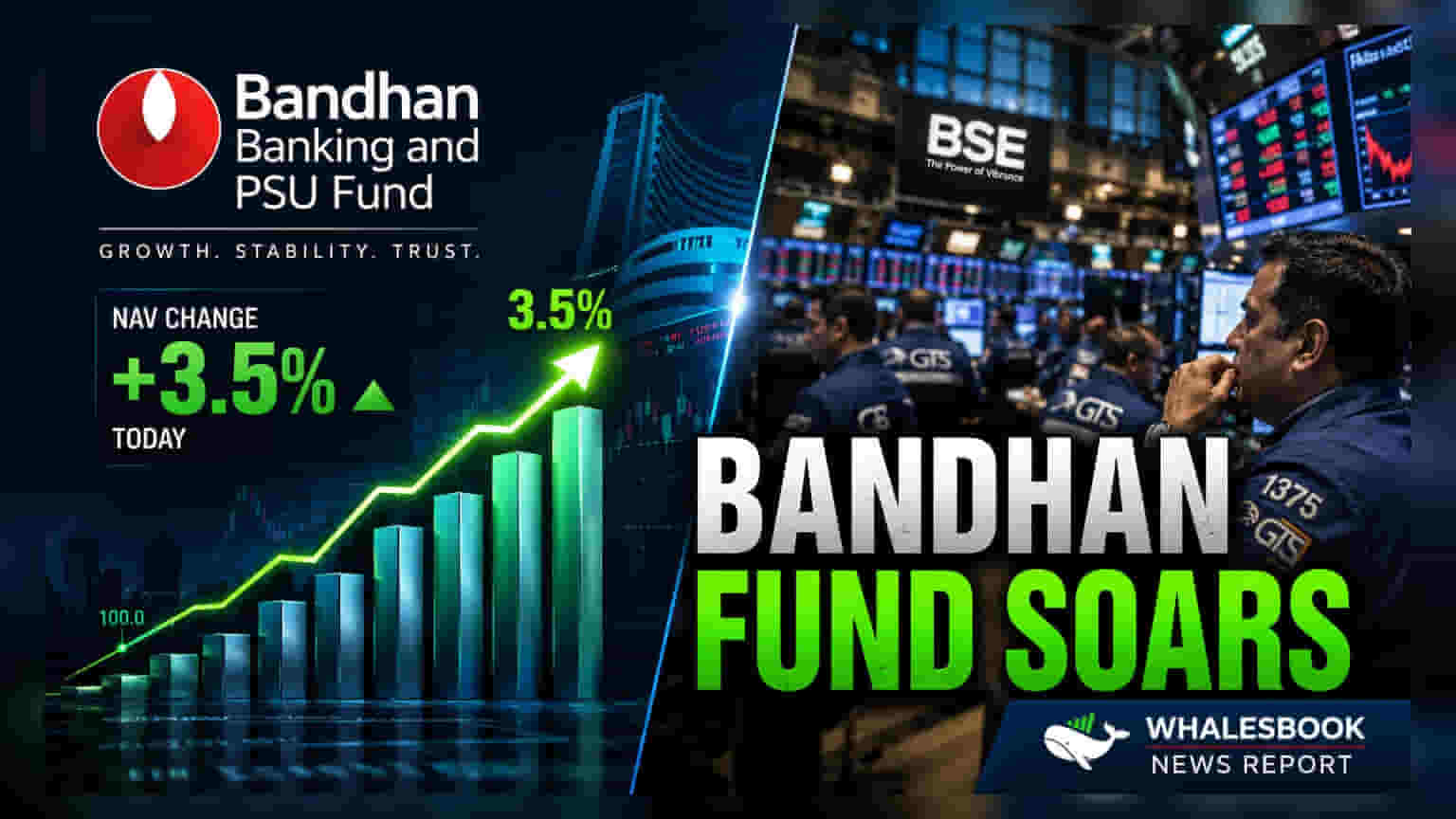
Bandhan Banking and PSU Debt Fund topped its category with a 3.5% return over the past six months, beating major peers like ICICI Pru and Kotak. This ranking considers funds with over ₹1,500 crore in assets under management. Performance leaders often change depending on the timeframe, as other funds lead over one-year or three-year periods.
What Happened
Data as of July 2, 2026, shows that the Bandhan Banking and PSU Debt Fund has secured the highest returns among its category peers over the last six months. According to data from ACE MF, the fund delivered a return of 3.5% during this period. This performance places it ahead of notable competitors such as the ICICI Pru Banking & PSU Debt Fund, which recorded a 3.1% return, and the Kotak Banking and PSU Debt Fund, which posted a 3.0% gain. The comparison is limited to schemes with an asset base exceeding ₹1,500 crore.
Why Timeframes Change The Picture
Investors often find that fund rankings shift significantly depending on the time period analyzed. While Bandhan leads in the six-month window, other funds dominate different time horizons. For example, the Nippon India Banking and PSU Debt Fund topped the performance charts for both one-month and three-month periods, with returns of 2.1% and 3.1%, respectively. When looking at a longer three-year horizon, the ICICI Pru Banking & PSU Debt Fund stands out as a top performer among the leading five schemes in this category, delivering 7.4% returns.
Comparing Against Benchmarks
The Bandhan Banking and PSU Debt Fund has also shown a strong ability to outperform its specific benchmark. Over a one-year period, the fund surpassed its benchmark by 3.4 percentage points, whereas the benchmark itself yielded 2.4%. On a three-year basis, the fund maintained a lead of 0.2 percentage points over the benchmark, which provided a 6.9% yield during that time.
Understanding The Category Context
Banking and PSU debt funds primarily invest in debt securities issued by banks, public sector undertakings, and public financial institutions. These funds are generally considered to have lower credit risk compared to other debt fund categories because they focus on high-quality issuers. However, investors should be aware that the performance of these funds is closely linked to interest rate movements in the economy. When interest rates fall, bond prices typically rise, which can benefit these funds. Conversely, rising interest rates can pressure the performance of debt instruments.
What Investors Should Track
When evaluating debt mutual funds, performance over a single short-term window is rarely enough to judge a fund's quality. Investors may track the following:
- Consistency: Check how the fund performs across various market cycles, not just the latest six-month period.
- Expense Ratio: Compare the costs of managing the fund, as higher expenses can eat into net returns over time.
- Interest Rate Sensitivity: Understand the fund's maturity profile, as funds with longer-duration bonds are more sensitive to interest rate changes.
- Credit Quality: Review the portfolio to ensure the fund remains focused on high-rated securities consistent with its mandate.