 Whalesbook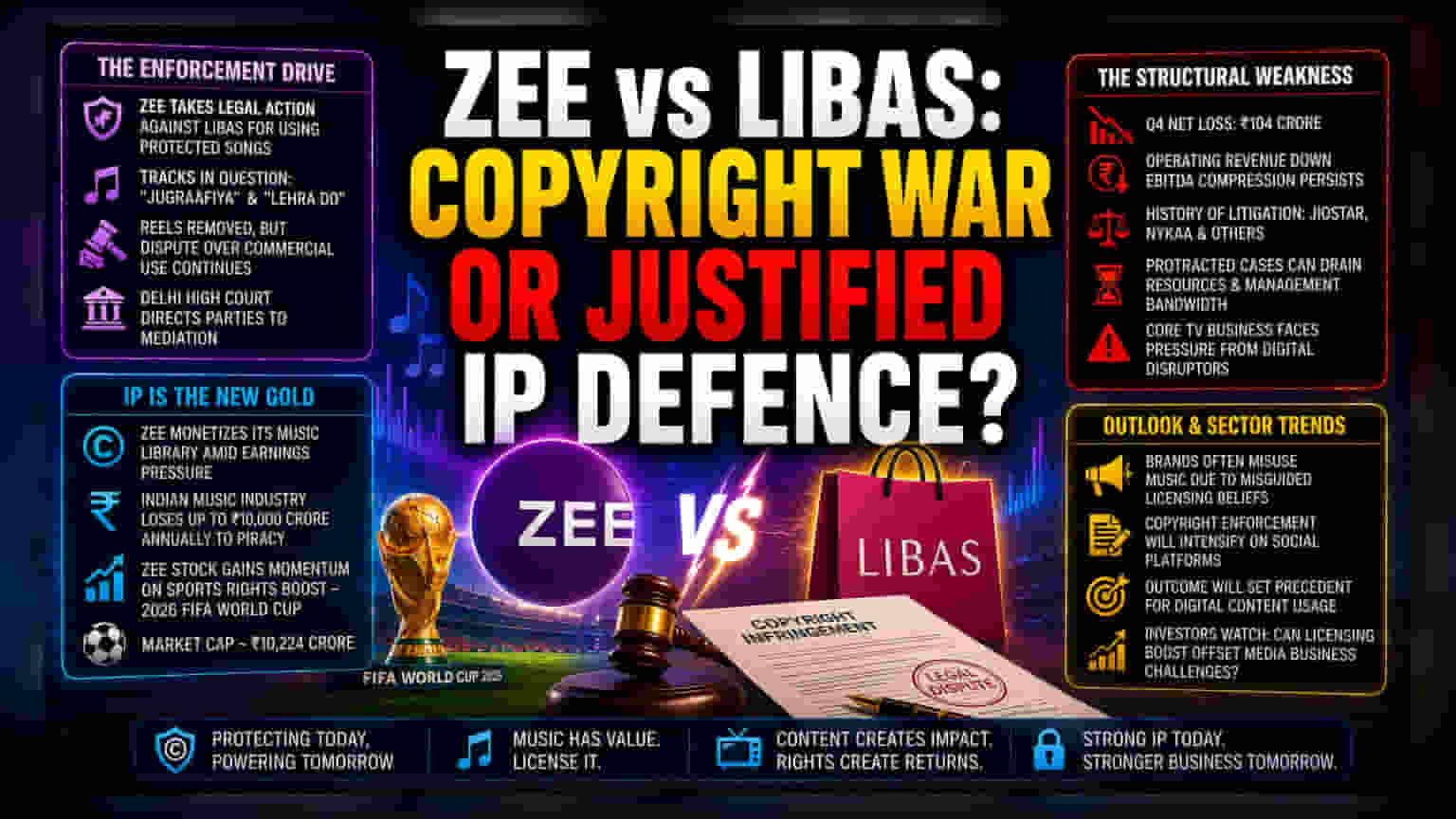


The Escalating Enforcement Strategy
Zee Entertainment’s legal challenge against Libas serves as a clear signal of its shifting stance on intellectual property management. While social media platforms provide expansive music libraries, the distinction between personal use and commercial promotion remains a frequent point of contention. The media house asserts that Libas utilized protected tracks—specifically titles such as "Jugraafiya" and "Lehra Do"—for promotional purposes, effectively bypassing the necessary commercial licensing protocols required for branded content. The Delhi High Court has directed the parties to mediation, acknowledging that while Libas has acted to remove the contested reels, the underlying conflict regarding the definition of commercial versus personal use remains unresolved.
The Valuation of Intellectual Property
This litigation is not an isolated event but a byproduct of a firm-wide initiative to extract greater value from its proprietary content library. Zee’s management is prioritizing the monetization of its music division, which is critical as the company navigates a period of significant earnings pressure. With a market capitalization now hovering near ₹10,224 crore, the company has seen its stock gain momentum recently, bolstered by a strategic pivot back into sports broadcasting, including the acquisition of rights for the 2026 FIFA World Cup. By enforcing its copyrights, the company seeks to protect its recurring revenue streams from the unauthorized exploitation that continues to plague the wider Indian music industry, which currently faces estimated annual losses of up to ₹10,000 crore due to royalty avoidance.
The Structural Weakness: A Recurring Pattern
Despite the recent rally in its stock price, Zee Entertainment operates under significant operational constraints. The company’s recent quarterly performance revealed a consolidated net loss of ₹104 crore, with a notable decline in operating revenue and persistent EBITDA compression. Critics often highlight the company's struggle to maintain consistent growth in its core broadcasting segments, which are increasingly challenged by digital-first competitors. Furthermore, the company’s history of aggressive litigation—including recent disputes with entities like JioStar and Nykaa—suggests a reactive rather than purely proactive approach to protecting its assets. If mediation fails, the company faces the risk of protracted legal battles that could drain management bandwidth at a time when the firm is attempting to rebuild its sports portfolio and improve margins.
Future Outlook and Sector Trends
The broader media landscape suggests that copyright enforcement will only intensify as brands rely more heavily on social media for direct-to-consumer sales. Marketing departments often operate under the misconception that platform-level licenses grant free rein for branded advertisements, creating a ripe environment for copyright litigation. As Zee continues to pursue these legal channels, the outcome of its current disputes will likely set important precedents for how commercial entities verify the legality of their digital assets. Investors should continue to watch whether these licensing efforts can sufficiently offset the continued profitability pressures in the firm's traditional television and media businesses.