 Whalesbook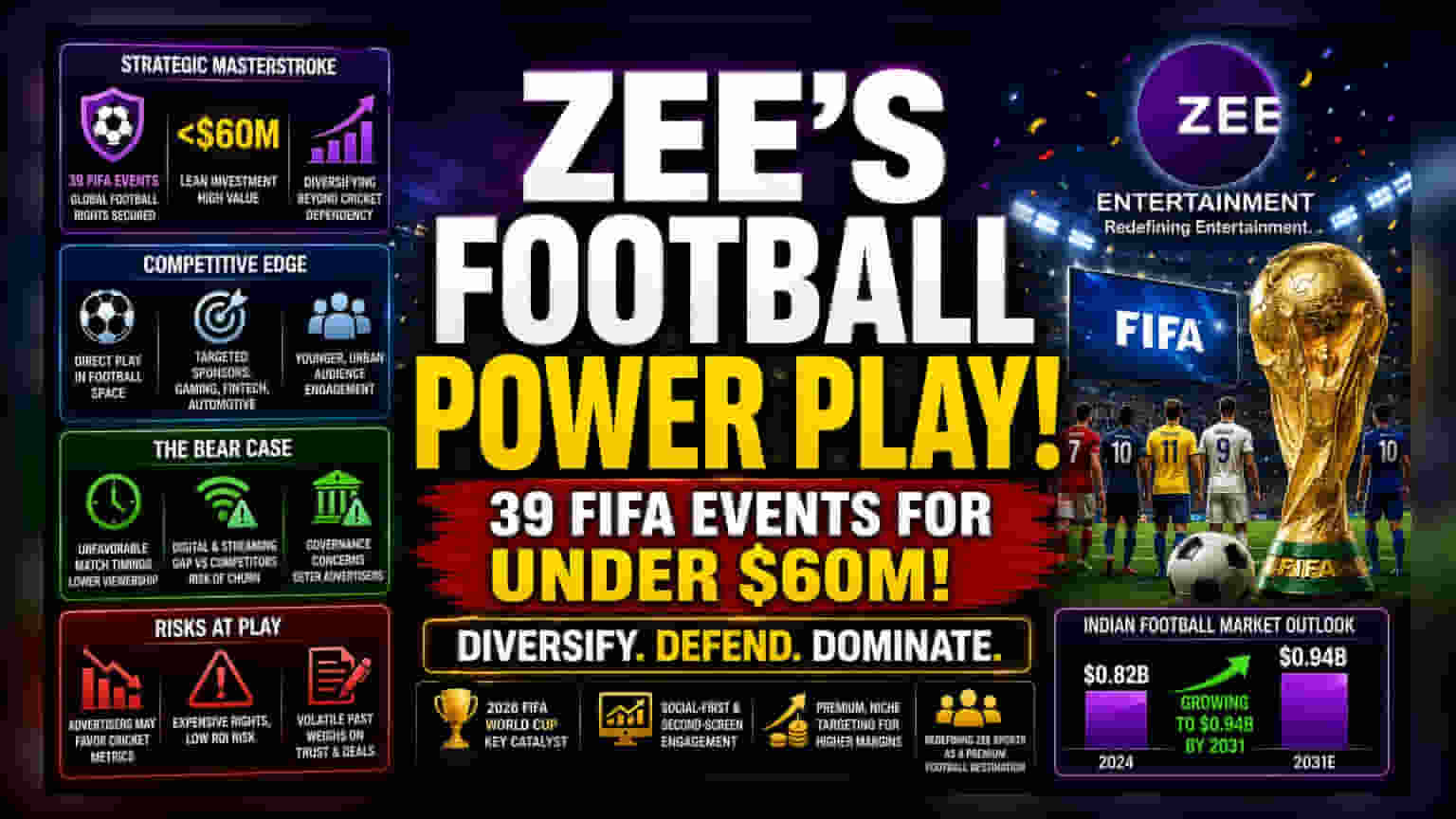


The Strategic Calculus
By securing a diverse portfolio of 39 FIFA global football events for a relatively lean sum of under $60 million, Zee Entertainment is attempting to mitigate the structural risks associated with a cricket-only content strategy. In a market where a single sports genre commands approximately 90% of total revenue, this diversification represents a defensive move against the volatility of cricket broadcasting rights, which have seen hyper-inflated bidding wars in recent cycles. The valuation of this deal, while conservative, allows the broadcaster to build a multi-sport ecosystem without the crushing debt load that often accompanies premier rights acquisitions.
Competitive Benchmarking and Market Reality
This move places Zee in direct, albeit lower-stakes, competition with deep-pocketed entities like Viacom18, which previously committed significantly higher capital for FIFA-related assets. Analysts observe that Zee’s approach signals a shift toward mid-tier asset acquisition where margins can be controlled more tightly. Unlike the astronomical $6.2 billion IPL cycle which creates massive pressure for immediate monetization, this football portfolio provides a platform for targeted sponsorship—specifically courting the gaming, fintech, and automotive sectors—which typically show higher engagement rates among urban, younger audiences than mass-market consumer goods.
The Forensic Bear Case
Despite the optimistic framing of new revenue streams, significant hurdles remain. The core risk lies in the timing of matches. Historical data suggests that international football broadcasts in the Indian time zone often suffer from diluted viewership compared to peak-time domestic cricket. Furthermore, Zee enters this space with a trailing market position in digital streaming infrastructure compared to competitors with integrated telecommunications backbones. If the platform fails to provide a seamless, latency-free streaming experience, advertisers may revert to the predictable, high-reach metrics provided by cricket broadcasts, leaving the company with expensive rights and stagnant ad inventory. Additionally, the history of corporate governance volatility at Zee serves as a lingering shadow that may deter institutional advertising partners from committing to long-term sponsorship cycles on this new property.
Future Outlook
Industry consensus suggests that the ultimate success of this initiative depends on Zee's ability to innovate beyond traditional linear broadcasting. The pivot toward social-first engagement and second-screen interactive advertising will be the primary metric for success. Should the 2026 World Cup cycle deliver the expected global viewership spikes, the company may succeed in rebranding its sports division as a premium, niche-targeting entity rather than a secondary player in a cricket-dominated environment.