

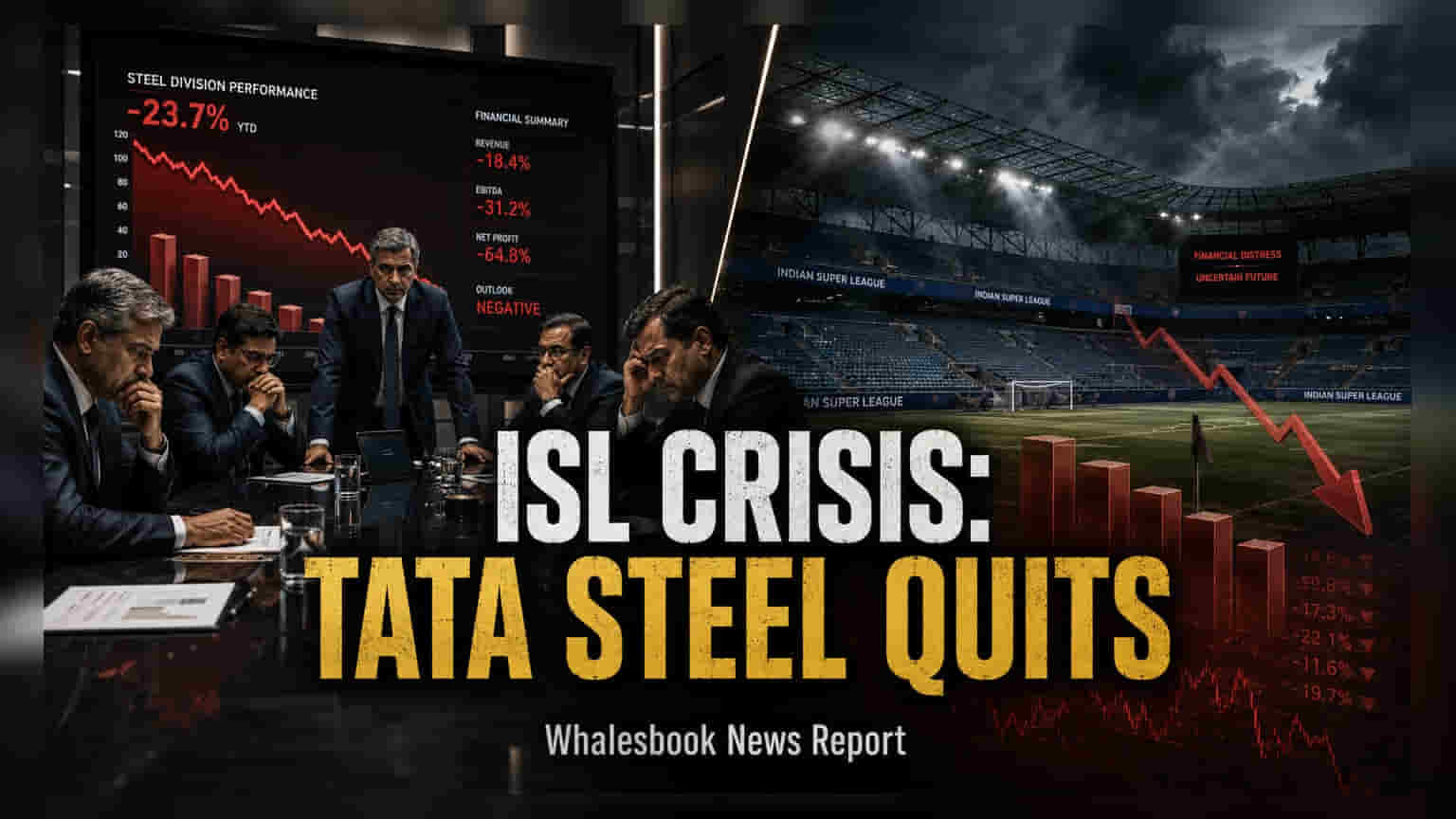
Tata Steel has decided to withdraw Jamshedpur FC from the Indian Super League (ISL) starting in the 2026-27 season. While the move is a strategic shift for the company, it highlights deeper financial instability within the football league, which has seen media rights values plummet and cumulative losses exceed ₹5,000 crore.
Tata Steel has officially confirmed that its football club, Jamshedpur FC, will not participate in the Indian Super League (ISL) from the 2026-27 season onwards. The company described the decision as a strategic pivot, aiming to refocus its sports investment towards grassroots football development rather than continuing with the professional league structure.
For investors, it is important to note that this decision involves a non-core business segment and has no material impact on Tata Steel’s main operations. The company's stock (TATASTEEL) closed near ₹190 on August 10, 2026, recording a gain of about 2% during the day, driven by broader market factors rather than this specific development. Tata Steel has maintained that the exit is not a response to the league's financial crisis, despite the timing of the announcement.
League Financial Instability and Media Rights
The move by Tata Steel brings fresh attention to the severe commercial challenges currently facing the ISL. The league has experienced a dramatic collapse in the value of its media rights, which are essential for its long-term financial health. Recent bidding for the 2025-26 season saw offers as low as ₹8.6 crore from platforms like FanCode and even lower from others, a sharp decline from the ₹275 crore annual value previously commanded by the league’s media rights deal with JioStar.
This commercial downturn occurs alongside significant administrative tension. The 15-year commercial agreement between the All India Football Federation (AIFF) and Football Sports Development Ltd (FSDL) has concluded, leading to disputes over how the league should be governed and managed. Market estimates suggest that over the last 15 years, the broader Indian football ecosystem—including clubs and operators—has collectively incurred losses of over ₹5,000 crore, raising questions about the current business model's ability to generate returns for corporate owners.
Future Monitorables for Stakeholders
The situation remains fluid, as the All India Football Federation has reportedly granted Jamshedpur FC until August 12, 2026, to reconsider its decision to leave. Investors and followers of the sports industry will likely track whether the league can implement structural reforms to improve profitability and governance. If the financial situation does not stabilize, the risk remains that other corporate teams might also reconsider their long-term involvement in the league, which would further test the commercial viability of the competition.