 Whalesbook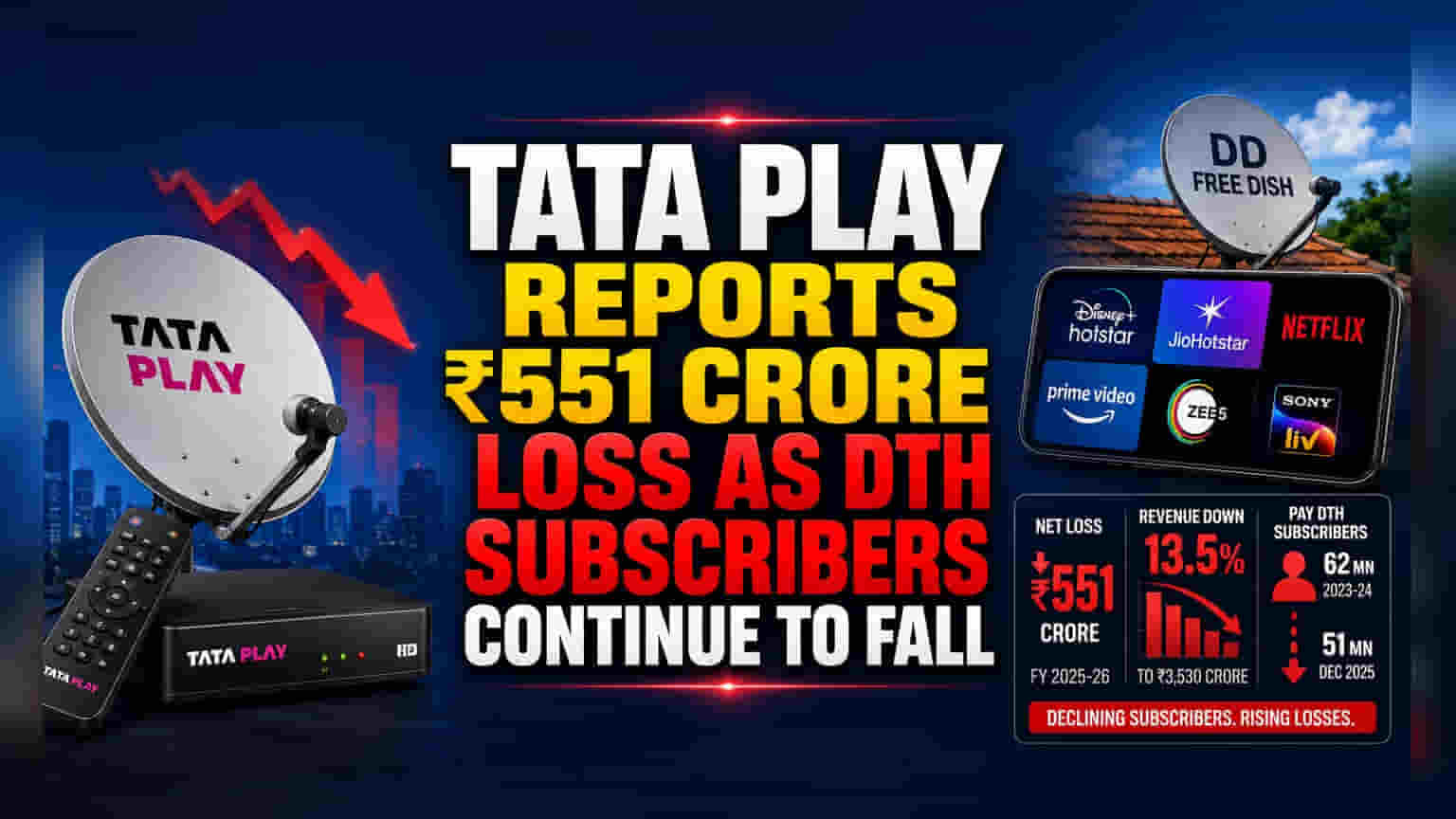


Tata Play reported a net loss of ₹551 crore for FY26 as revenue dropped by 13.5% to ₹3,530 crore. This shift reflects the broader challenges in India's DTH industry, where customers are moving toward free-to-air platforms and streaming services. The performance highlights the structural pressure on traditional cable and satellite businesses, which are losing market share as viewers change how they consume entertainment.
What Happened
Tata Play, the joint venture between Tata Sons and Walt Disney, reported a net loss of ₹551 crore for the financial year 2025-26. This marks an increase in losses from the previous year's figure of ₹529 crore. Alongside the rising loss, the company’s revenue saw a sharp decline of 13.5%, falling to ₹3,530 crore. These figures come at a time when the broader direct-to-home (DTH) industry in India is experiencing a sustained reduction in the total number of paid subscribers.
Why This Matters For The DTH Sector
The primary issue facing the industry is a shift in consumer behavior. Households are increasingly moving away from paid DTH connections toward two main alternatives: free-to-air services like DD Free Dish, operated by Prasar Bharati, and subscription-based or ad-supported streaming platforms.
For investors and market observers, this trend is critical. When consumers leave paid DTH services, it puts direct pressure on the revenue models of these companies. The decline in Tata Play's subscriber base—part of a wider industry trend where the national pay DTH subscriber count has dropped from 62 million in 2023-24 to 51 million by December 2025—indicates that the traditional cable and satellite business model is under significant structural strain. Even with modest increases in Average Revenue Per User (ARPU), as reported by industry analysts like Crisil, the overall volume of users is shrinking too quickly to sustain previous growth levels.
The Content Dispute Factor
Another layer of pressure on the business is the ongoing content dispute with Sony Pictures Networks India. For over a year, Sony’s channels have been unavailable on the Tata Play platform. This has been a source of frustration for subscribers and, according to industry experts, has contributed to customer departures. The matter has reached the Telecom Disputes Settlement and Appellate Tribunal (TDSAT). This dispute highlights a recurring risk in the media distribution sector: when distributors and content creators cannot reach price agreements, the end customer often chooses to leave the platform entirely, which hurts long-term revenue.
The Bigger Business Context
It is important for readers to note that this is not an isolated problem for a single company but a reflection of a changing sector. Across the DTH industry, including other players like Dish TV India, companies are struggling to retain users who now prefer the flexibility of streaming apps or the zero-cost model of free-to-air satellite dishes.
While some companies attempt to increase revenue by raising prices twice a year, this strategy carries the risk of pushing more price-sensitive customers toward cheaper or free alternatives. The business model of DTH relies on large-scale subscriptions to cover high operational and content acquisition costs. When the subscriber base thins out, maintaining profitability becomes significantly harder.
What Investors Should Monitor
The most important monitorable for the industry is how these companies adapt to the streaming era. Investors and analysts should watch for:
- Subscriber Retention: Whether the pace of user exits stabilizes or continues to accelerate.
- Content Deals: The resolution of ongoing disputes with major broadcasters, as these agreements are essential to keeping channel packages attractive.
- Pivot to Hybrid Models: Whether traditional DTH players can successfully integrate streaming apps into their platforms to offer a 'one-stop' service that keeps customers from leaving.
- Pricing Power: Whether the industry can continue to increase ARPU without losing further market share to free alternatives.