 Whalesbook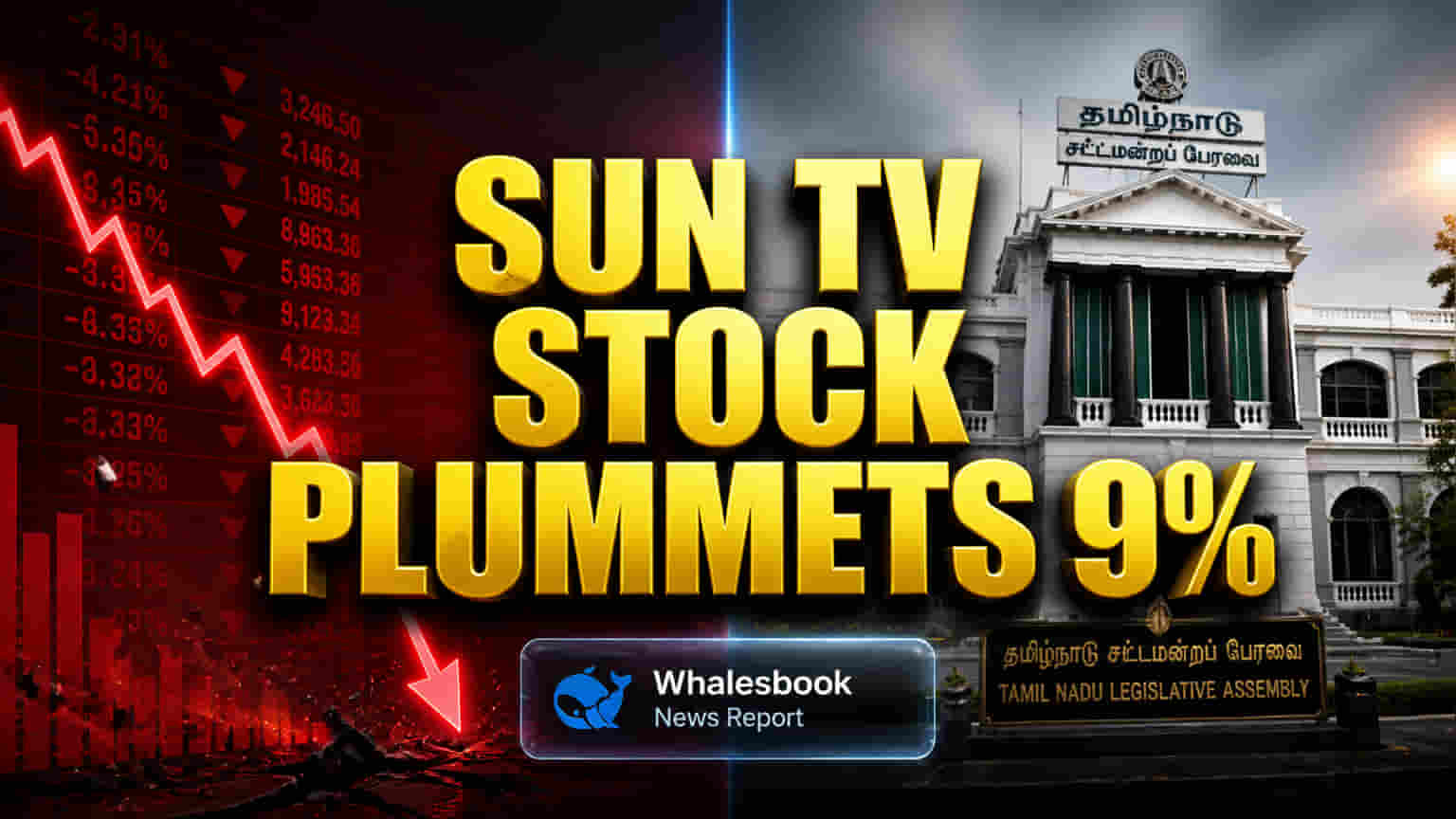


Political Volatility Sparks Sharp Sell-off
Sun TV Network shares saw a sharp drop in price on Monday, May 4, 2026, with intra-day lows reaching ₹548.10. This marked its steepest single-day decline since August 2024. The fall of 9.49% happened despite broader market gains, with the Nifty 50 index trading up 0.99% at 24,235. The sell-off was triggered by early Tamil Nadu assembly election results showing the incumbent Dravida Munnetra Kazhagam (DMK)-led coalition trailing significantly. The Tamilaga Vettri Kazhagam (TVK) and the All India Anna Dravida Munnetra Kazhagam (AIADMK) alliance were reported to be leading. The stock's performance by 11:51 AM reflected this sentiment, trading at ₹563.40, down 6.97% from its previous close. Trading volumes surged, with approximately 1.7 million shares changing hands, valued at nearly ₹96 crore, indicating substantial investor divestment. The company's market capitalization stood at ₹22,177.11 crore as of May 4, 2026. The stock is now down 17% from its 52-week high of ₹660.70 touched on April 20, 2026.
Political Ties Create Risk
Sun TV Network's close ties to the DMK, via ownership by the Maran family—Kalanithi Maran is the grand-nephew of DMK patriarch M Karunanidhi and nephew of current Chief Minister MK Stalin—carry political risk. Historically, the company benefited from its alignment with the DMK. However, negative election outcomes immediately worry investors about potential policy shifts, regulatory environments, and the company's influence. This election result highlights the vulnerability of media companies closely tied to political parties to electoral shifts, potentially affecting advertising revenue and partnerships. The broader Indian media sector, trading at a Price-to-Earnings (P/E) ratio of 17.2x, lower than its 3-year average of 31.3x, already faces pessimism regarding long-term growth due to digital disruption and shifting advertising spend.
Media Sector Challenges and Structural Issues
Beyond the political news, Sun TV Network operates in a challenging media landscape. The industry faces ongoing pressures from weak advertising growth and audience/revenue shifts to Over-The-Top (OTT) platforms. While Sun TV has diversified with an IPL franchise (Sunrisers Hyderabad) and its own OTT platform (SUNNXT), its core broadcasting business remains susceptible. Analysts suggest the stock may struggle to gain value without visible improvements in revenue growth, content monetization, and capital allocation. The company's valuation metrics, including a Price-to-Earnings (P/E) ratio around 14.66x to 15.51x, place its market capitalization near ₹23,865 crore. Competitors like Zee Entertainment trade at a similar P/E of 15.0x. Despite a consensus 'Buy' rating from analysts with an average 12-month price target around ₹670-₹680, these fundamental business challenges remain significant.
Key Risks for Sun TV
Maran Family Dispute Fuels Governance Worries
Another significant risk is the ongoing legal battle within the Maran family over control of Sun TV Network. Dayanidhi Maran has accused his brother, Kalanithi Maran, of orchestrating a "premeditated fraudulent scheme" to gain control of the company through questionable share allotments and transactions dating back to 2003, shortly after their father's death. Allegations include fraudulent share allotments, forged documentation, and corporate misgovernance, with claims that shares worth thousands of crores were transferred at face value, bypassing other legal heirs. Sun TV Network has denied these allegations as personal matters not affecting business operations, but this internal discord creates significant governance risks. This could lead to lengthy legal battles, distract management, and reduce investor confidence, overshadowing strategic initiatives or business recovery plans. This internal strife also raises questions about the transparency and ethical practices within the promoter group.
Regulatory and Political Minefield Remains
Sun TV's deep ties to the DMK party put it in a precarious political position. Any shifts in political power or policy direction could directly impact regulatory approvals, spectrum allocation, and government advertising revenue. Furthermore, the allegations of fraudulent transactions within the Maran family, if proven, could attract further regulatory scrutiny beyond corporate governance, potentially involving financial crime investigations. The company's historical reliance on political patronage is now a double-edged sword, exposing it to election uncertainty and potential legal entanglements from internal power struggles.
Competition Weakness Amidst Disruption
While Sun TV is a dominant player in regional broadcasting, its reliance on traditional advertising models makes it vulnerable to digital disruption. Unlike agile digital-native competitors, adapting legacy structures can be slow and capital-intensive. The internal family dispute further hinders the company's ability to focus on innovation, content strategy, and adapting to evolving viewer habits, potentially ceding ground to more nimble competitors. Despite a healthy debt-free balance sheet and a dividend yield of around 2.27%-2.48%, these factors alone are insufficient to mitigate risks from operational distractions and major industry changes.
Analyst Outlook Faces Risks
Analysts maintain a generally positive outlook, with a consensus 'Buy' rating and average 12-month price targets around ₹667.50-₹681.27. However, these projections do not fully reflect the greater risks from the internal family dispute and escalating political uncertainty. The stock's immediate future will likely be dictated by the ongoing election results and any developments in the Maran family legal battle. Investors should watch for signs of business revival, improved content monetization, and clearer capital allocation strategies. Dividend yield and cash reserves may offer limited protection against significant governance and structural concerns.