 Whalesbook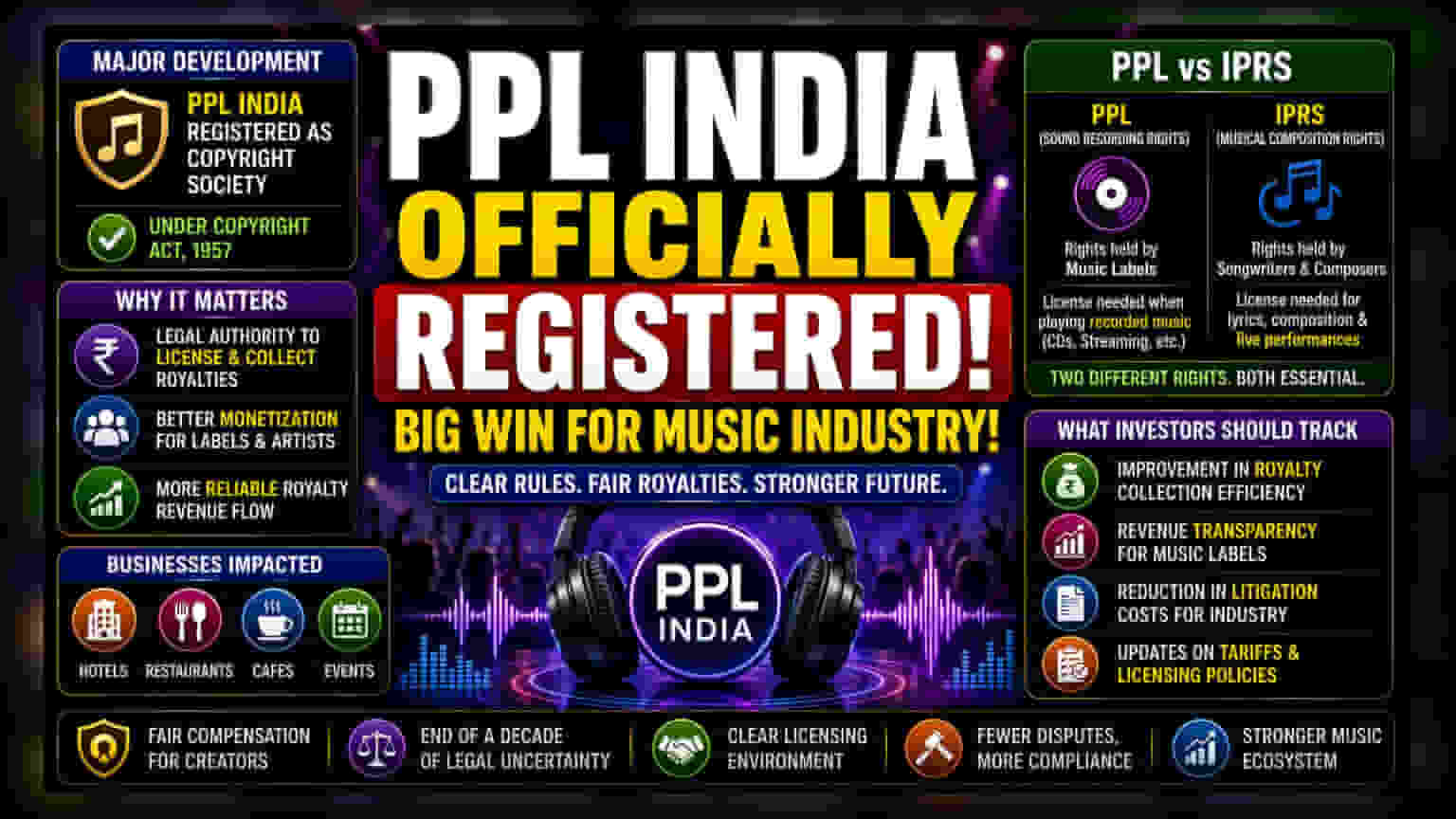
The Indian government has registered Phonographic Performance Limited (PPL) as a Copyright Society, resolving years of legal uncertainty. This move simplifies music licensing for businesses and helps music labels collect royalties more effectively. It marks a shift from a period of doubt over PPL's legal authority to a clear, regulated framework for sound recording rights.
What Happened
The Indian government has officially registered Phonographic Performance Limited (PPL India) as a Copyright Society under the Copyright Act, 1957. This is a major regulatory step for the music industry. PPL, which has been in operation since 1941, represents hundreds of music labels and manages rights for sound recordings. This status gives the company formal legal authority to grant licenses and collect royalty fees from businesses that play recorded music.
Why This Matters for the Music Industry
For years, there was legal confusion about whether PPL could legally collect license fees without this specific registration. This ambiguity allowed some businesses to avoid paying for music, which meant music labels and artists were losing out on potential income. With this official status, the rules are now clearer. Music labels can now expect a more reliable flow of royalty payments. For the labels and production companies, this means potentially better monetization of their music libraries.
The Difference Between PPL and IPRS
It is important for observers to distinguish between the two main types of music rights in India. PPL deals with sound recording rights, which are generally held by music labels. When a hotel or restaurant plays a song from a recorded CD or streaming platform, they need a license from PPL.
In contrast, the Indian Performing Right Society (IPRS) handles the underlying rights—the lyrics and musical composition. When a songwriter or composer is involved, or if live music is performed, the IPRS is the entity involved. While they serve different purposes, both are now established bodies, which helps clarify the licensing environment for businesses that need to obtain rights for both the composition and the recording.
Historical Context and Legal Clarity
The path to this registration has not been smooth. Following a 2012 amendment to the Copyright Act, there was a decade of legal uncertainty. PPL had been operating as a private entity, leading to court cases where businesses challenged their right to issue licenses. Some high-profile legal disputes, such as those involving hospitality chains, highlighted the friction caused by this lack of formal status. By granting this registration, the government has essentially ended a long period of "wait and see" for both the music industry and the commercial establishments that use their work.
Impact on Businesses and Compliance
Commercial establishments like hotels, restaurants, cafes, and event organizers will now face a more standardized licensing process. Previously, some businesses used the legal uncertainty as a reason to avoid fees. Now that PPL is a registered society, those businesses will need to be more diligent in securing valid licenses. While this ensures fairness for creators, it also means that businesses using recorded music must ensure their compliance is up to date to avoid potential legal issues or penalties.
What Investors Should Monitor
Investors and stakeholders in the media and entertainment sector should watch for how this affects royalty collection efficiency. The key monitorable will be the improvement in revenue transparency for music labels. Additionally, market participants may track whether this leads to a reduction in litigation-related costs for the industry, as the legal framework for licensing is now more settled. Any further updates on tariff structures or uniform licensing policies from the government will also be important to follow.

