 Whalesbook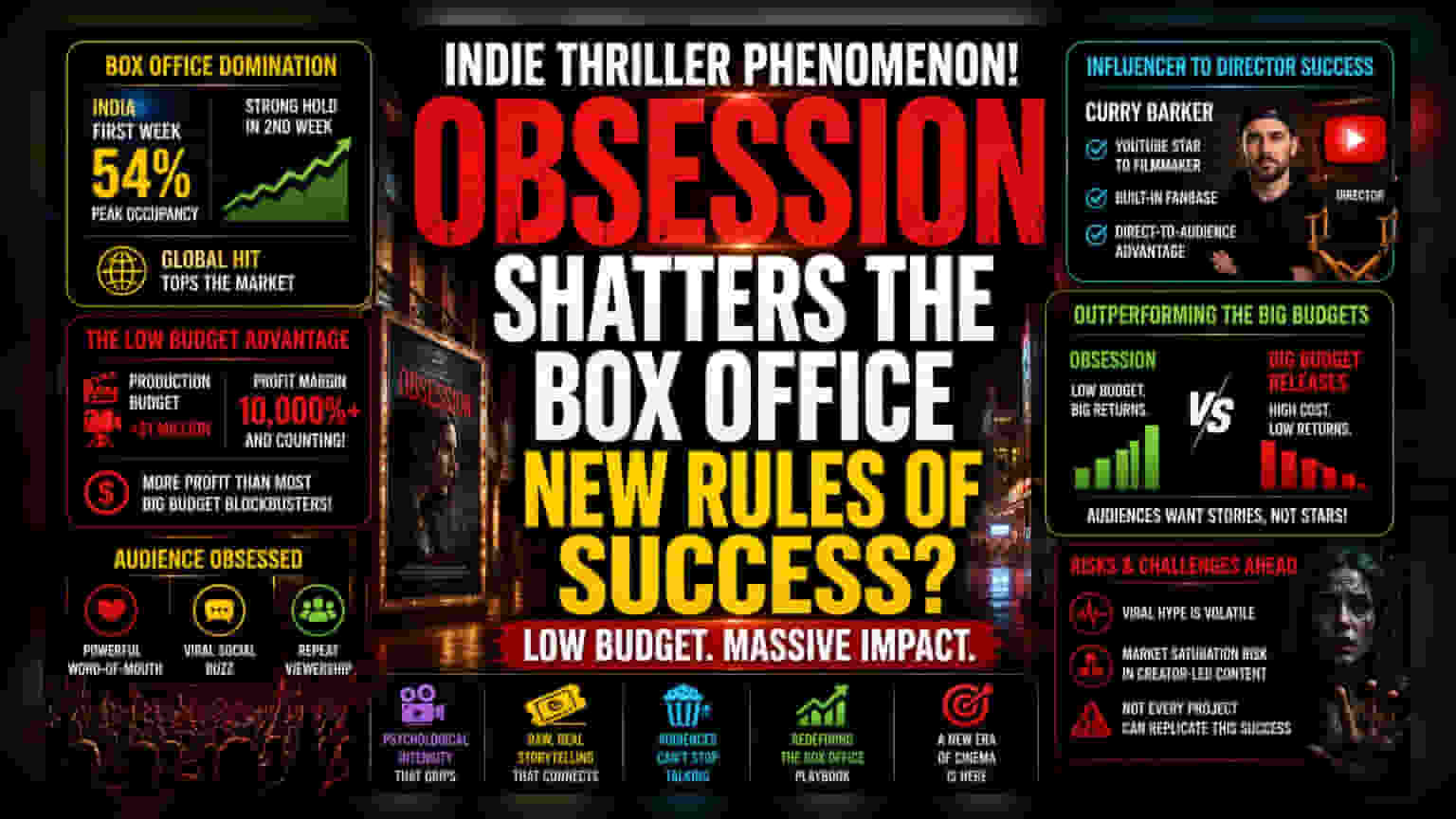


The Decentralized Box Office Shift
'Obsession' has transcended its niche origins to become a case study in modern media consumption. While legacy studios struggle to draw audiences to high-budget, franchise-dependent titles, Curry Barker’s psychological thriller has secured a dominant position in the global market, with its India performance reflecting a broader appetite for raw, digital-native storytelling. The film’s ability to thrive without traditional A-list casting marks a structural departure from conventional theatrical metrics, where marketing spend previously served as the primary arbiter of success.
The Efficiency of the 'Influencer-to-Director' Pipeline
Barker, transitioning from a viral YouTube content creator to a feature film director, has effectively monetized an established, pre-sold audience. Unlike standard independent releases that rely on festival circuits for discovery, the success of this film stems from direct-to-consumer engagement and algorithmic optimization. By operating with a reported production budget under $1 million—a fraction of typical marketing outlays for wide releases—the film has achieved profit margins exceeding 10,000 percent. This efficiency model is now actively reshaping the risk-reward ratio for studios like Focus Features, which are increasingly prioritizing directors who bring built-in fan communities into the theater.
Comparing Market Penetration
Within the Indian market, the film’s performance highlights a distinct shift in genre preference. Occupancy figures, which peaked at 54% during its first week, reveal that audiences are responding to the psychological intensity of the narrative rather than the star power traditionally required to fill seats in regions like Chennai and Hyderabad. In a climate where broader multiplex sentiment has been challenged by fluctuating demand, 'Obsession' has sustained its momentum across its second week, defying the typical front-loaded decay seen in most horror releases. This longevity is largely attributed to the organic social media discourse that continues to drive foot traffic, effectively outperforming big-budget local releases that lacked similar engagement cycles.
Structural Risks and the Bear Case
Despite the current success, the model faces scalability hurdles. The reliance on viral, influencer-led hype cycles can create high volatility in theatrical legs. If a project fails to cultivate immediate, explosive word-of-mouth, the absence of franchise IP or established star names leaves it with no safety net. Furthermore, as the industry floods the market with content from creator-directors, the 'YouTube-to-cinema' pipeline risks saturation, potentially compressing returns as audiences become more discerning. The current high profitability is an outlier performance; investors should be wary of assuming that all low-budget, indie-horror projects will replicate these unprecedented multiples.