

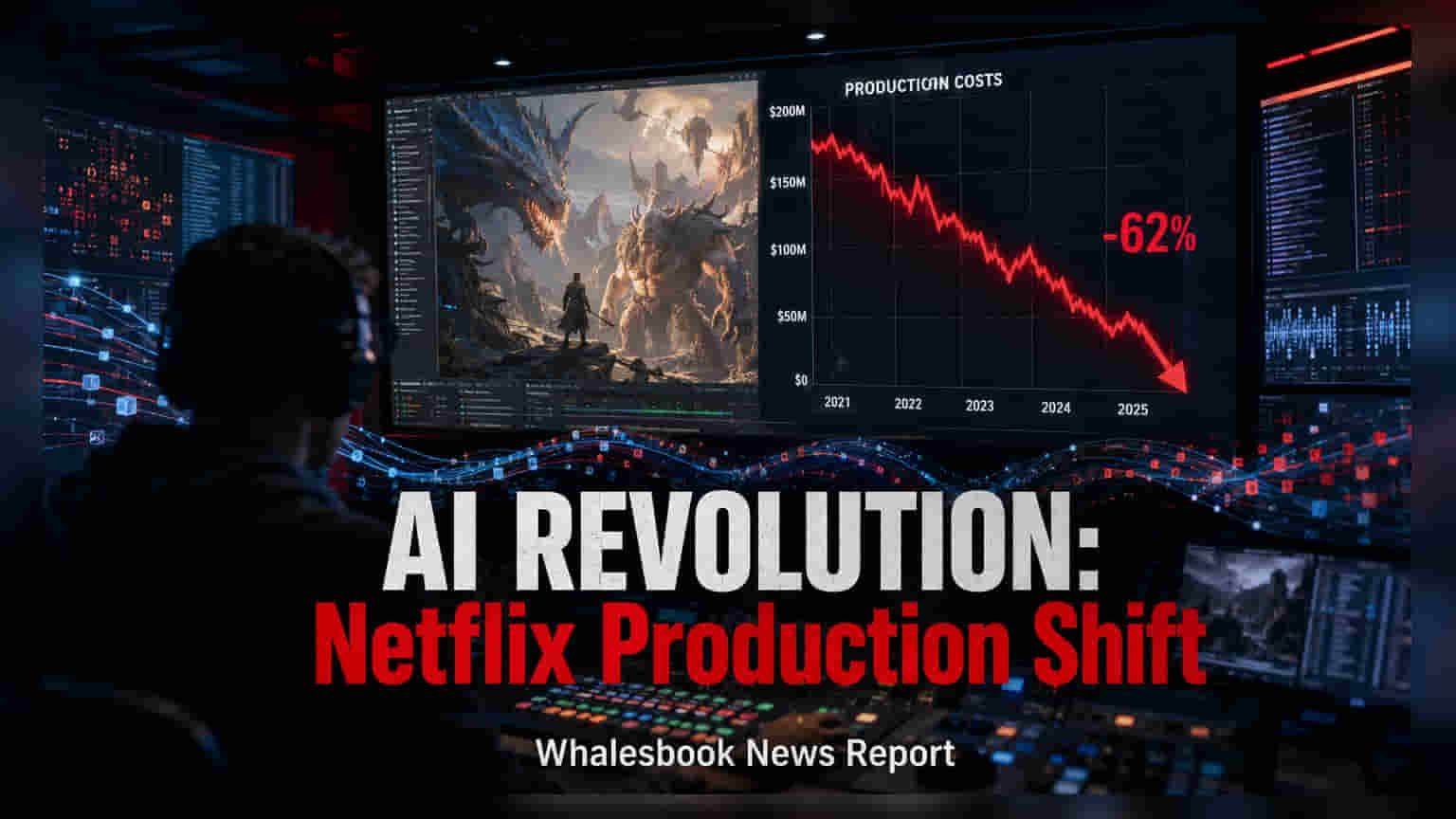
Netflix reported that nearly 300 titles produced this year utilized generative AI to streamline post-production and visual effects. The company is leveraging this technology to lower production expenses and enable more complex creative scenes. Investors are monitoring how these efficiency gains might influence profit margins in a highly competitive streaming market.
Netflix has confirmed that generative artificial intelligence has become a core component of its content production strategy, with approximately 300 films, series, and specials released or in production during 2026 utilizing the technology. By integrating AI tools, the streaming giant aims to enhance visual effects, accelerate post-production timelines, and produce ambitious visual sequences that were previously limited by budget and time constraints.
Scaling Production Efficiency
The company’s move toward AI integration reflects a strategic effort to optimize capital allocation in a content-heavy industry. Co-chief executive Ted Sarandos indicated that the goal is to equip filmmakers with advanced tools that allow for more efficient execution of complex shots. For instance, in specific productions like the Indian series Glory and the documentary The American Experiment, the company utilized AI to handle crowd generation and large-scale environmental shots. These applications have reportedly reduced the time and cost for certain visual effects work by approximately 50% compared to traditional manual methods.
Strategic Impact on Margins and Competition
For investors, the adoption of AI is significant because it directly addresses the high costs associated with content creation and visual effects. As the global streaming sector faces pressure to balance massive content spending with sustainable profitability, reducing post-production expenses could provide a competitive advantage. If these efficiency gains scale across Netflix's massive library of global content, it may assist in protecting profit margins despite the ongoing need for high-quality, high-budget programming to retain subscribers.
Industry Challenges and Future Monitorables
Despite the operational benefits, the widespread use of AI in creative industries remains a subject of intense debate. Professionals in visual effects, writing, and acting have expressed concerns regarding the impact of automation on job security and the preservation of artistic integrity. While Netflix maintains that AI is an assistant rather than a replacement for human creativity, the company faces the ongoing challenge of managing these industry-wide tensions while maintaining its reputation for creative quality.
Investors should track how these AI-driven cost savings reflect in the company’s operating margins in upcoming quarterly results. Additionally, the ability of the company to navigate creative labor discussions and maintain its premium brand image while automating portions of its production pipeline will be a key factor in its long-term operational success.