

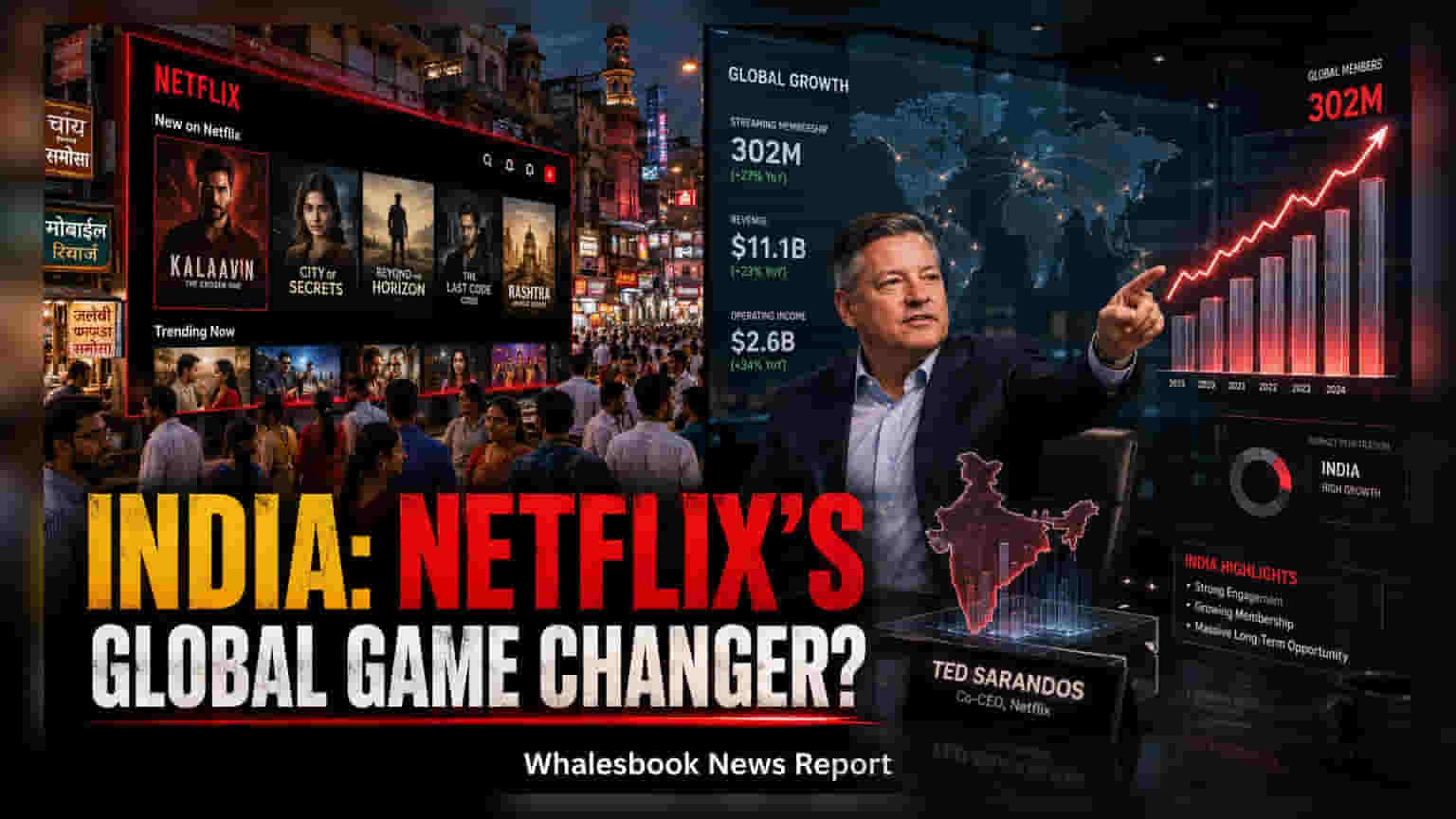
Netflix Co-CEO Ted Sarandos has signaled that India is critical to the company's next phase of growth, focusing on creative potential rather than just user numbers. As the streaming giant manages slowing revenue in mature regions, its Indian strategy centers on cost-effective original content and selective live events. Investors are currently tracking the company's global performance amid conservative Q3 2026 guidance and rising competition.
Netflix global Co-CEO Ted Sarandos has officially identified India as a vital pillar for the company’s future expansion, moving the conversation beyond simple subscriber metrics. As Netflix navigates a period of slowing revenue growth in mature Western markets, its investment in Indian creative talent, local production, and affordable content models has become central to its global profitability strategy.
While the company does not disclose specific subscriber figures for India, it is estimated to contribute a significant portion of the platform's global user base. Sarandos noted that India’s vast potential is driven by a strong appetite for entertainment, increasing internet connectivity, and a rapidly developing creative ecosystem. The company aims to position itself as a long-term partner in the Indian market rather than just a content provider.
Strategic Shift in Content and Sports
A critical part of the company's strategy involves a distinct approach to live content. Unlike some competitors that bid heavily for broad, multi-season sports league rights like the IPL, Netflix is prioritizing "eventizable" live experiences. By developing technology to support unique, one-off events—similar to its recent NFL Christmas broadcasts in the US—the company aims to attract younger audiences without the heavy capital expenditure associated with long-term sports rights. This reflects a broader philosophy of avoiding "loss leader" tactics and ensuring each content investment has a clear path to profitability.
Global Financial Context and Risks
For investors, the enthusiasm for India’s growth must be balanced against the current global financial picture. Netflix recently reported revenue of $12.56 billion for the second quarter of 2026, marking a 13% increase year-over-year. While this growth was generally in line with analyst expectations, the company’s share price has experienced significant volatility in mid-2026. This downward pressure is largely linked to cautious Q3 guidance and investor concerns regarding slowing growth in mature international markets.
Furthermore, the competitive landscape remains intense. Netflix faces significant pressure from other streaming services and free, ad-supported platforms like YouTube, which continue to capture substantial TV viewing time. Investors are also monitoring how the company balances its rising content acquisition costs against its desire to maintain strong operating margins. Additionally, recent changes in how the company discloses engagement reports have prompted some analysts to seek more transparency regarding long-term subscriber retention metrics.
As Netflix continues its push into emerging markets, the key monitorable for investors will be whether its local strategy can successfully drive sustainable revenue growth to offset the maturity of its Western markets. The company’s ability to manage content costs while scaling in diverse regions like India will likely dictate the next phase of its financial performance.