

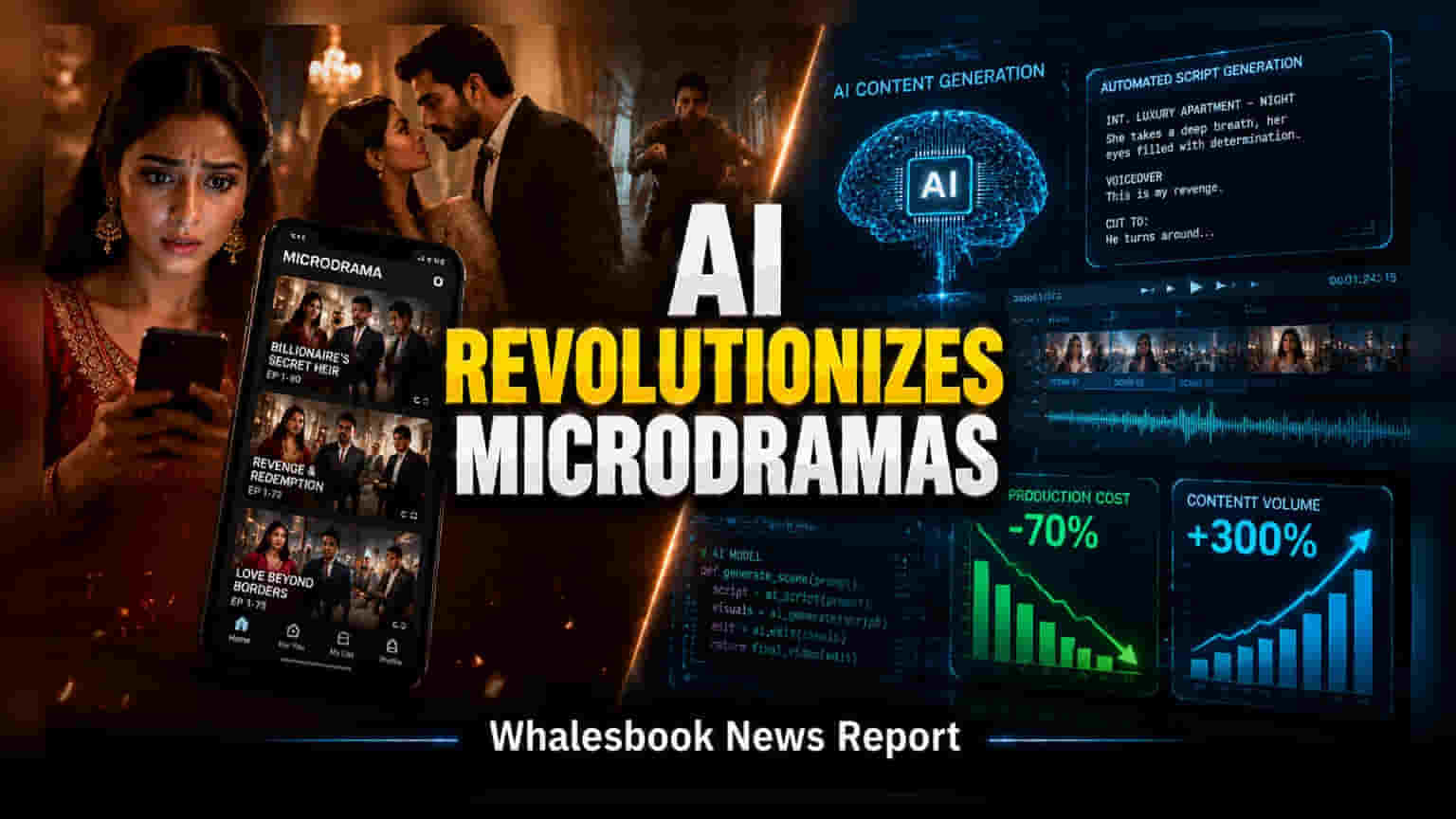
Indian microdrama platforms are integrating AI to cut production costs by up to 50% and accelerate content volume. While companies like JioStar and Dashverse expand their AI-led libraries, the shift faces challenges regarding specialized creative talent and audience engagement.
The Indian digital entertainment landscape is witnessing a rapid transition as microdrama platforms increasingly turn to artificial intelligence to drive production efficiency. Industry leaders project that AI-generated shows could account for 30% to 40% of the total content mix by late 2026. This shift is primarily fueled by the potential to reduce production expenses by 25% to 50% compared to traditional live-action filming, as AI tools streamline asset creation, localization, and visual effects.
Impact on Production and Costs
Platforms are leveraging AI to bypass traditional hurdles such as the requirement for large-scale film sets and human actors. According to industry observations, AI-driven workflows are currently yielding cost savings of approximately 40% over conventional production methods. For instance, companies like Story TV have reported significant reductions in VFX costs, noting that AI can lower these expenses to roughly one-fifth of traditional levels. This efficiency allows smaller production houses to experiment with high-spectacle genres like mythology, fantasy, and action without the prohibitive budgets associated with live-action shoots.
Market Adoption and Emerging Trends
Major players are already integrating these technologies into their business models. JioStar’s microdrama vertical, TADKA, is testing new AI workflows for animated formats, while Dashverse has successfully launched AI-generated titles like 'Raftaar' on its DashReels app. Similarly, platforms like ShareChat and Moj report that AI-generated content already occupies a notable share of their library, with expectations for this figure to grow significantly as the technology matures.
Challenges and Strategic Risks
Despite the clear cost advantages, the sector faces substantial operational and creative hurdles. A primary concern is the shortage of specialized writers capable of mastering animation-focused storytelling, which requires different pacing and character development techniques than traditional live-action drama. Furthermore, industry experts warn that lower production costs do not inherently ensure quality. There is a verified risk of 'creative convergence,' where an over-reliance on AI models may lead to repetitive, formulaic content that fails to maintain long-term audience engagement. Concerns regarding emotional authenticity also remain, as human connection is often cited as a critical factor in the success of Indian entertainment.
Investors may monitor whether platforms can successfully balance these automated efficiencies with high-quality, original storytelling. The next phase for the industry will depend on how effectively these companies can bridge the talent gap and maintain viewer retention as the proportion of AI-generated content continues to rise.