

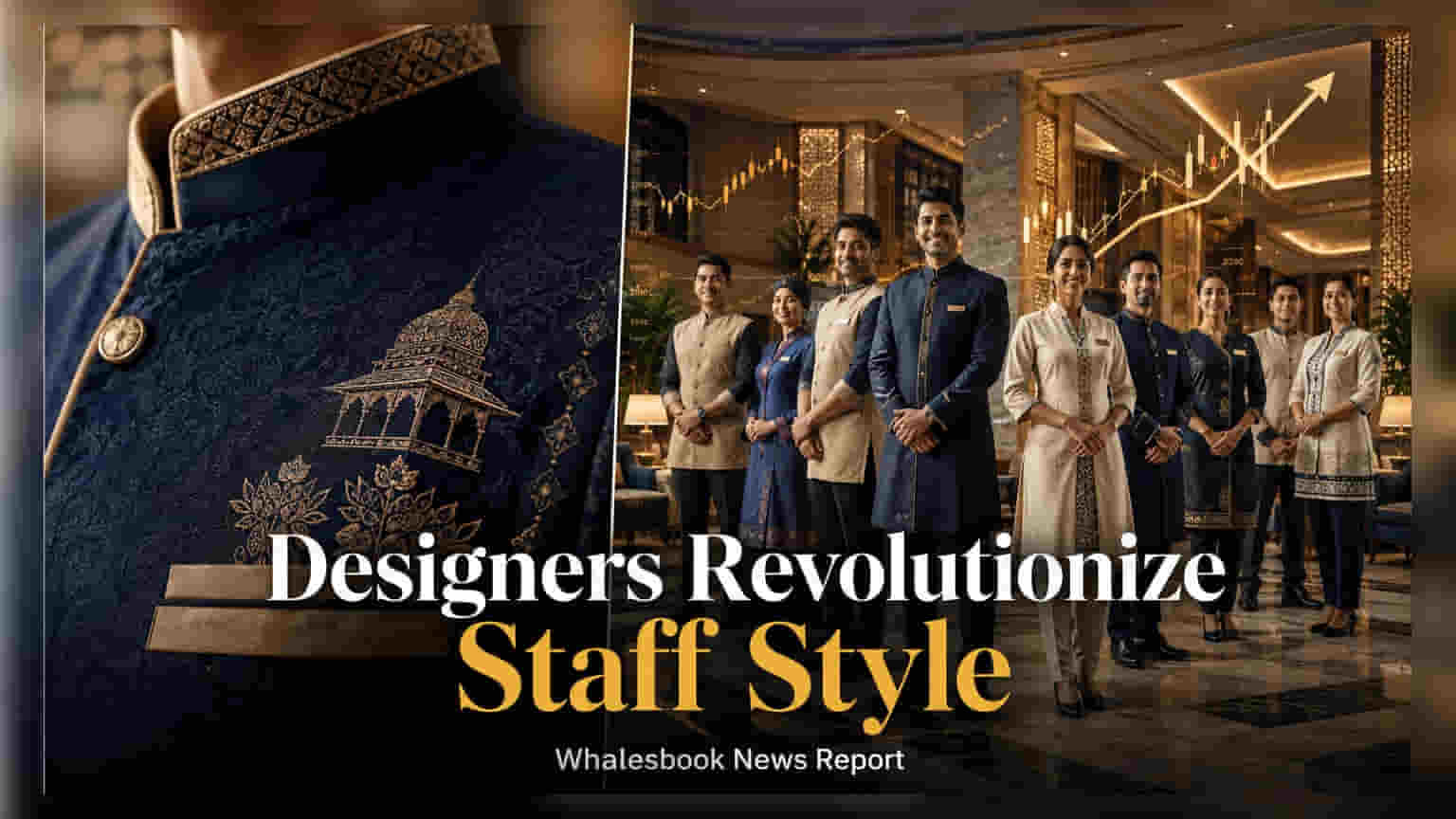
Top Indian designers are creating bespoke uniforms for luxury hotels and airlines to boost brand identity. This growing trend highlights the rise of high-end service design, though scaling artisanal craftsmanship for large corporate orders presents a unique business challenge.
The landscape of corporate and hospitality design is shifting as luxury fashion designers increasingly move away from purely retail collections to create bespoke staff uniforms. This trend represents a strategic evolution in the branding of premium services, where apparel is no longer just functional but serves as a key element of the overall guest experience.
Blending Brand Strategy With Artisanal Craft
High-end designers like Payal Jain, Manoviraj Khosla, and Sandeep Gonsalves are leading this transition by applying haute couture principles to staff attire. For luxury hospitality clients, such as The Oberoi or The Leela, the focus is on creating a visual narrative that aligns with the property's history, architecture, and regional culture. Unlike standard mass-produced uniforms, these pieces often incorporate intricate motifs, specialized tailoring, and indigenous textile techniques. For investors tracking the luxury hospitality and services sector, this shift underscores a deeper focus on differentiation and guest experience as a means to command premium pricing in a competitive market.
The Business Model of Bespoke Design
This movement marks a diversification of revenue streams for fashion designers, who are tapping into the stable demand of the B2B corporate sector. By collaborating with airlines and high-end cocktail bars, designers are able to extend their creative influence and reach a wider, captive audience. However, the business model faces specific operational hurdles. While standard uniform manufacturers prioritize speed and low-cost scalability, bespoke design firms must balance artistic detailing with the practical realities of industrial laundering and daily wear. Maintaining quality control across large quantities, such as the thousands of units required for airline staff, requires a high level of operational management and supply chain coordination, which can be a bottleneck for smaller, atelier-based firms.
Economic Risks and Sector Sensitivity
While this trend offers an opportunity for designers to stabilize income, the segment is inherently tied to the health of the hospitality and corporate travel sectors. Spending on luxury uniforms is often viewed as a discretionary expense. Should luxury travel or corporate hospitality budgets face pressure, demand for these premium, high-cost collaborations could see a decline. Additionally, the labor-intensive nature of hand-crafted detailing limits the ability to rapidly scale production, making it difficult to compete on volume with established corporate clothing suppliers.
The next important trend to watch is whether these collaborative models can achieve sustainable profitability as they move from niche boutique projects to larger-scale institutional contracts. Success will depend on the ability of design firms to optimize their production processes without compromising the artisanal quality that attracts these premium clients in the first place.