

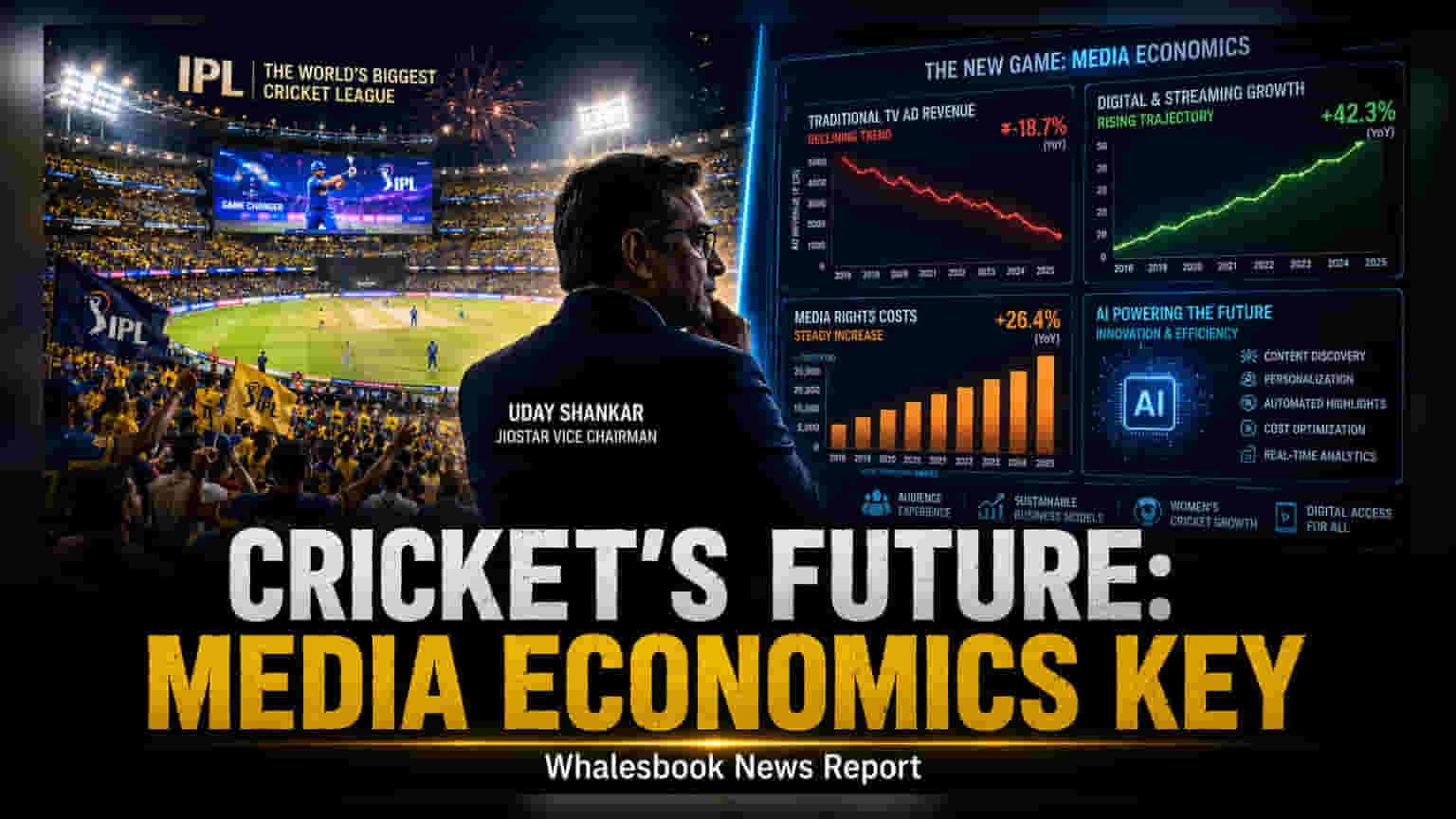
JioStar Vice Chairman Uday Shankar emphasized at the ET World Leaders Forum that the long-term viability of sports, including the IPL, depends on sustainable media business models rather than just stadium attendance. He highlighted the mounting pressure on traditional advertising revenue and the potential for AI-driven innovation to reshape sports broadcasting.
JioStar Vice Chairman Uday Shankar shared insights on the future of sports media at the ET World Leaders Forum in New Delhi on August 21, 2026. He argued that the success of major sporting properties like the Indian Premier League (IPL) is no longer driven by stadium capacity alone, but by the ability to connect with a vast audience through a sustainable and scalable media ecosystem.
For investors and market participants, this perspective offers a look into the challenges facing large media conglomerates. While sports represent a massive reach, they are also a capital-heavy business. The cost of acquiring media rights for top-tier sports has risen sharply, putting pressure on broadcasters to find efficient ways to turn viewership into profit. Shankar noted that traditional media, which historically relied heavily on television advertising, is now navigating a complex shift as audience habits change and digital platforms grow.
JioStar, a joint venture involving Reliance Industries, is currently working to address these shifts by focusing on audience experience and refining its business models. As the media landscape evolves, companies are moving away from relying solely on linear television advertisements toward models that incorporate digital access and newer content formats.
Shankar also touched upon the future role of technology, noting that artificial intelligence is poised to become a significant driver for innovation. He suggested that AI could help manage the growing volume of content, potentially reducing costs or creating more engaging viewer experiences. Beyond technology, he highlighted women’s cricket as a growth segment, pointing to its high competitive quality as an untapped opportunity for broader engagement.
Looking ahead, investors may track how these media entities manage the rising costs of sports rights. The central risk for the sector remains the volatility in advertising spending, which is often tied to broader economic conditions. While the reach of cricket in India remains strong, the financial success of these ventures will depend on the company's ability to maintain margins amidst these high content costs. The ongoing expansion of digital accessibility is expected to remain a key monitorable for analysts assessing the long-term health of media and entertainment portfolios.