 Whalesbook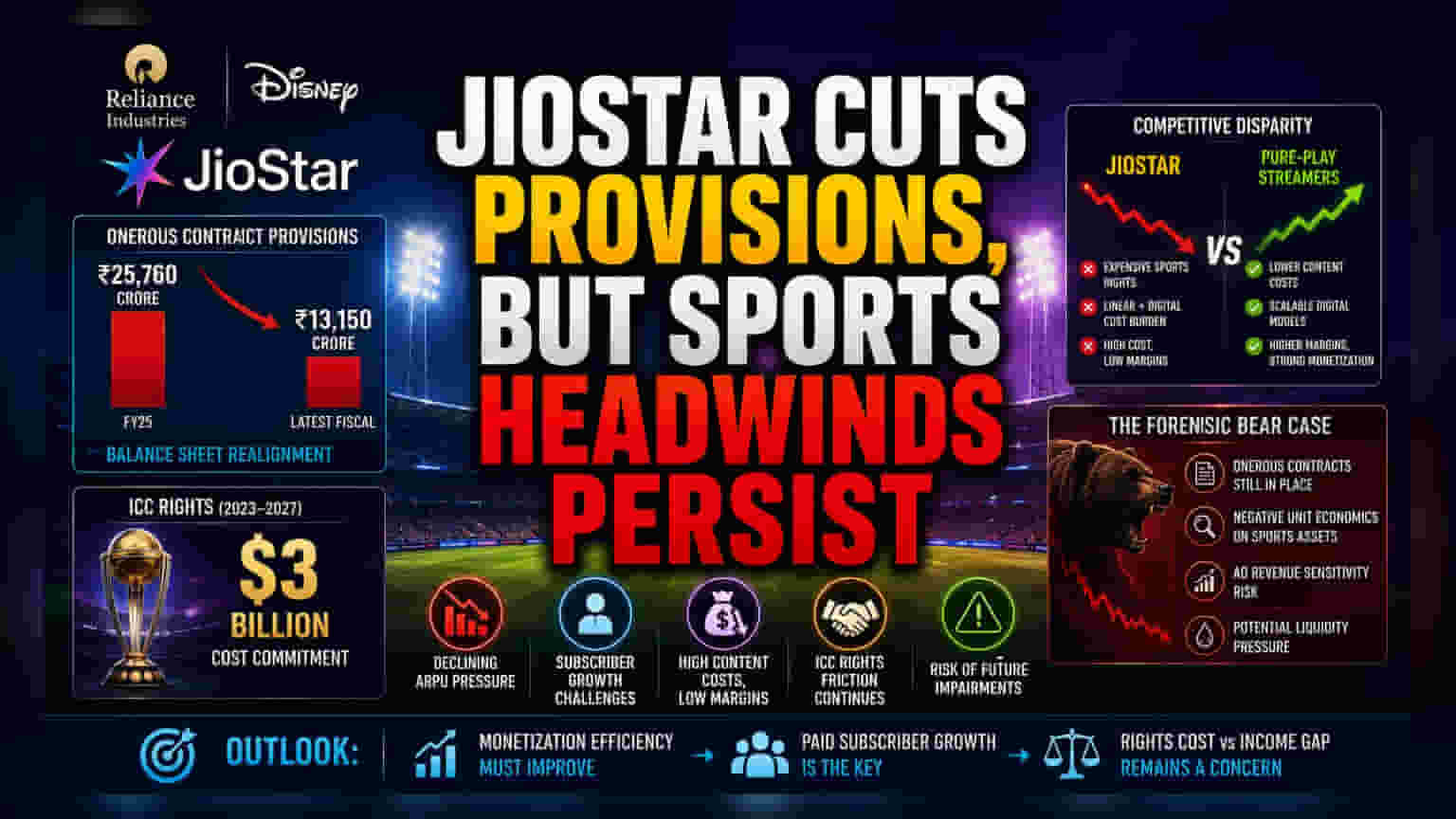


The Accounting Realignment
The reduction in onerous contract provisions—dropping from ₹25,760 crore in FY25 to a leaner figure in the most recent fiscal period—suggests a strategic shift in how the Reliance Industries and Disney joint venture classifies its long-term liabilities. By avoiding significant new provisions this year, the firm is attempting to normalize its balance sheet despite the reality that the core economics of high-stakes sports broadcasting remain deeply challenging. This maneuver does not eliminate the underlying financial friction; rather, it reflects a recalibration of expected future losses against current revenue streams that have struggled to keep pace with premium content acquisition costs.
Competitive Disparity in Streaming
Unlike pure-play digital incumbents that leverage lower-cost content libraries, JioStar remains tethered to expensive linear and digital sports rights that often act as loss leaders. The market valuation of this venture is heavily influenced by its ability to convert casual cricket viewers into high-ARPU subscribers, a metric that continues to face downward pressure from aggressive pricing wars. When benchmarked against global peers in the sports streaming space, JioStar faces a unique structural hurdle: the lack of a mature, high-margin subscriber base capable of absorbing the massive $3 billion cost tag associated with the 2023-2027 ICC cycle. The industry is watching closely to see if this reduction in provisions marks a genuine turnaround in monetization efficiency or merely a tactical deferral of recognized losses.
The Forensic Bear Case
From a risk perspective, the persistence of the 'onerous' label on certain contracts is a red flag for institutional investors. Management’s reliance on adjusting these accounting reserves masks the deeper issue of negative unit economics on flagship sports properties. The friction with the International Cricket Council regarding the potential surrender of rights suggests that the joint venture is struggling to find a viable path to profitability under the current fee structure. If advertising demand softens in the coming quarters, the company may find itself forced to recognize even larger impairments, potentially triggering a liquidity crunch for its sports-focused divisions. Furthermore, the reliance on high-cost content creates a rigid operating structure that leaves little room for pivots if consumer preference shifts away from premium cricket packages.
Future Outlook and Strategic Direction
Analysts remain divided on whether this accounting cleanup serves as a precursor to a wider restructuring of broadcasting agreements or a temporary stabilization. The company’s ability to secure favorable terms in future cycles will hinge on its capacity to drive meaningful growth in paid subscribers. Without a significant uptick in per-user revenue, the structural imbalance between rights costs and realized income will likely necessitate further adjustments in future reporting periods.