 Whalesbook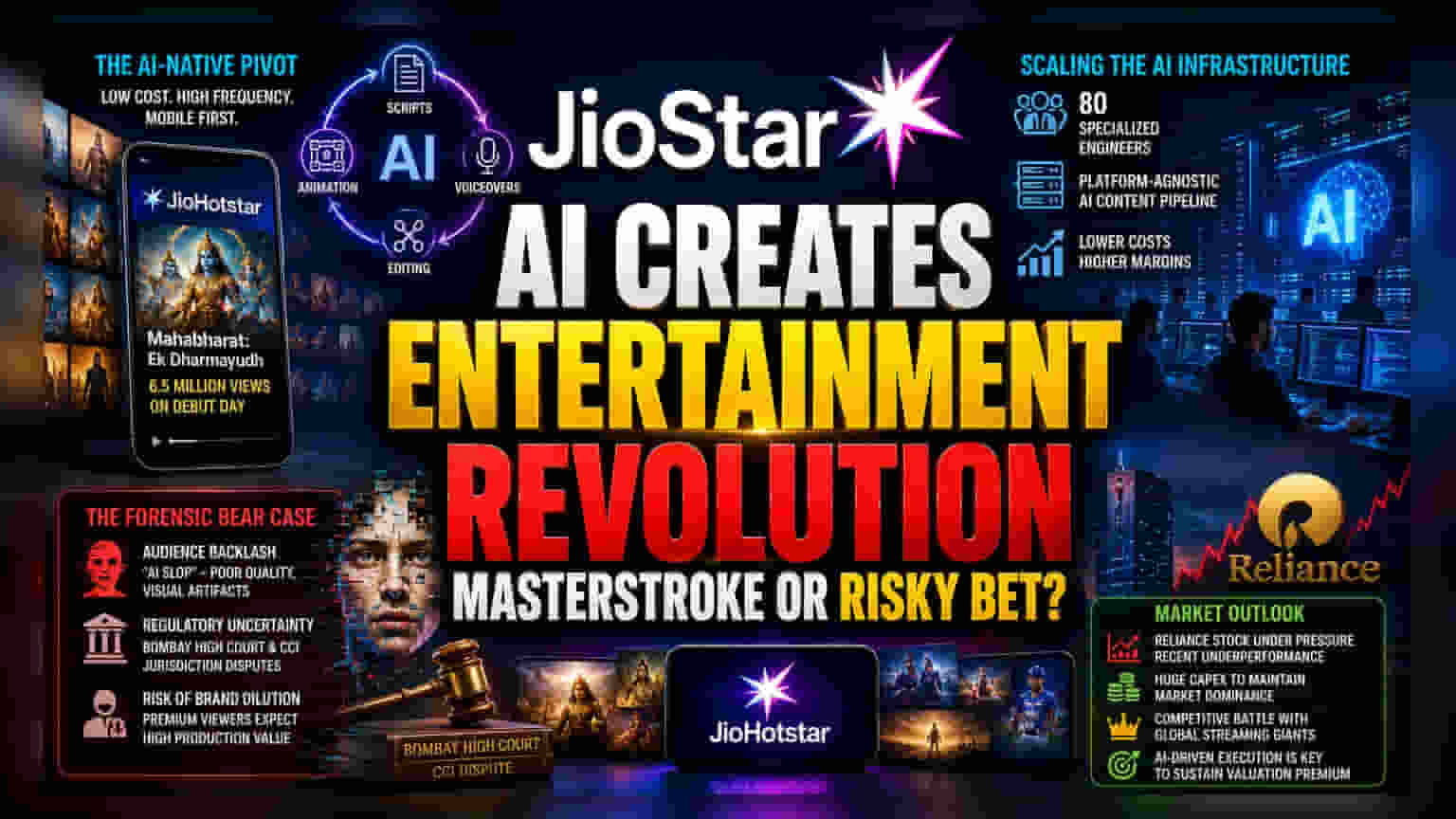


The Shift to Automated Storytelling
JioStar is pivoting away from high-cost traditional production in favor of an AI-native model, aiming to transform JioHotstar into a low-cost, high-frequency entertainment hub. This strategy goes beyond simple AI assistance; the company is developing a pipeline where scripts, animation, voiceovers, and editing are synthesized entirely by machine learning. The directive follows the viral success of Mahabharat: Ek Dharmayudh, which defied expectations by capturing 6.5 million views on its debut day. Under the guidance of Senior Vice-President of GenAI Content Stephan Bugaj—a veteran of Pixar and Telltale Games—the platform is rapidly transitioning to automated creative frameworks designed for mobile-first consumers who prioritize short-form, high-velocity content.
Scaling the AI Infrastructure
Reliance Industries, which holds a commanding position in this venture, is heavily incentivizing this technology to stabilize operations following the capital-intensive integration of diverse sports rights. By hiring 80 specialized engineers, JioStar intends to move beyond experimental micro-dramas toward a robust, platform-agnostic library. This move positions the studio to cater to India's fragmented viewer base far more efficiently than peers relying on labor-intensive, human-led productions. While competitors navigate rising talent costs, JioStar’s bet is that structural cost reductions in content generation will unlock superior operating margins and allow for personalized, interactive storytelling that traditional studios cannot replicate at scale.
The Forensic Bear Case
Despite the aggressive expansion, the strategy faces substantial headwinds. Early audience reception to the platform’s AI-generated content has been polarized, with vocal critics labeling the output as "AI slop" due to frequent visual artifacts such as distorted faces and rendering inconsistencies. Beyond the immediate quality concerns, the venture operates in a complex regulatory environment; the Bombay High Court has been embroiled in jurisdictional disputes involving the Competition Commission of India, which could complicate future media operations. Furthermore, the reliance on automated pipelines risks alienating the premium subscriber base that expects high-fidelity production values. Unlike global competitors who have faced intense creative pushback, JioStar’s primary risk is not just cultural resistance, but the potential for long-term brand dilution if the technology remains unable to deliver consistent narrative depth or visual polish.
Market Outlook and Valuation
Market sentiment toward the parent entity, Reliance Industries, remains cautious as the stock contends with broader sectoral pressures and recent sub-benchmark performance. Investors are watching closely to see if this AI-driven media strategy can successfully offset the massive capital outlay required to maintain its domestic market dominance. With the media division operating in a hyper-competitive landscape against established streaming incumbents, the successful execution of this tech-first pivot is crucial for maintaining the valuation premium that the market has historically assigned to Reliance’s diversified growth story.